The fastest way to add 'Build a Website in a Day' to your services

Most creators comparing Beacons vs Linktree are really asking one thing: which option costs the least and does the most once money starts coming in.
You pull up your social profiles, look at that solitary URL slot in your bio, and realize you need a hub that actually pulls its weight. The two names that always pop up first are Beacons and Linktree, but the honest answer depends entirely on whether you just need a place to stash a few external links or a page built to earn.
Here’s the bottom line upfront.
Linktree wins on pure simplicity and free link hosting, Beacons wins if you want built-in monetization apps right out of the box, and Julip wins if you want a page that looks like a real website and takes zero percent of your sales.
Throughout this breakdown, we’ll put all three tools head-to-head on fees, features, design, and who each one is actually built for.
Let’s get right into it.
Beacons vs Linktree vs Julip At a Glance
To get your bearings before diving into the details, here’s how the three platforms stack up side by side.
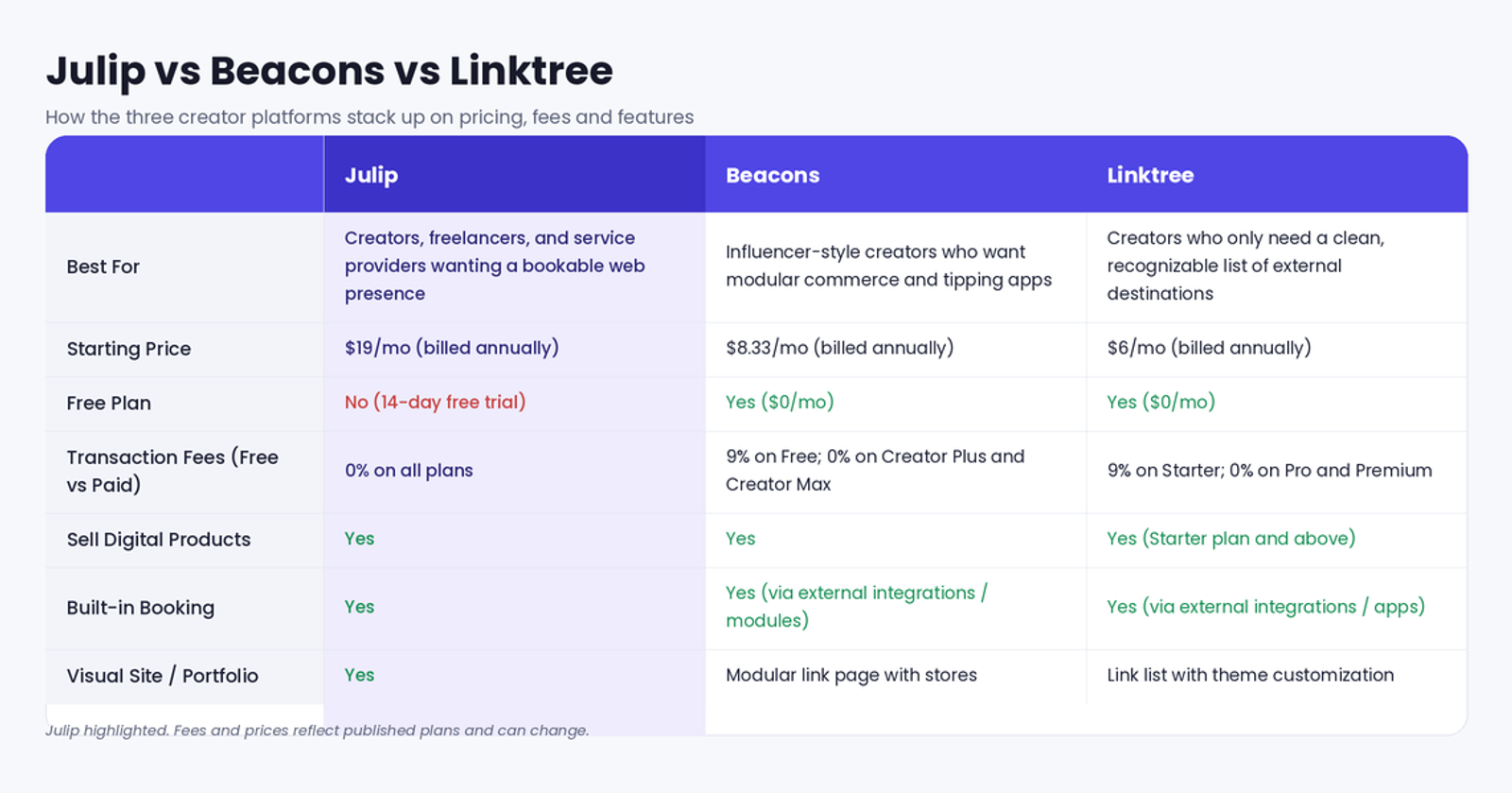
Now that you have the quick-reference breakdown, let's take a closer look at how each option functions, starting with where the original link-in-bio pioneer built its reputation.
Linktree: Best For a Simple, Recognizable Link List
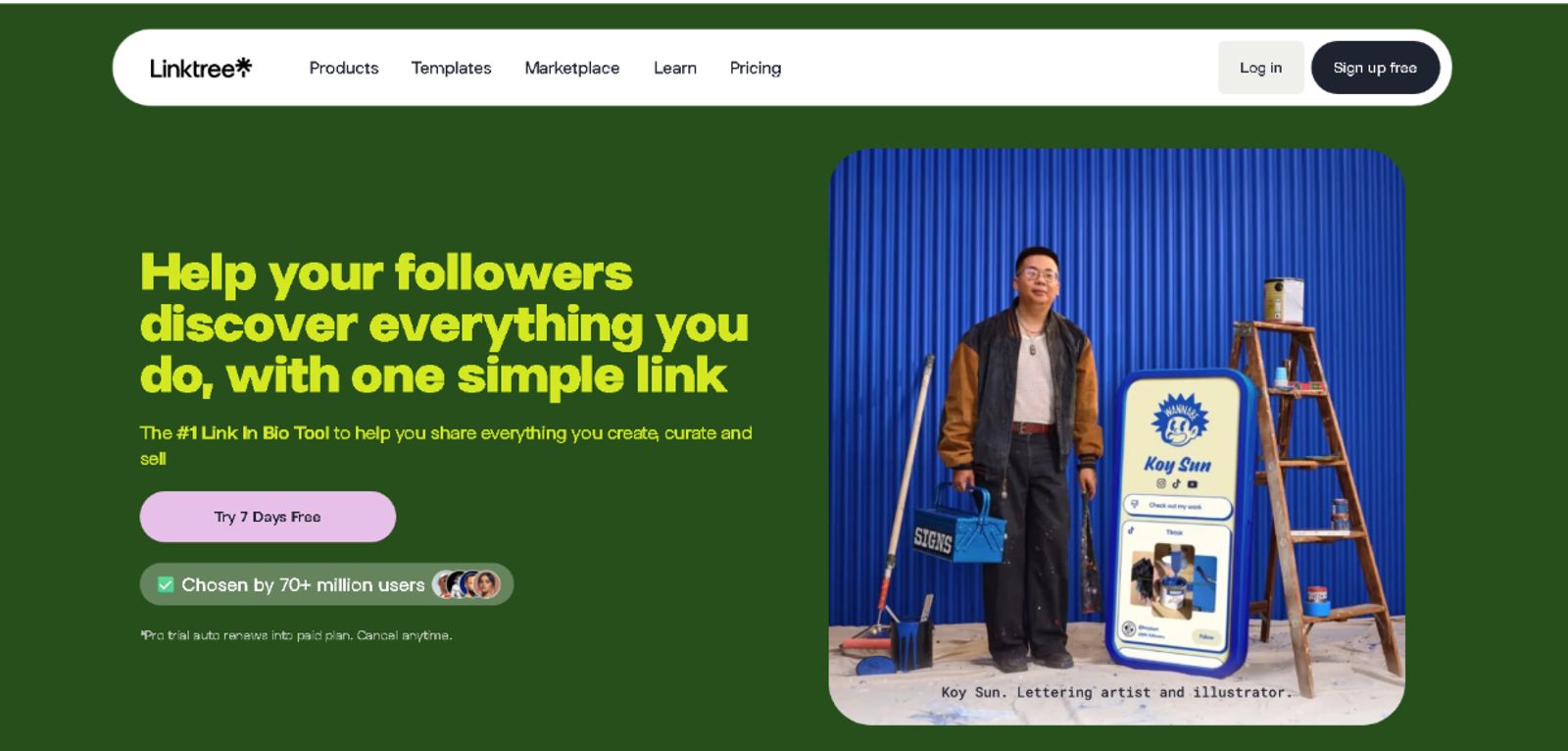
Linktree acts as the pioneer of the link-in-bio space. Almost everyone on social media recognizes that tidy stack of buttons, and setting one up takes about two minutes flat.
What it is:
The original and most recognized link-in-bio tool, featuring quick setup and a free tier that charges zero transaction fees on basic link sharing.
Strengths:
Pure simplicity, instant brand recognition, and a genuinely free option for basic link directories.
Limits:
It remains a list of links rather than a functional storefront or a full website, meaning e-commerce features and custom branding require stepping up to paid plans.
Best for:
Creators who only need to point followers to a few external destinations without building an actual web presence.
Beacons: Best For Built-In Monetization Apps
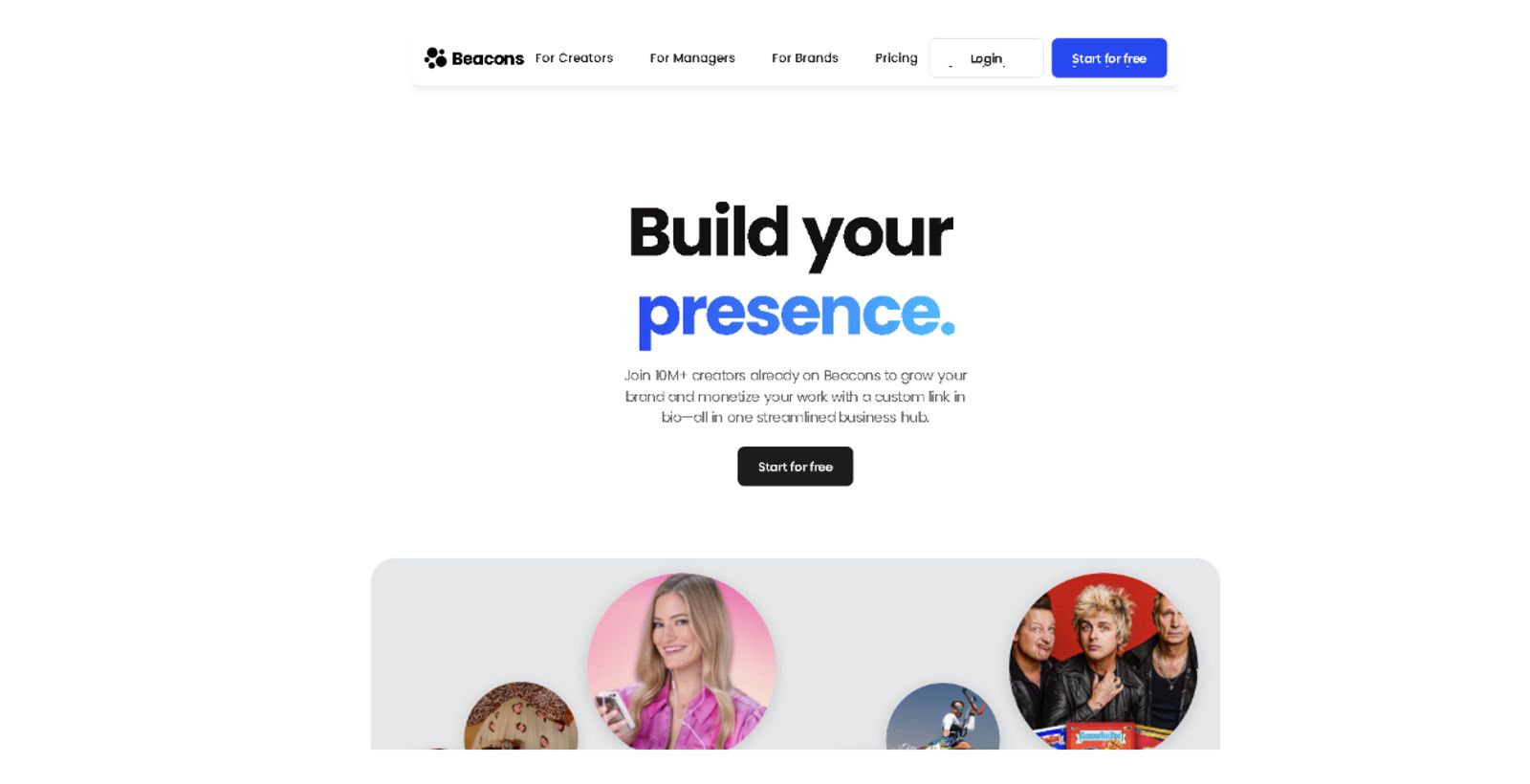
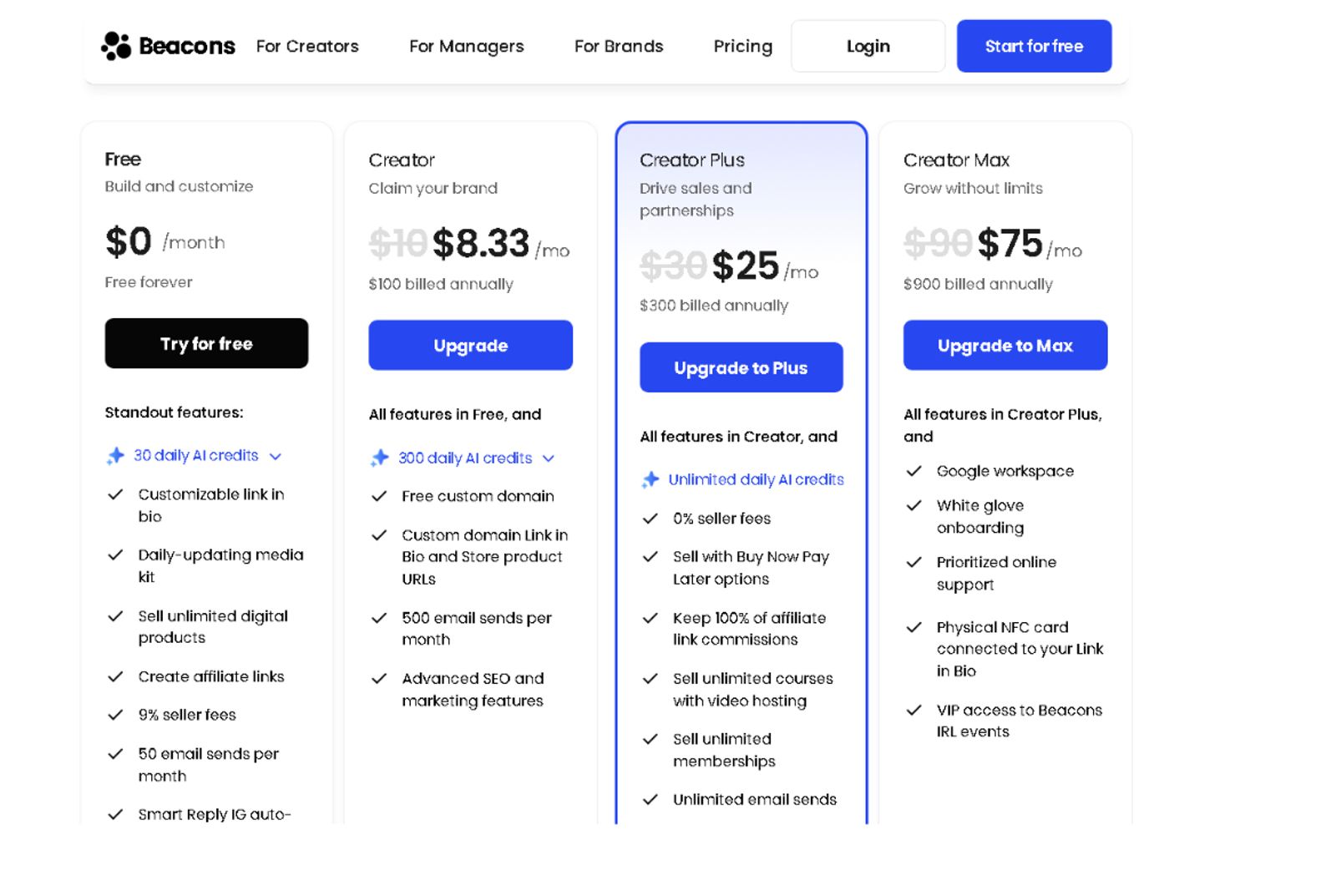
Beacons leans heavily into the creator economy by packing store links, tip jars, and media kits right into a modular layout. It operates on a freemium model where you can spin up a basic page for free, though stepping up to paid tiers like Creator Plus unlocks zero seller fees and advanced features.
What it is:
A modular link page equipped with built-in digital stores, tipping options, media kits, and a free tier to get started.
Strengths:
Heavy focus on creator monetization, an AI-powered media kit for pitching brand deals, and flexible layout modules.
Limits:
The free plan slaps a 9 percent transaction fee on sales, and even on paid tiers, the interface still feels like a link page with commerce bolted on rather than a true independent website.
Best for:
Influencer-style creators who prioritize quick tipping setups, brand sponsorship tools, and modular storefront options.
Julip: Best For a Real Website in Your Bio with 0% Fees
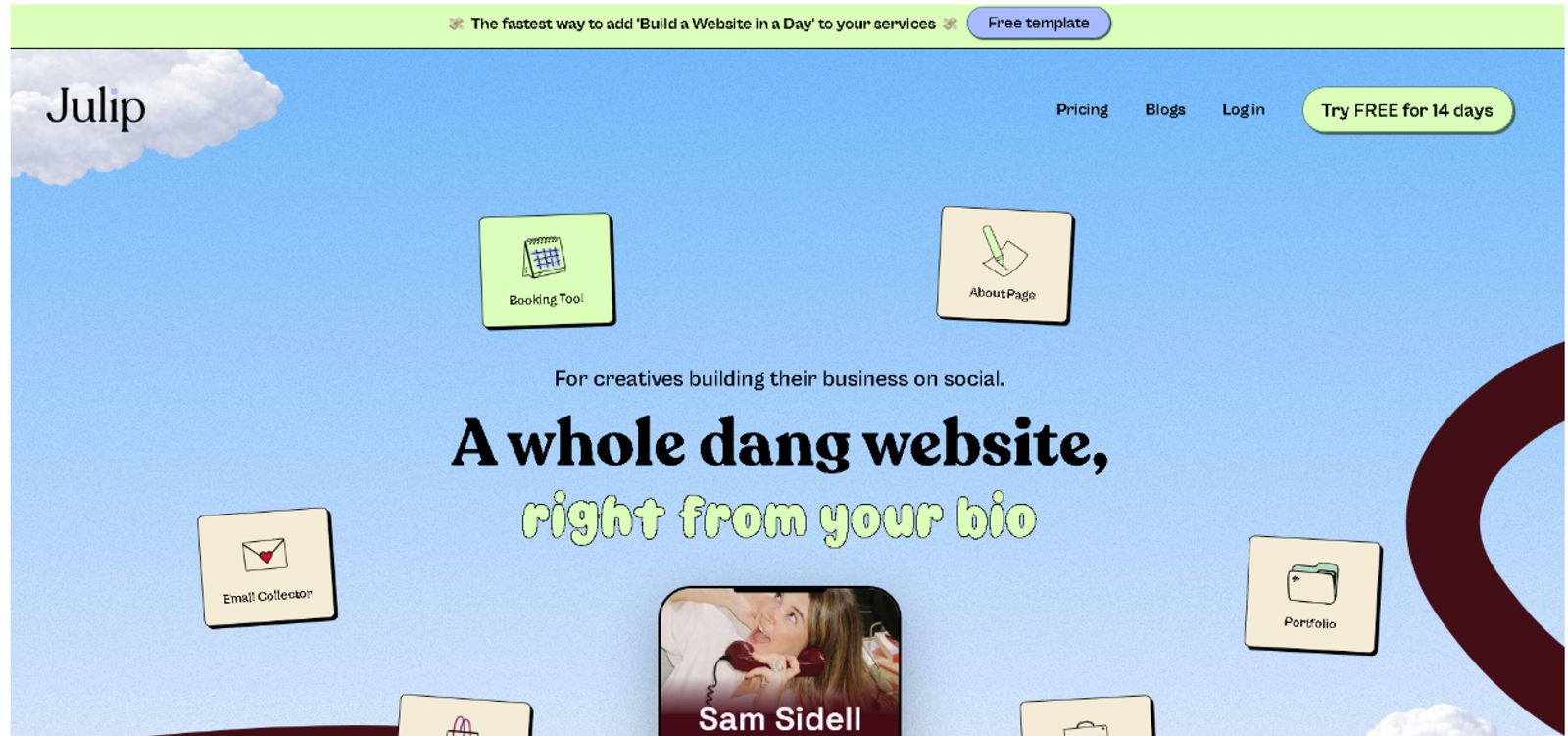
Now that you’ve looked at the modular approach, let us move on to the option built for anyone who wants a complete online presence without giving away a cut of their hard work.
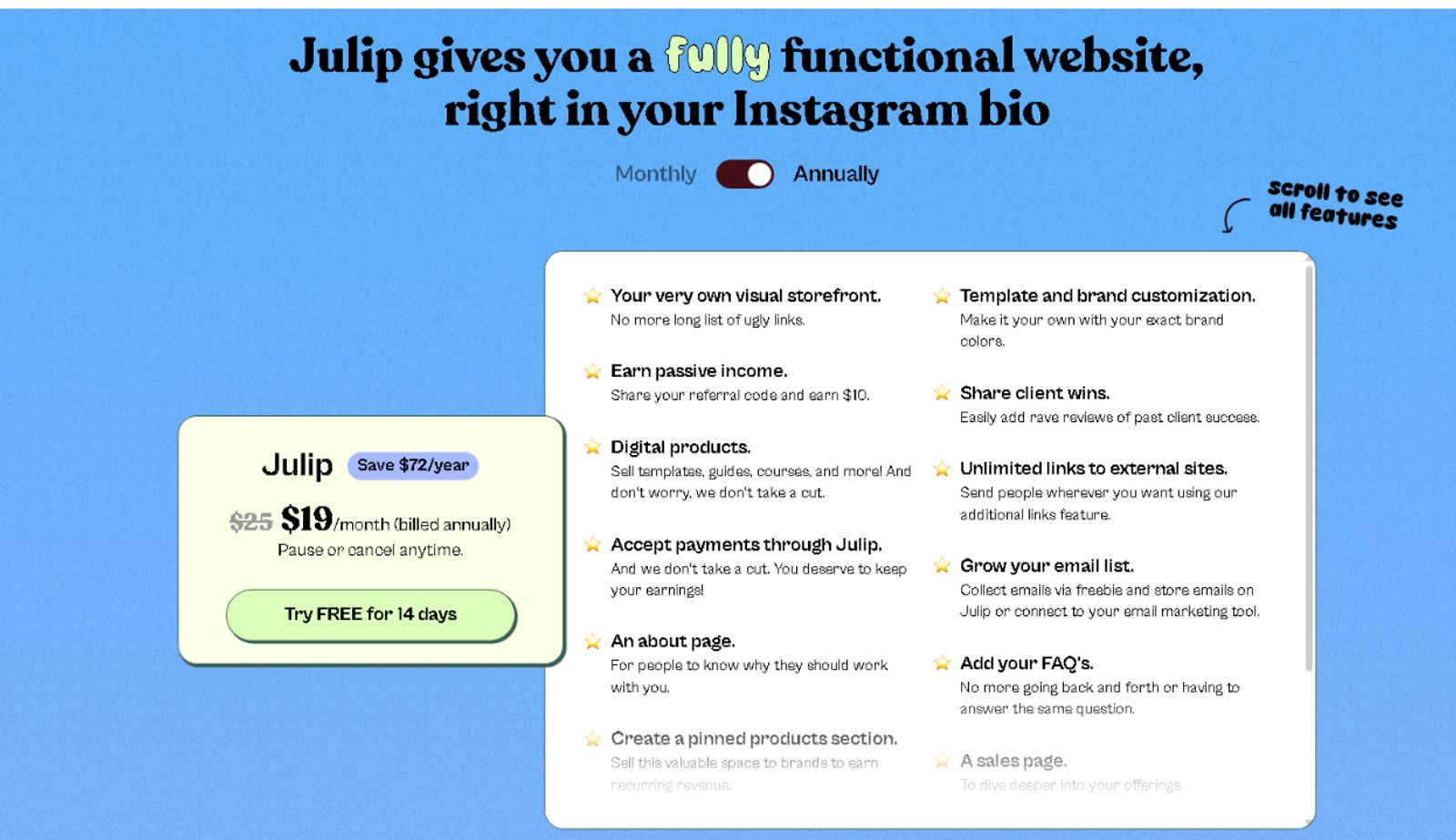
Julip shifts the entire concept of a bio link by transforming a single URL into a fully functional web presence. So instead of restricting you to a vertical list of buttons, it lets you build a legitimate portfolio, display service offerings, handle client bookings, and sell digital products from one centralized location.
What it is:
A visual website-in-bio platform that combines portfolios, service listings, appointment booking, digital product storefronts, and email tools into a single link with zero platform commission fees across every plan.
Strengths:
It looks and functions like a custom website instead of a simple link directory, offers native booking features that neither Beacons nor Linktree match out of the box, and never takes a percentage of your earnings.
Limits:
There’s no free-forever tier; it operates as a paid tool backed by a 14-day free trial, and it targets solo creators rather than large multi-user teams.
Best for:
Creators, freelancers, and service providers who sell products or book clients directly from social media and want to keep 100% of their revenue. Creators like Debbie Poh and Adleesa Edwards use Julip to showcase their portfolios, manage services, and connect with audiences in a professional format.
Beacons vs Linktree: The Direct Comparison
Putting these two platform giants head-to-head clarifies how Beacons vs Linktree match up when you look past the marketing hype.
Let's take a look at how each platform handles commerce.
Free Plan and Fees
Linktree gives you a genuinely free tier for basic link listing that takes zero cut of transactions, while Beacons offers a free tier that slaps a 9 percent fee on your sales.
Selling
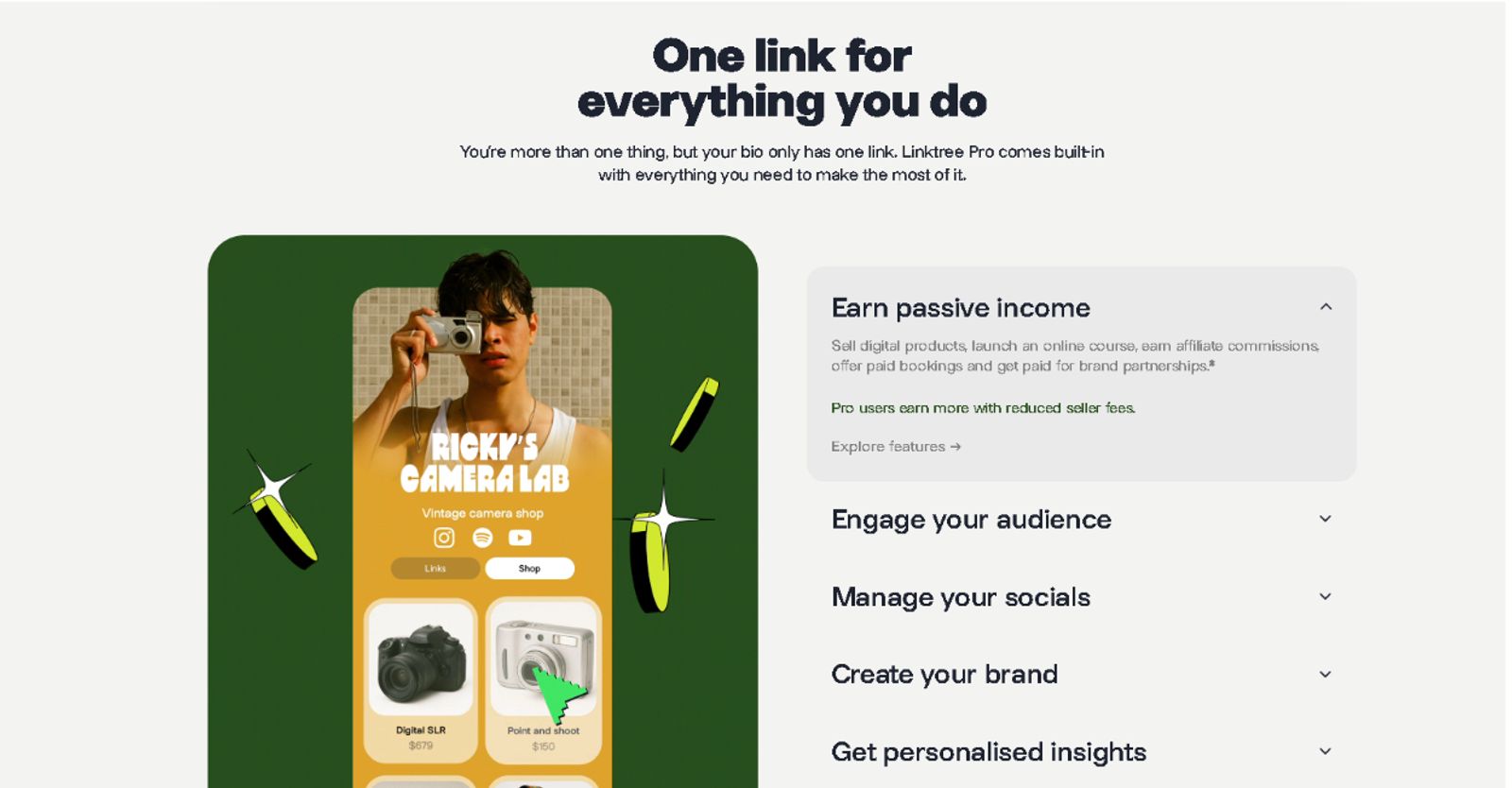
Beacons loads you up with native stores and tipping features right out of the gate, whereas Linktree keeps commerce minimal and hides deeper selling tools behind paid subscriptions.
Design and Branding
Linktree sticks closely to a straightforward button directory style unless you upgrade for layout tweaks, while Beacons leans into a modular look that gives you extra breathing room for customization.
Verdict
In short, if you only need to list links, go with Linktree. And if you want built-in monetization apps, choose Beacons.
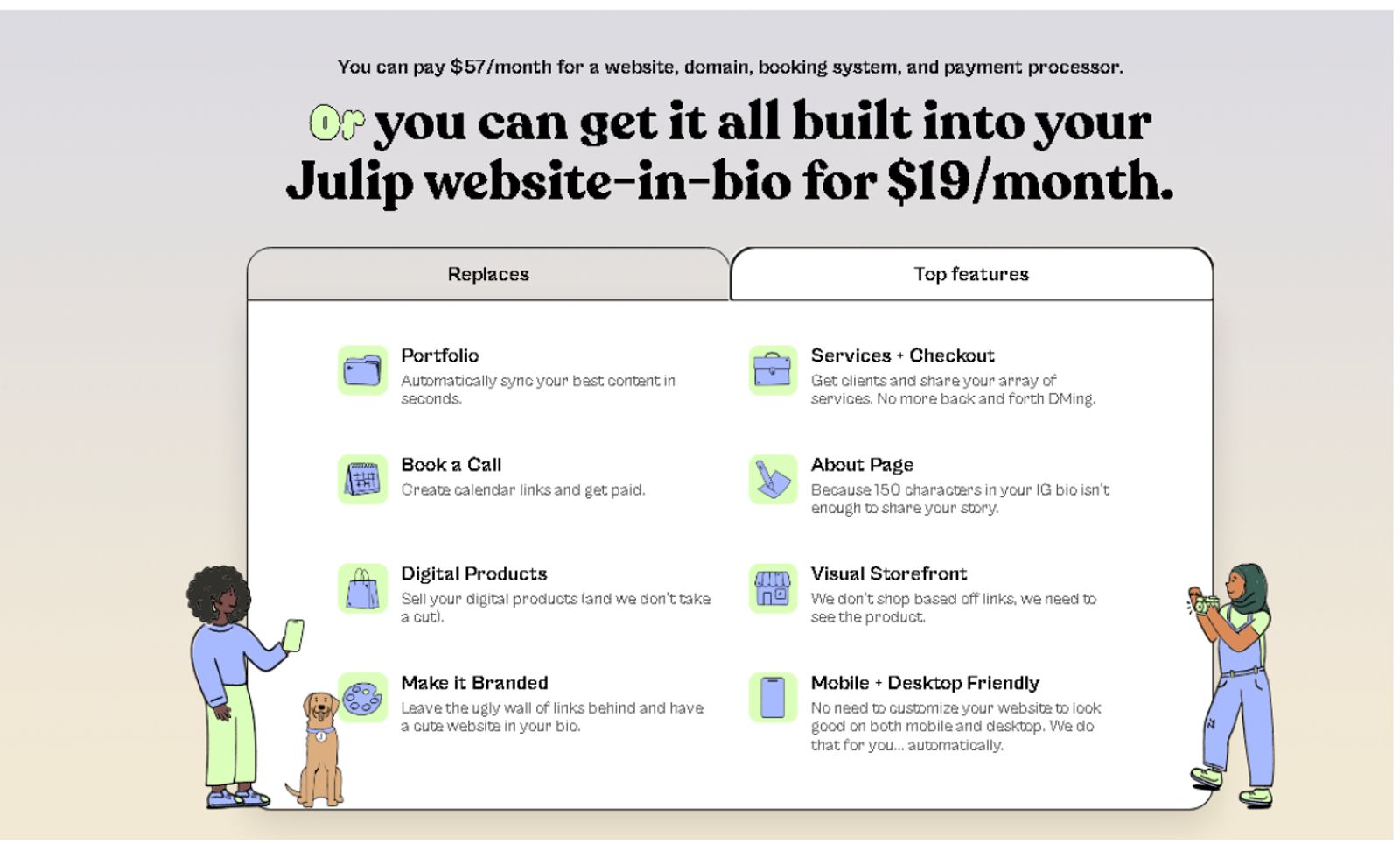
Of course, if you want to skip the limitations entirely and build a fully bookable site with zero platform fees, that is where Julip enters the picture. Giving your social traffic a professional home base changes everything once you’re ready to scale up your brand.
Which Should You Choose?
Finding the right fit comes down to matching your immediate goals with what each platform actually delivers.
To break it down by your main priority:
- Choose Linktree if: You just need a completely free, straightforward, and instantly recognizable list of external links for your social profile.
- Choose Beacons if: You want tipping features, brand-deal tools, and a modular layout that brings basic commerce to a freemium page.
- Choose Julip if: You want to ditch the basic link list entirely and put a professional website in your bio complete with portfolios, client bookings, and digital product sales while keeping every single dollar you earn.
Weighing these options carefully ensures your social link drives maximum impact for your unique brand.
FAQ

Is Beacons Better Than Linktree?
Deciding which platform wins in a Beacons vs Linktree comparison depends on your main priority, as Beacons works best for built-in monetization apps while Linktree shines for quick and simple link directories. Beacons charges a 9 percent fee on its free tier, whereas Linktree offers a free basic link tier with zero transaction cuts.
Is Linktree or Beacons Cheaper?
When evaluating Linktree vs Beacons, both platforms offer free entry tiers, but their pricing diverges as you scale. Linktree's paid plans start at $6 per month, while Beacons starts at $8.33 per month when billed annually, though Beacons includes native commerce tools sooner on its lower tiers.
Does Beacons or Linktree Take a Cut of Sales?
Beacons charges a 9 percent transaction fee on its free plan before dropping it to zero on paid tiers, while Linktree's free and starter plans charge 9 percent on digital sales. By contrast, Julip charges 0 percent platform commission across all of its plans so you keep every dollar you earn.
What Is a Good Alternative to Beacons and Linktree?
Julip serves as a premier alternative because it replaces basic link lists with a fully bookable website, built-in portfolio, and digital storefront while charging zero platform fees.
Which Is Best For Selling Digital Products?
Beacons suits creators who want modular storefronts and tipping apps on a freemium budget, Linktree suits basic link sharing with paid e-commerce add-ons, and Julip wins for creators who want a complete website-in-bio with 0 percent sales fees.
Conclusion
Choosing the right link-in-bio tool ultimately comes down to what you want your social profile to achieve.
Linktree keeps things easy if you just need a straightforward directory for your links, while Beacons works well if you want built-in monetization apps and modular storefront features.
And for creators ready to move past basic buttons and set up a complete bookable website that keeps 100 percent of every sale, Julip changes the game.
Head over and start Julip's 14-day free trial with no credit card required to build a professional online home for your brand today!