The fastest way to add 'Build a Website in a Day' to your services

Here’s the truth: Most creators don’t lose money because they can’t sell. They lose it to platform fees silently skimmed off every single transaction, plus a frustrating stack of separate subscriptions for checkout tools, booking calendars, and link-in-bio pages.
The audience is right there, the sales are happening, but a noticeable slice of the revenue disappears into thin air before it ever hits a bank account.
Sound at all familiar?
If so, you’re in the right place.
This guide ranks the best creator monetization platforms by looking at what actually decides take-home pay: transaction fees, product flexibility, payout speed, and monthly overhead.
Finding the right creator monetization platform or broader content monetization platforms comes down to keeping what’s earned, which is why the top spot goes to an option taking 0% of your sales.
Now, let's break down the essential traits to look for before diving into the top contenders.
What Makes a Good Creator Monetization Platform?

Choosing the right tool to sell your work comes down to a few non-negotiable details that protect your profits.
Keep an eye out for these five key features:
- Low or zero transaction fees: Every percentage point skimmed from a sale eats directly into earnings. So keeping that cash requires a setup that lets you hold onto 100% of what you make.
- Multiple ways to earn: Relying on a single income stream limits growth potential. The ideal setup handles digital downloads, live coaching calls, client services, and recurring memberships all under one roof.
- Sells from where your audience is: Followers rarely want to jump through hoops or pinch and zoom on a clunky desktop layout. With that in mind, a smooth, mobile-first page turns casual social media traffic into paying customers in a couple of taps.
- All-in-one, not a stack of tools: Running a business shouldn't mean paying for separate monthly subscriptions for your landing page, booking software, and checkout cart. You want to combine everything into a single dashboard to keep overhead low and sanity intact.
- Fast setup and payouts: Getting a storefront live should take minutes without needing a developer, and earned revenue needs to land in your bank account quickly.
The Best Creator Monetization Platforms
Now that the groundwork is laid out, let's look at the actual options.
Here are the top contenders, ranked to help you figure out where your digital home should live.
1. Julip: Best Overall Creator Monetization Platform
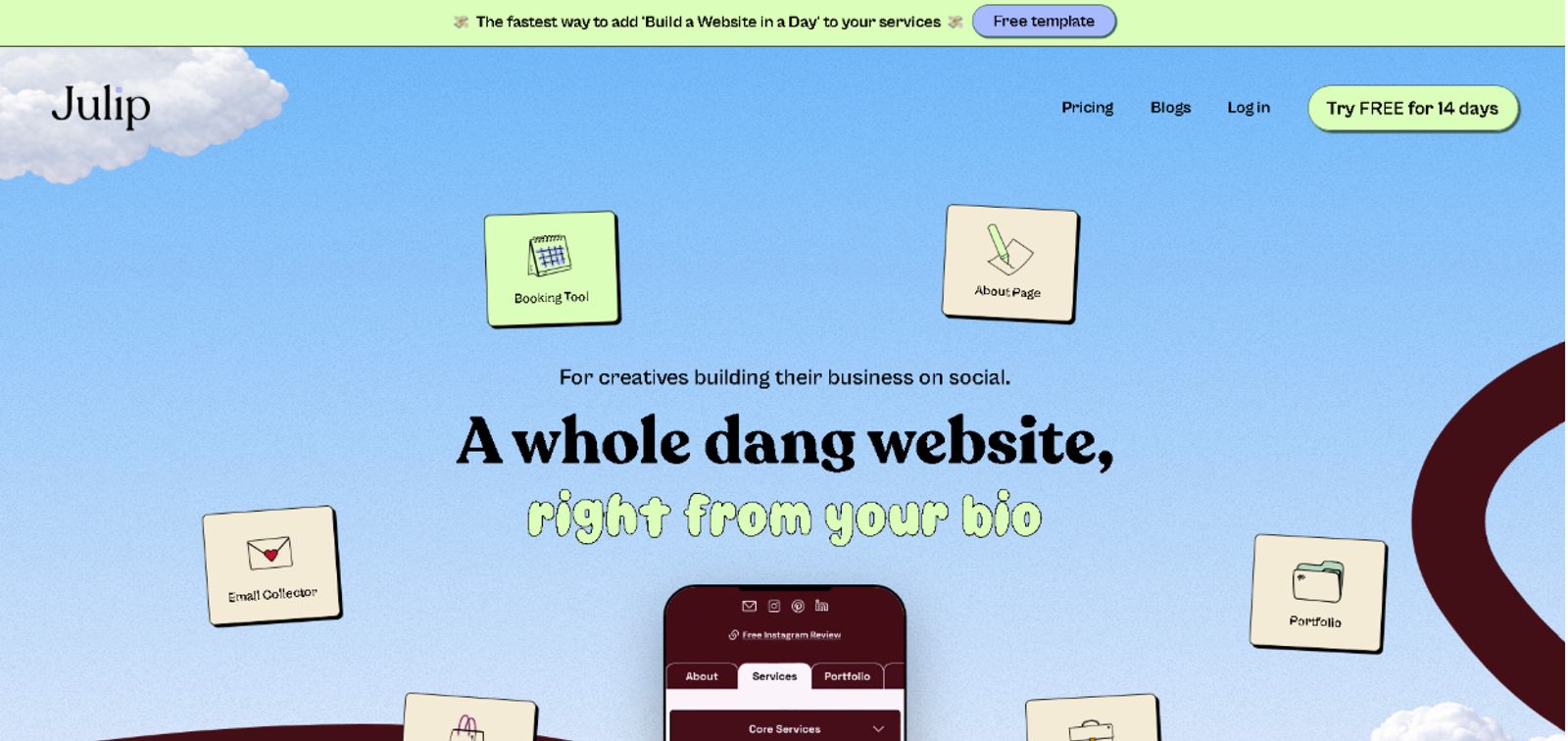
Taking the top spot as the anchor of our list, Julip stands out as a top-tier creator monetization platform by changing the math on what creators keep.
It’s currently the only option that pairs a full visual website-in-bio with 0% platform fees across its plans, making it a favorite for independent creators like lifestyle creator Debbie Poh and marketing strategist McKenzie, who use it to showcase products and services without losing a cut to middlemen.
Best for:
Solo creators and social media-focused businesses wanting an all-in-one hub without paying commission per sale.
What it offers:
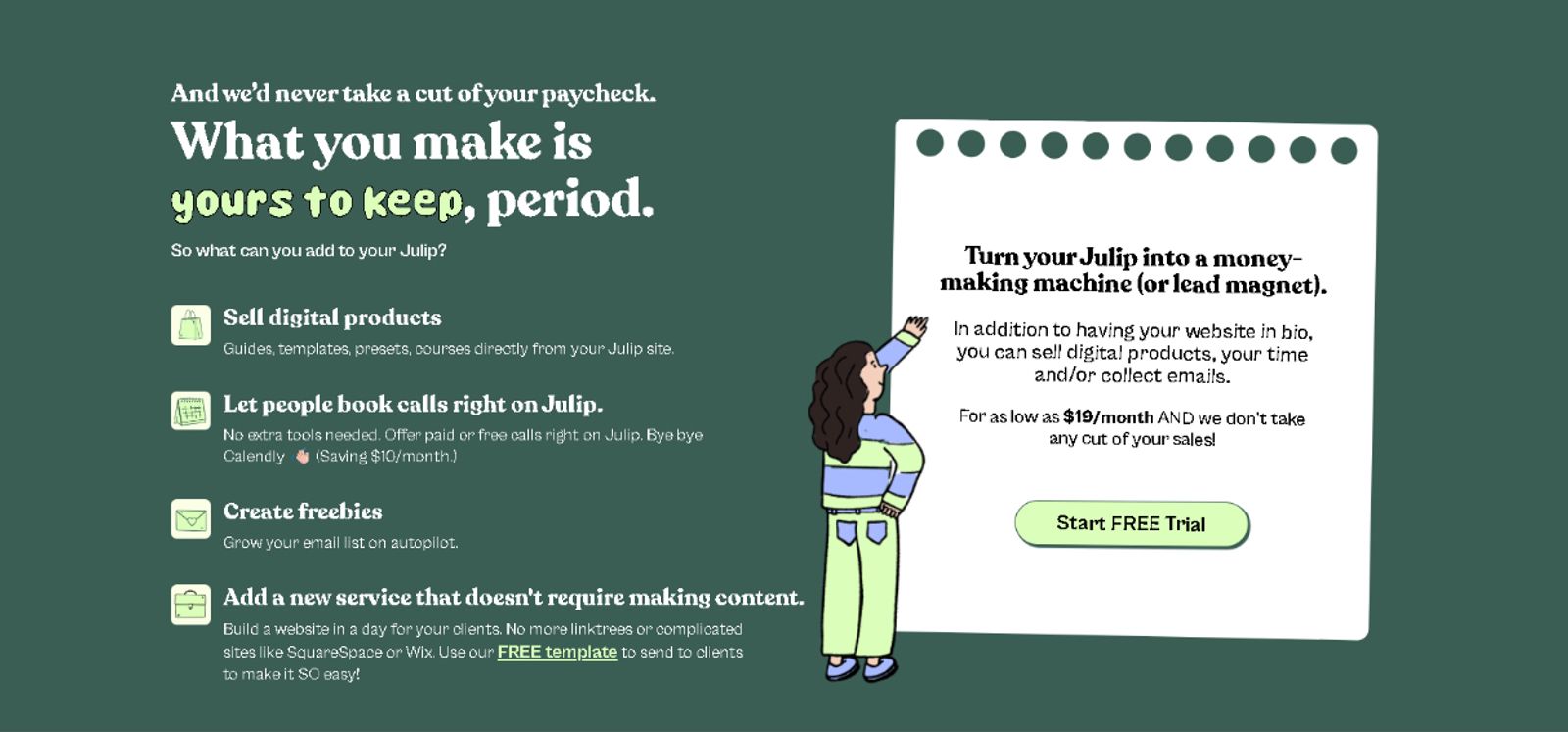
Sell digital products, take bookings and paid calls, list client services, collect email subscribers, and run a gorgeous visual storefront and portfolio, all from one bio link.
Pros:
- 0% transaction fees
- Replaces a link tool plus a scheduler plus a checkout cart in one affordable package
- Mobile-first design
- 14-day free trial
- 100% earnings retention
Cons:
Not built as a heavy-duty course-hosting LMS for massive video libraries, and tailored primarily for solo creators who build their audience on social media rather than multi-person agencies.
Pricing:
Plans start at $19 per month with a 14-day free trial available.
2. Stan Store: Best for High-Volume Digital Product and Course Sellers
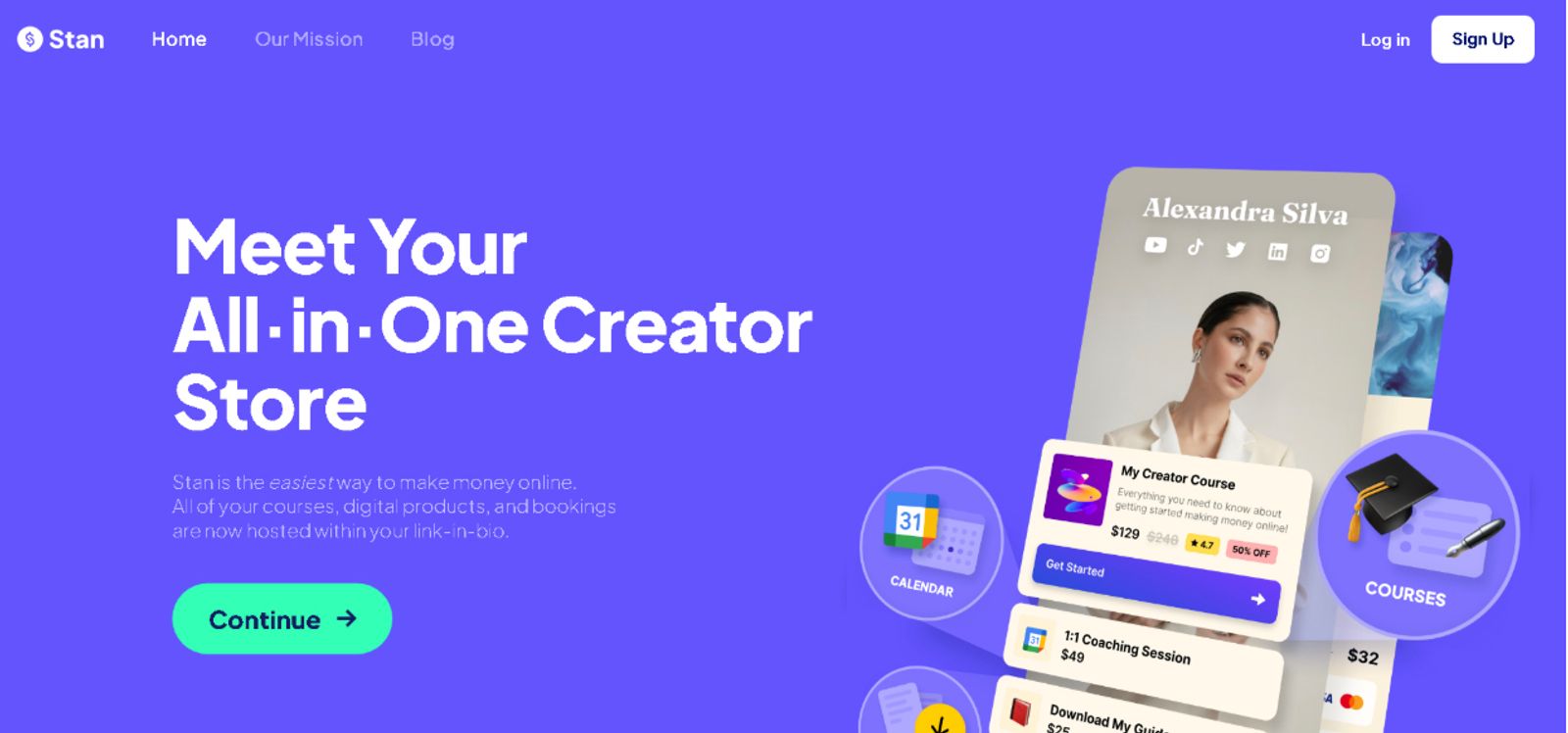
Moving down the list, Stan Store takes a different route by focusing heavily on quick storefront setups and speed. It’s a strong option for busy sellers who want to push out digital downloads or online courses without getting bogged down by complicated design menus.
Best for:
High-volume sellers focused purely on digital products, short guides, and online courses.
What it offers:
A streamlined storefront built directly into a link-in-bio format, complete with calendar booking integrations, digital product hosting, and simple checkout flows.
Pros:
Fast single-tap checkout experiences for buyers, zero platform transaction fees on its paid plans, and a clean mobile layout.
Cons:
No free tier available for testing out ideas, and the design customizability can feel a bit rigid if you want a multi-page website feel.
Pricing:
Entry-level Creator plans start at $29 per month, while the advanced Creator Pro tier runs $99 per month. Standard payment processing fees from Stripe or PayPal still apply.
3. Beacons: Best for Creators Who Want Built-In Monetization Apps
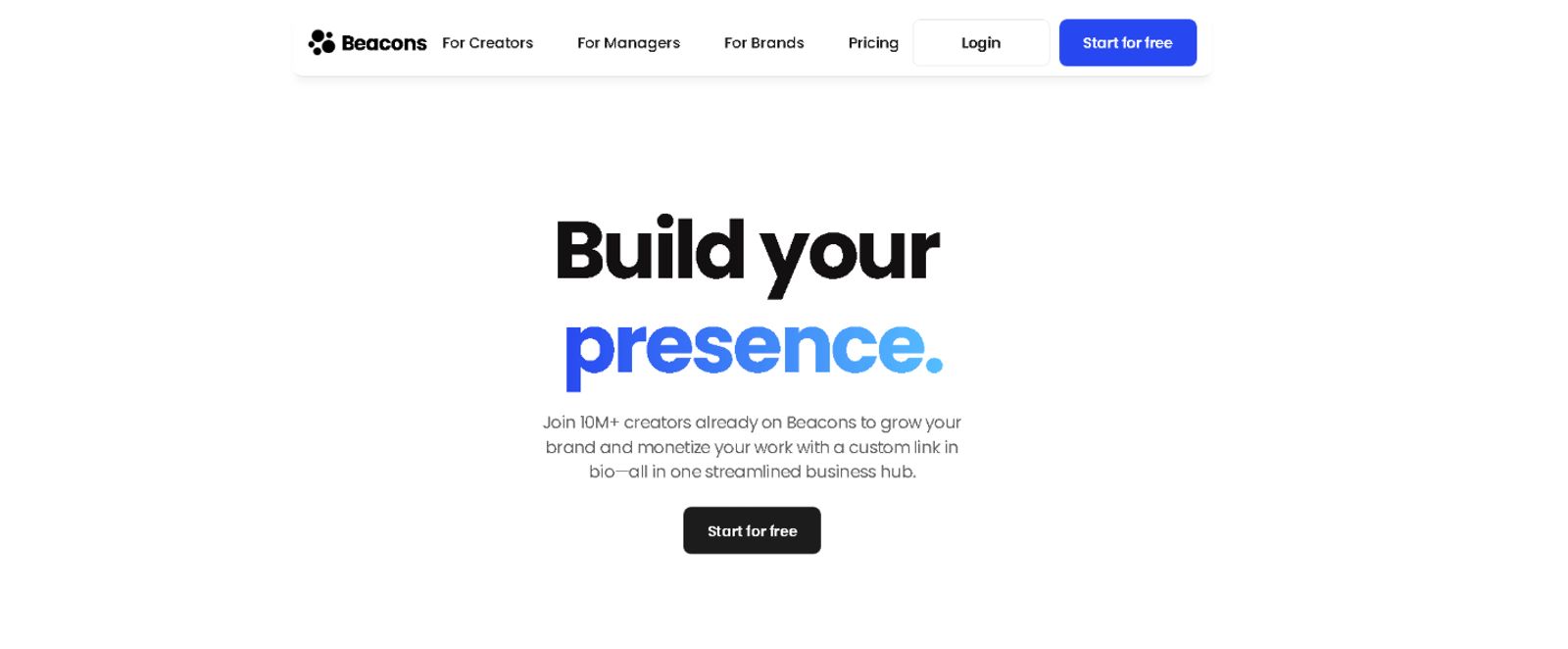
Beacons takes a modular approach to building a digital storefront. Instead of locking everything into a single template, it lets you snap different features onto your page like building blocks.
Best for:
Creators who like mixing and matching specific mini-apps for tips, media kits, and digital sales.
What it offers:
A customizable link-in-bio builder packed with native add-ons like email marketing tools, automated media kits, and digital product stores.
Pros:
Highly customizable layouts, tons of built-in utility apps, and an intuitive drag-and-drop editor.
Cons:
The free plan carries a higher transaction fee, and managing a dozen different mini-apps can feel cluttered if you prefer a simpler setup.
Pricing:
Features a free tier with a 9% transaction fee, while paid plans start around $10 to $30 per month to drop transaction fees down to 0% and unlock advanced branding.
4. Gumroad: Best for Simple, Pay-As-You-Go Digital Sales
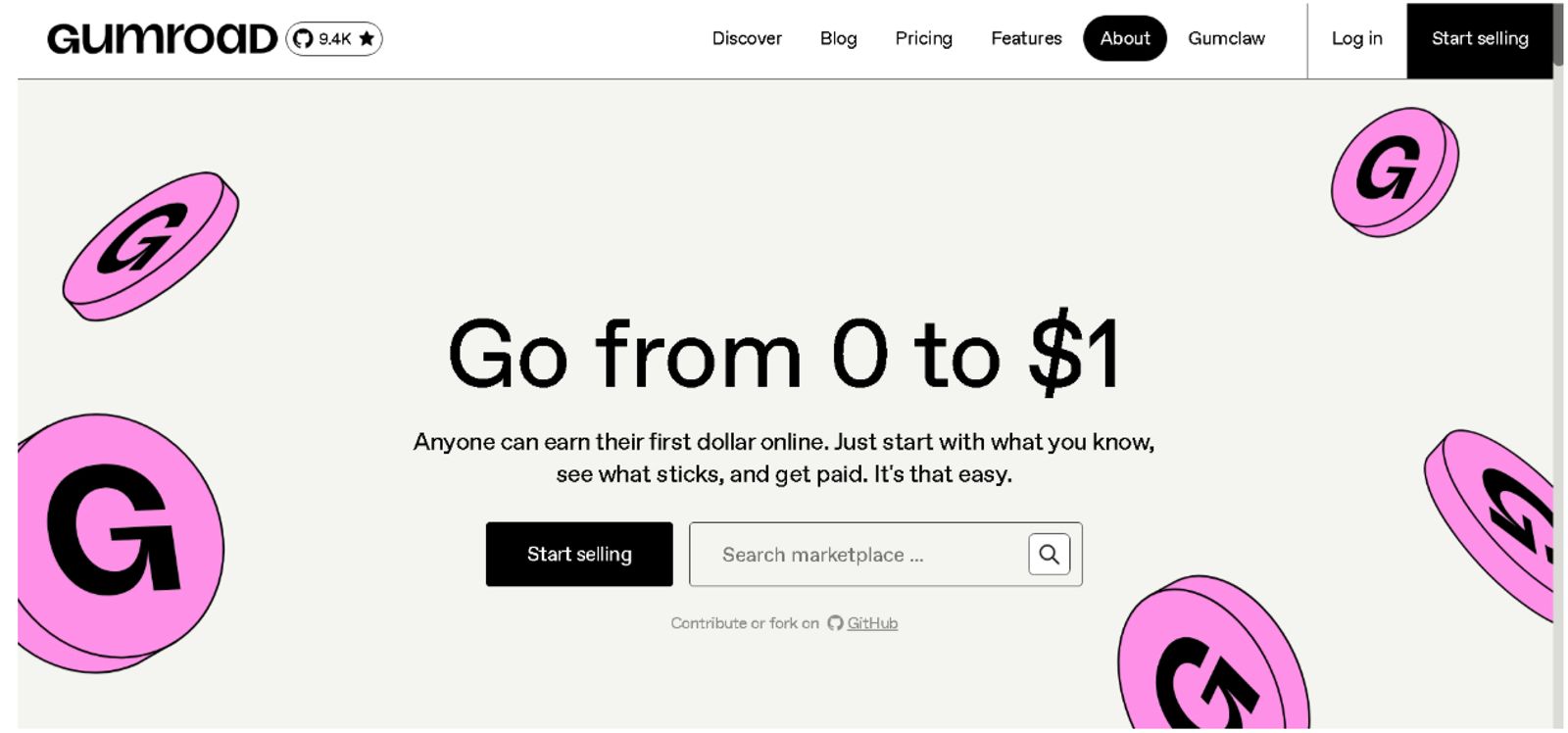
Stripping away everything outside of pure checkout links, Gumroad functions as a lightweight option for anyone wanting to upload a PDF, template, or downloadable asset without dealing with a full page builder.
Best for:
Creators launching quick digital products who want a zero-upfront-cost setup.
What it offers:
Straightforward checkout link generators and minimal product pages that handle instant digital file delivery and global tax management.
Pros:
Zero monthly subscription fees, lightning-fast product publishing, and automatic handling of worldwide tax compliance.
Cons:
Lacks a visual website-in-bio portfolio layout, calendar booking features, and deep brand customizability.
Pricing:
Free to start with a flat platform fee of 10% plus $0.50 per transaction on direct profile sales.
5. Patreon: Best for Membership and Recurring Fan Income

Patreon zeroes in on long-term community building and predictable monthly revenue. It acts as a digital clubhouse where superfans pay a recurring subscription to access exclusive content, early releases, and direct creator updates.
Best for:
Podcasters, video creators, and artists focused on recurring memberships and community spaces.
What it offers:
Tiered subscription structures, patron-only post management, integrated community chat rooms, and built-in tier gating.
Pros:
Established brand trust with fans, reliable monthly recurring revenue models, and robust tools for community engagement.
Cons:
Takes a noticeable percentage cut out of monthly earnings, and the interface can feel overly community-centric if you just want a clean e-commerce shopfront.
Pricing:
Free to start with a flat 10% fee on earned income, plus standard payment processing, currency conversion, and payout fees.
6. Ko-fi: Best Free Option For Tips and Small Sales
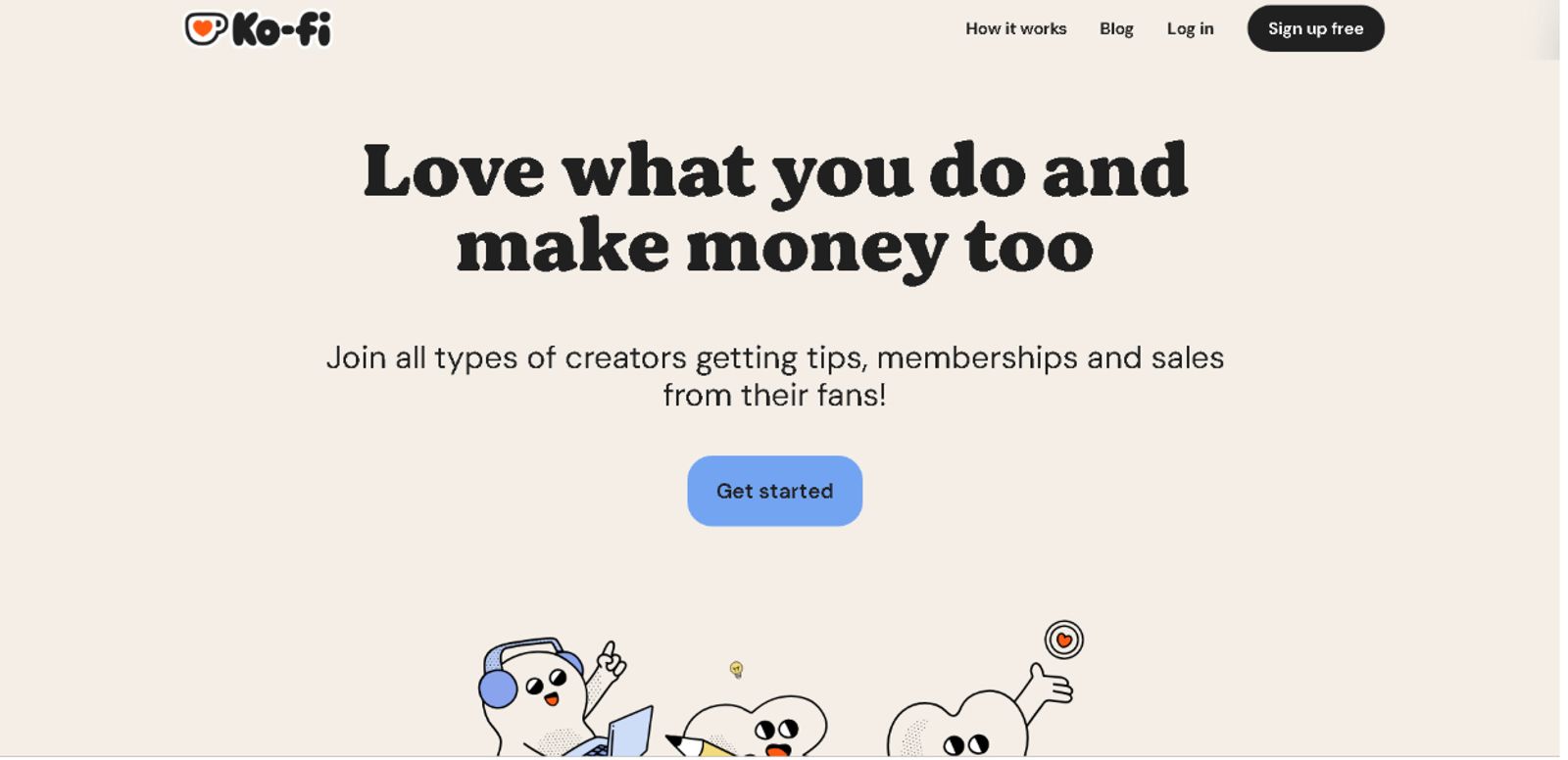
Next is Ko-fi, which sets up a virtual tip jar that doubles as a lightweight marketplace for small digital items. This platform serves as a friendly digital space for supporters to drop a coffee budget into a creator's pocket without heavy commitment.
Best for:
Artists, hobbyists, and casual creators collecting tips or selling low-cost digital goods.
What it offers:
Customizable donation pages, direct tipping goals, commission request forms, and a basic shop for digital downloads or physical merchandise.
Pros:
Zero platform fees taken from direct tips on the free tier, low setup friction, and an approachable community feel.
Cons:
Lacks advanced e-commerce automation, robust website layout tools, and high-end client booking calendars.
Pricing:
Free Standard tier at $0 per month with a 5% service fee, or the Gold tier at $12 per month with a 0% service fee, plus standard payment processor charges.
7. Substack: Best For Writers Monetizing a Newsletter
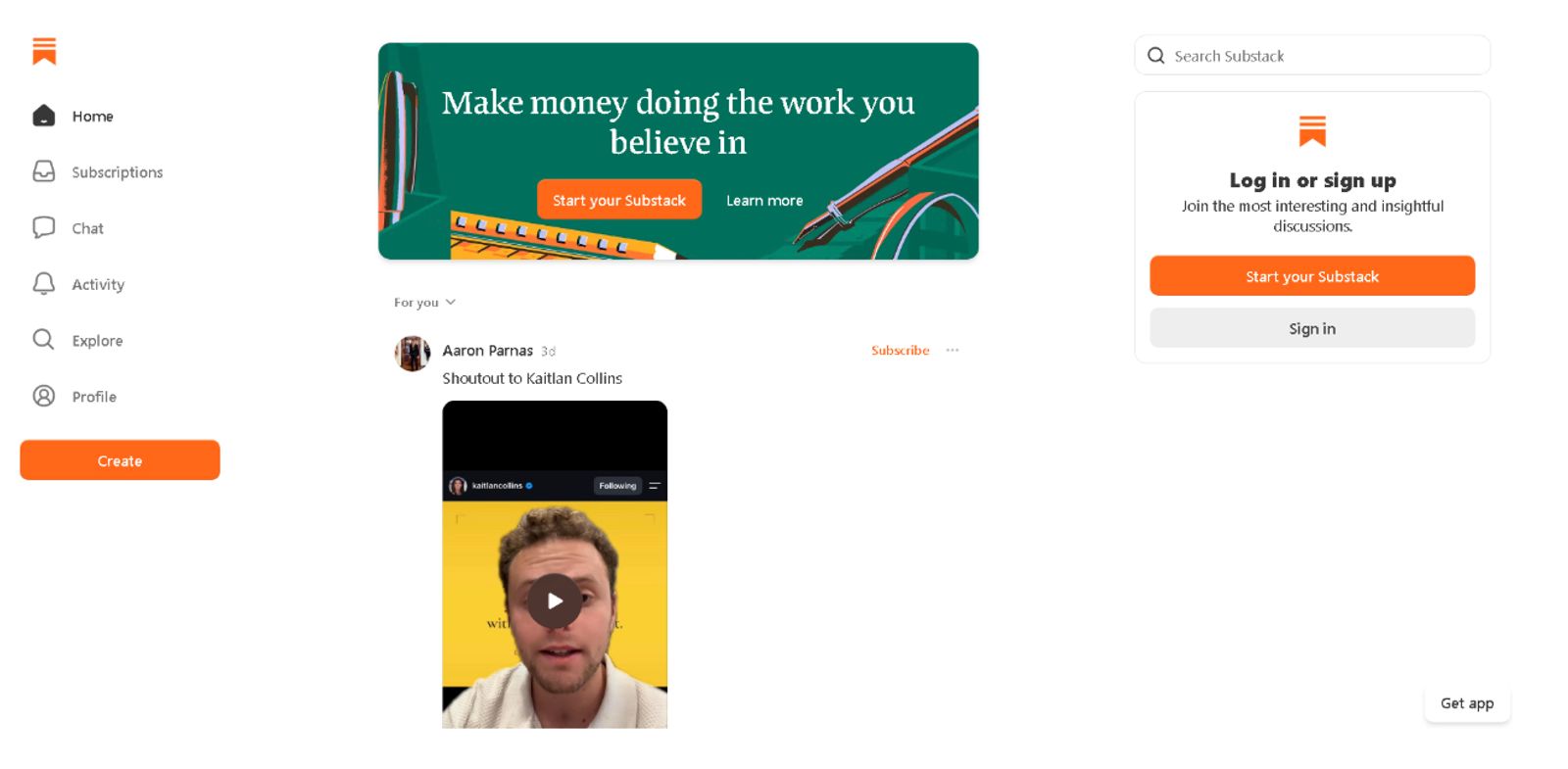
Wrapping up the list, we have Substack. It skips standard e-commerce grids in favor of a clean publishing home built for newsletters and long-form email distribution.
Best for:
Writers, journalists, and essayists building a paid subscriber base around an email publication.
What it offers:
Minimalist publishing tools, built-in subscriber lists, automated email delivery, and podcast hosting options.
Pros:
Zero upfront subscription costs, high reader trust, and a seamless writing experience.
Cons:
Limited options for selling standalone physical or digital products, minimal page customization, and a narrow focus that does not suit service providers or coaches.
Pricing:
Free to use with zero monthly fees, taking a 10% cut of paid subscription revenue, plus standard payment processing charges.
Creator Monetization Platforms Compared: Side-By-Side
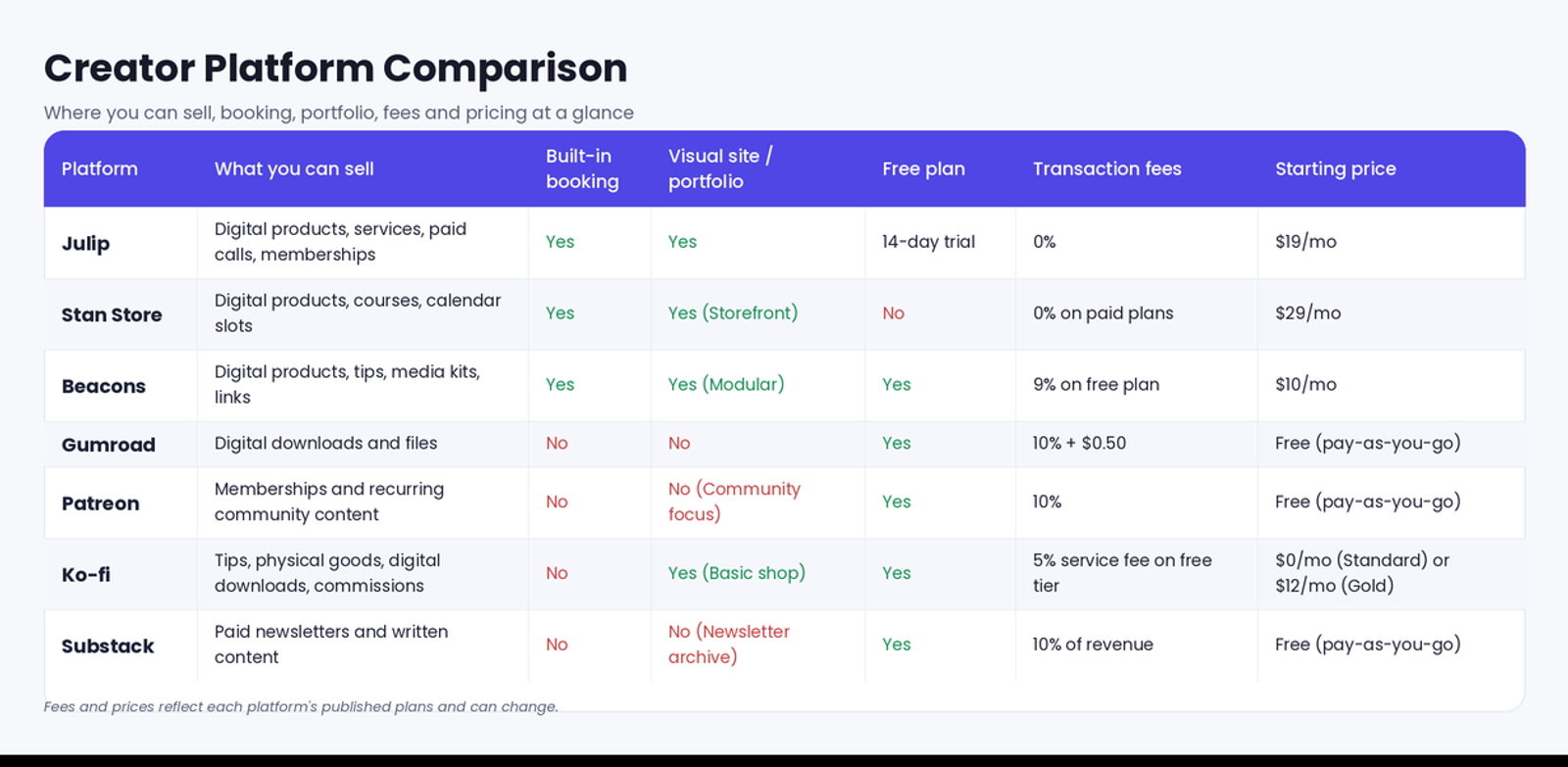
To make it easier to see how each option stacks up against the others, the table below breaks down their core features, fees, and starting prices at a glance.
How Much Do Creator Platforms Take in Fees?

Creator platforms typically charge fees through three main models: flat-fee-plus-0% commission (such as Julip and Stan Store on paid plans), percentage-of-sale commissions ranging from 5% to 10% (such as Gumroad, Patreon, Substack, and Beacons' free tier), and tip-based service fees (such as Ko-fi).
For anyone pulling in steady sales, a flat monthly fee with 0% commission almost always beats a percentage model. So for instance, paying a 10% cut on $1,000 in monthly sales costs $100.
Switching to a flat $19 monthly subscription on a platform like Julip drops that overhead significantly, meaning more money stays directly in your pocket as your business scales.
FAQ

What is the best creator monetization platform?
Julip ranks as the top creator monetization platform because it combines a visual website-in-bio with 0% platform fees across its plans. Other strong options include Stan Store for digital courses and Beacons for modular setups.
What are the best content monetization platforms?
The best content monetization platforms depend entirely on your specific medium and business model. Choosing the right tool requires matching your format to the platform, such as using Patreon for community memberships, Substack for paid newsletters, or Julip for all-in-one digital sales and client bookings.
Which platform takes the lowest fees from creators?
Julip and Stan Store charge 0% commission on their paid plans, letting you keep 100% of your sales earnings. In contrast, percentage-based tools like Gumroad, Patreon, Substack, and Beacons' free tier automatically take a cut of every single transaction.
Can I monetize content for free?
Free tiers are available on Gumroad, Ko-fi, Beacons, and Substack, though these options charge per-sale or service fees on transactions. For an all-in-one setup with zero commission cuts, Julip offers a 14-day free trial on its complete toolset.
What is the best way for a beginner creator to make money?
Beginners find success by starting where their audience already spends time on social media. Using a single mobile-first page to sell digital products, list client services, and take bookings keeps overhead low while simplifying the path from follower to buyer.
Conclusion
Picking the right home base for digital earnings always comes down to what you sell.
Membership-focused creators will naturally lean toward Patreon, writers building email audiences will look at Substack, and pure file downloads point straight to Gumroad or Stan Store.
Yet, for anyone wanting to juggle product sales, client scheduling, and a visual bio link without losing a percentage cut to platform fees, Julip stands out as the strongest all-in-one choice.
Ready to keep 100% of your revenue?
Jump in with a 14-day free trial, and leave your credit card in your wallet.