The fastest way to add 'Build a Website in a Day' to your services


- Top Freelancer Platforms Reviewed: The top website builders for independent contractors, such as Julip, Squarespace, and Wix, are ranked according to their usability, mobile-first design, integrated client booking, and monthly value.
- Eliminating Multi-Tool Fatigue: Budgets are rapidly depleted, and potential clients are turned off by fragmented tech stacks that require freelancers to pay for separate scheduling, payment, and portfolio systems.
- Essential Business Features: Modern freelancers want a simplified, zero-code hub with integrated service menus, Stripe checkout, and straightforward booking tools in order to successfully book and convert clients from social media.
Your website must do more than just seem professional if you are a freelancer. It should make it simple to schedule a conversation, clarify what you offer, foster trust with potential customers, and, ideally, assist you in collecting payments or selling digital goods.
The good news is that you can build a website to support your freelance business without being a web developer. These days, the best website builder for coaching business can be as basic as website-in-bio platforms or as complex as fully functional systems for marketing, subscriptions, and courses.
What is the top website builder for independent contractors?
For independent contractors looking for a straightforward, conversion-focused online presence without the complexities of traditional website builders, Julip is our #1 choice. Here are seven best website builder for coaching business to think about.
1. Julip: Best Website Builder for Freelancers
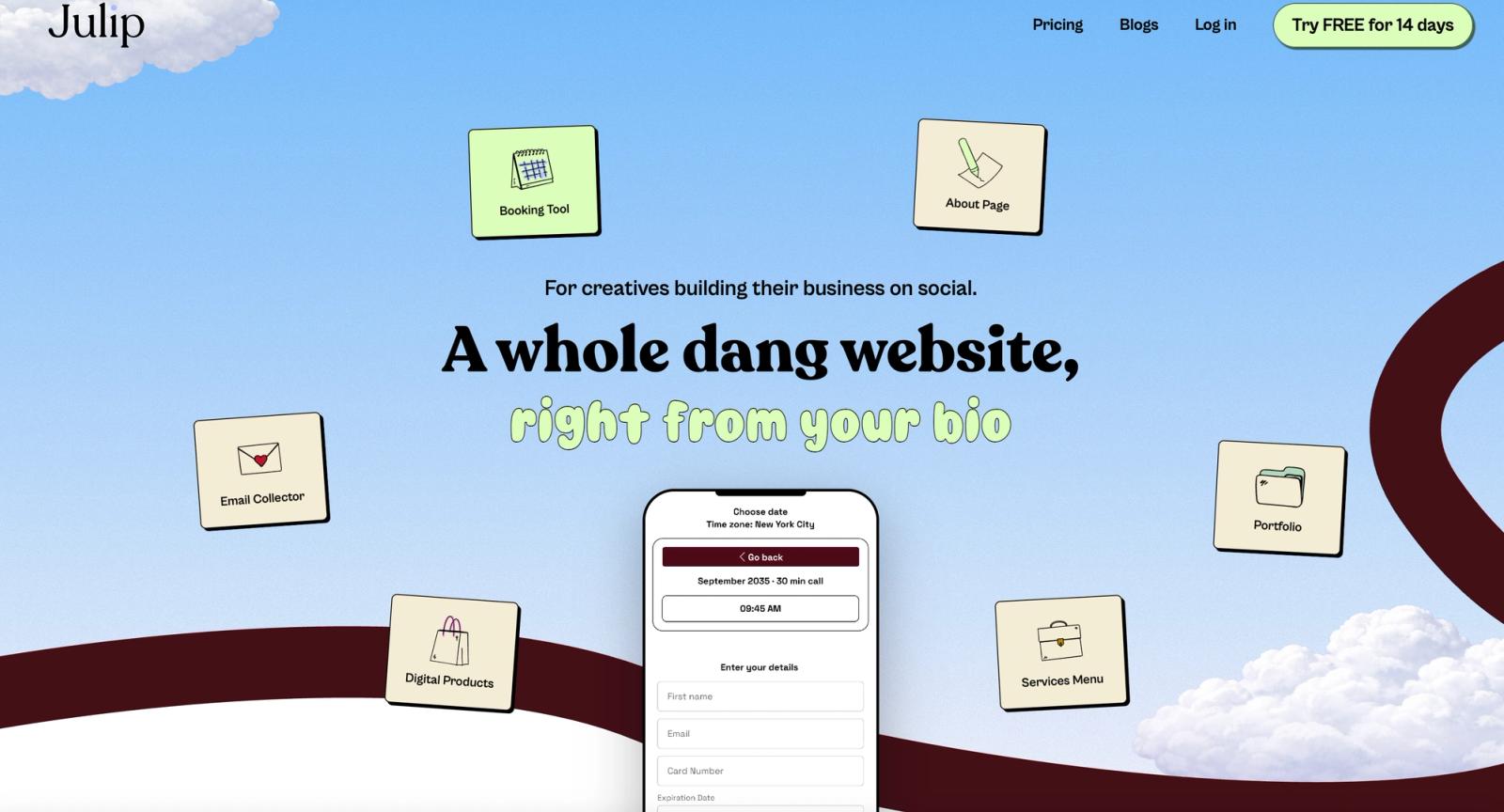
Julip is our top choice for freelancers who want to launch a professional online presence quickly and keep their business tools in one place.
Julip provides you with a customisable website-in-bio that can serve as your primary company website instead of requiring you to create and manage a conventional multi-page website. Your services, prices, portfolio, testimonials, About page, social media links, FAQs, freebies, digital goods, and reservation options can all be included.
That combination can be particularly helpful for independent contractors. You may give a potential client a single location to learn about your service, review your offerings, schedule a call, and make a payment rather than sending them through many tools.
Key features for freelancers
- Services and checkout: Showcase your service offerings and take Stripe payments.
- Booking: Allow prospective customers to schedule paid or free calls without the need for an additional scheduling tool.
- Digital goods: Offer courses, templates, manuals, and other digital materials.
- Testimonials: Highlight client successes and social proof.
- Email list growth: Grow your email list by collecting subscribers and providing freebies.
- Personalized branding: Tailor your page to reflect your brand.
- Portfolio: Display pertinent work, content, or client outcomes in your portfolio.
- Mobile-friendly design: Your website is made to function effortlessly on both desktop and mobile devices.
Currently, Julip offers a 14-day free trial. The monthly cost is $19 when billed annually or $25 when billed monthly.
Best for: Freelance creators, consultants, designers, writers, and other service providers who want a simple website that can also support bookings, payments, and digital products.
2. Squarespace: Best for Polished Website Design
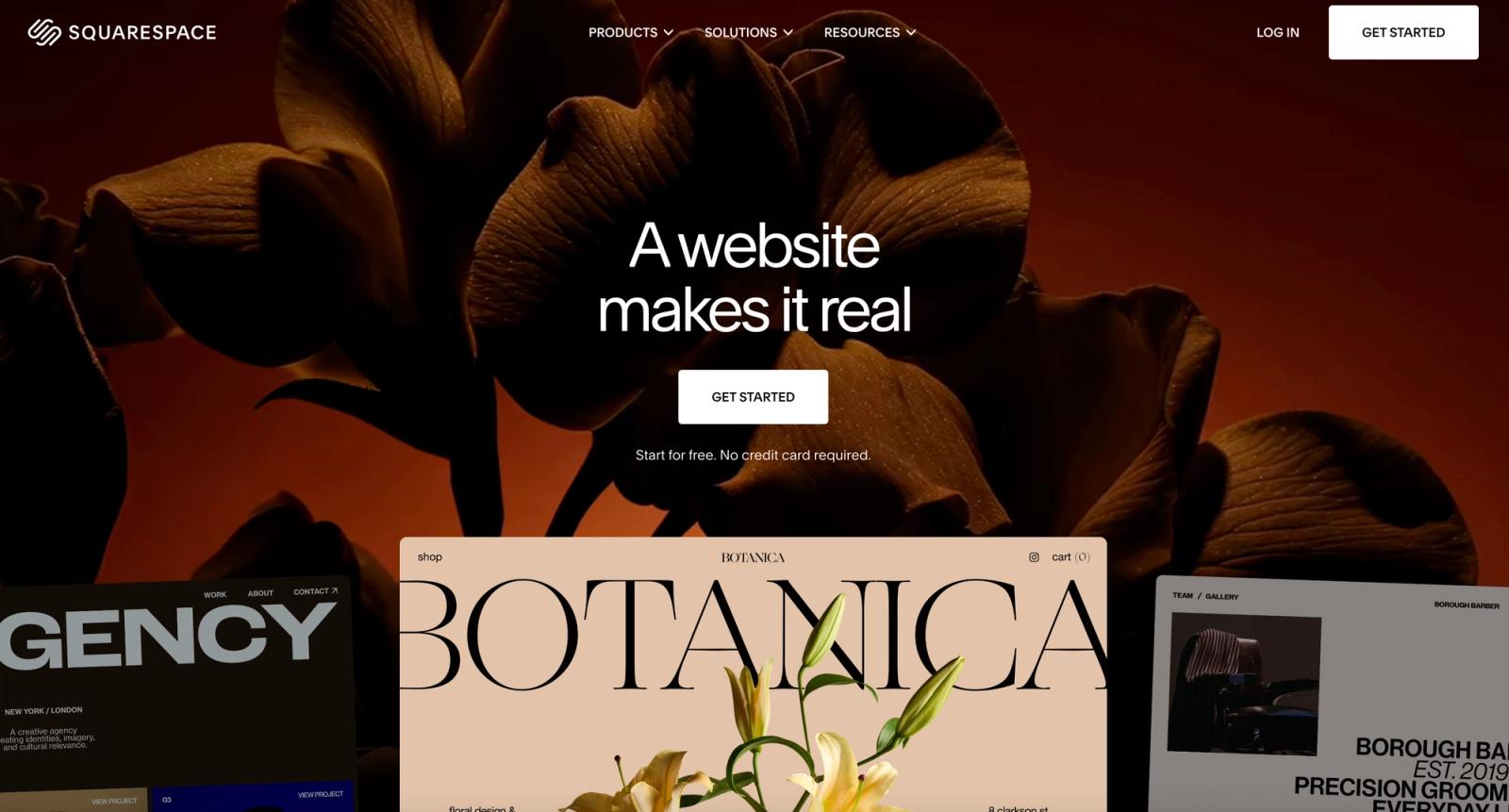
Freelancers who want a traditional website with a strong visual focus often use Squarespace. Its expertly crafted templates enable the creation of a polished website without requiring a high level of technical expertise.
Squarespace may be used to develop pages for your services, an About section, testimonials, a blog, contact details, and more for a freelance business. Scheduling and other business functionality can also be added.
The main advantage is presentation. Squarespace is something to think about if a sophisticated visual identity is a key component of your freelance brand.
Best for: Freelancers who prioritize design and want a conventional multi-page website.
3. Wix: Best for Flexibility
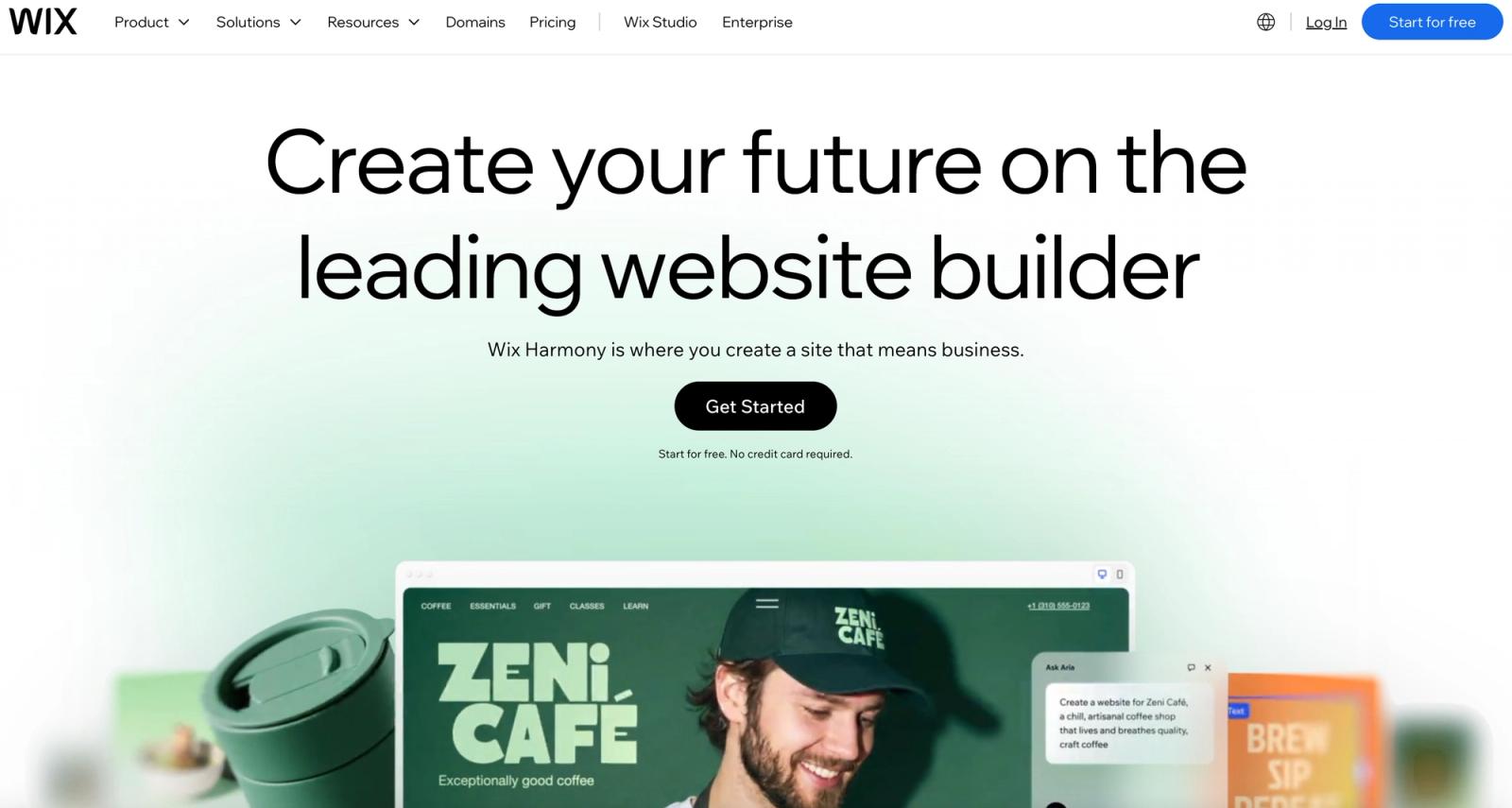
Another excellent choice for independent contractors seeking a drag-and-drop website builder with lots of customization choices is Wix.
The platform's app ecosystem lets you add more features as your firm expands, and it provides templates and business features tailored to various professional types. Wix's own 2026 freelancer guide highlights features and use cases ranging from basic portfolio websites to courses and broader business growth.
The drawback is that the platform may appear more complex than a specialist freelancer solution due to its abundance of alternatives.
Best for: Freelancers who want extensive design flexibility and a large selection of website features.
4. Kajabi: Best for Courses and Memberships
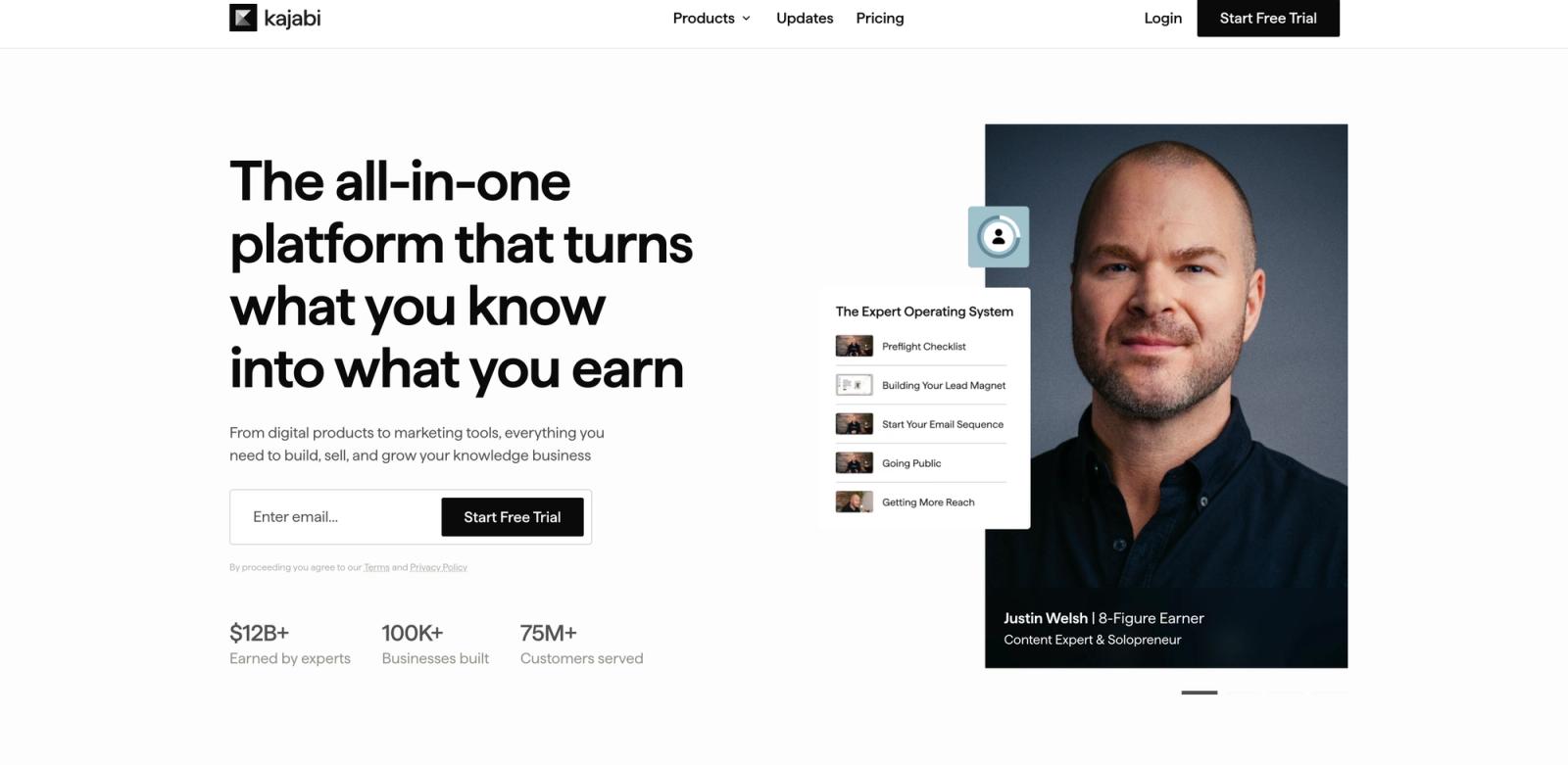
Kajabi is especially useful if your freelancing business is growing beyond one-on-one client work because it was designed with knowledge enterprises in mind.
Kajabi places a lot of emphasis on courses, subscriptions, communities, funnels, and digital products in addition to website functionality. Because of this, it appeals to seasoned independent contractors who wish to expand their education-based business.
However, that additional functionality is more costly and complicated than a lightweight website builder.
Best for: Established freelancers selling courses, memberships, group programs, or other digital offers.
5. WordPress: Best for Maximum Control
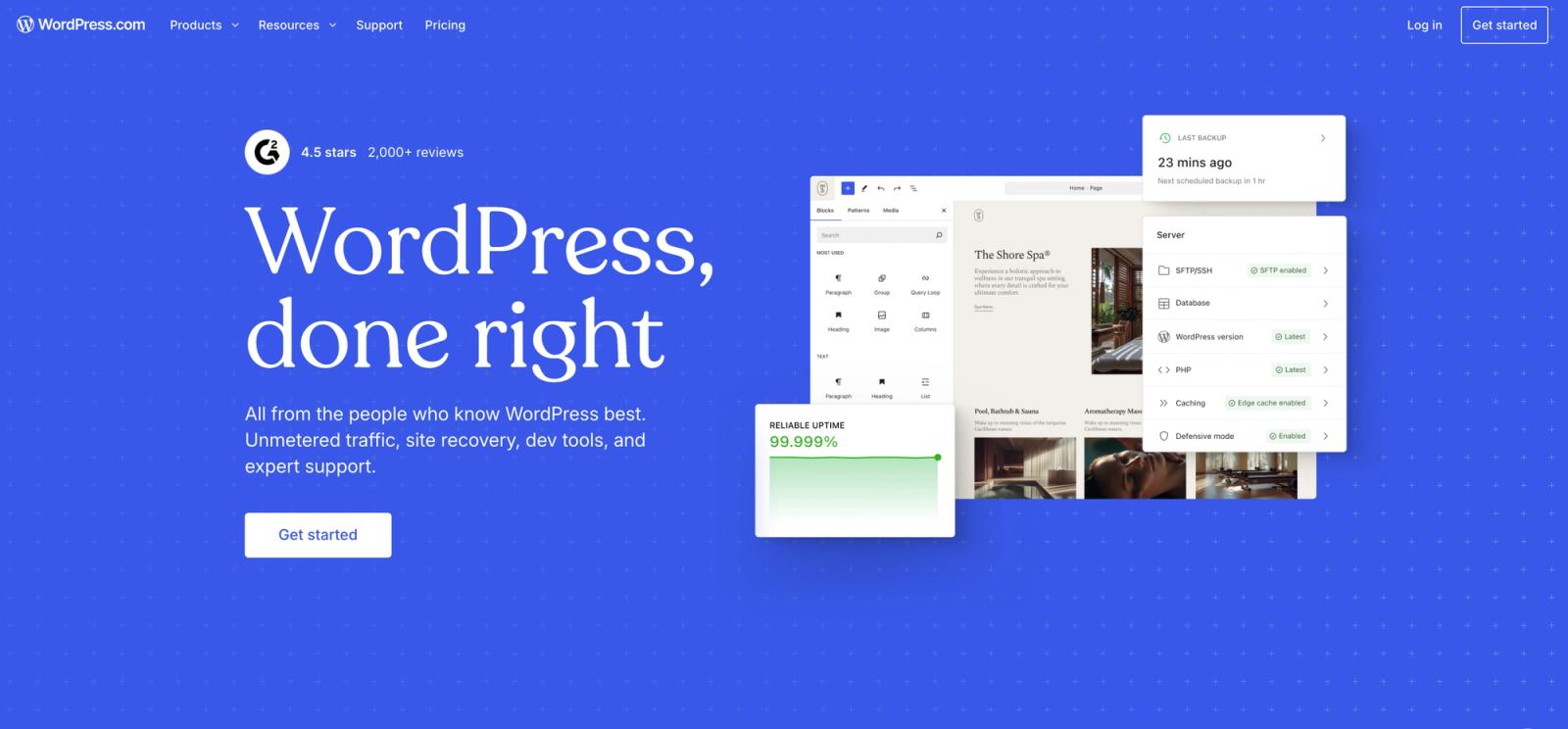
WordPress continues to be one of the most flexible options for building a freelancing website. Because you may choose your hosting provider, theme, plugins, and integrations, you have a lot of control over how your website works.
This flexibility is particularly useful if SEO and content marketing play a major role in your growth strategy. Booking systems, payment tools, email marketing interfaces, training platforms, and other features can be added with plugins and third-party services.
The disadvantage is that WordPress requires more setup and ongoing maintenance than hosted solutions.
Best for: Freelancers who want extensive customization, SEO control, and long-term scalability.
6. Showit: Best for Creative Branding
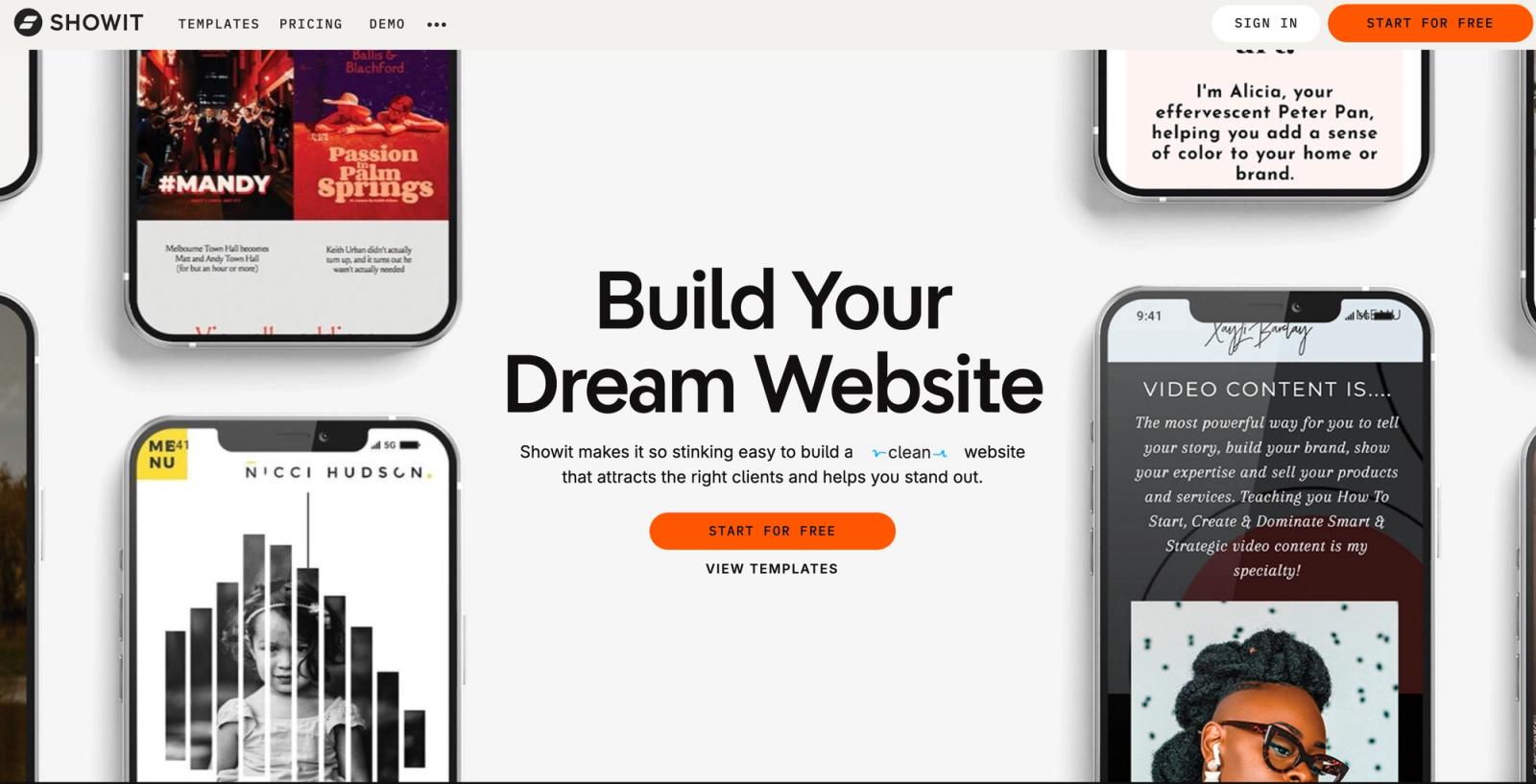
Showit is something you should consider if visual branding is one of the most important components of your freelance business.
It allows you to create highly customized layouts by giving you a lot of design freedom rather than relying heavily on conventional templates. It might be useful for independent contractors whose marketing heavily relies on their personal brand.
You may need additional tools for business-specific functionality like scheduling, payments, courses, or subscriptions.
Best for: Personal-brand freelancers who want highly customized visual design.
7. Carrd: Best for Simple Freelancer Landing Pages
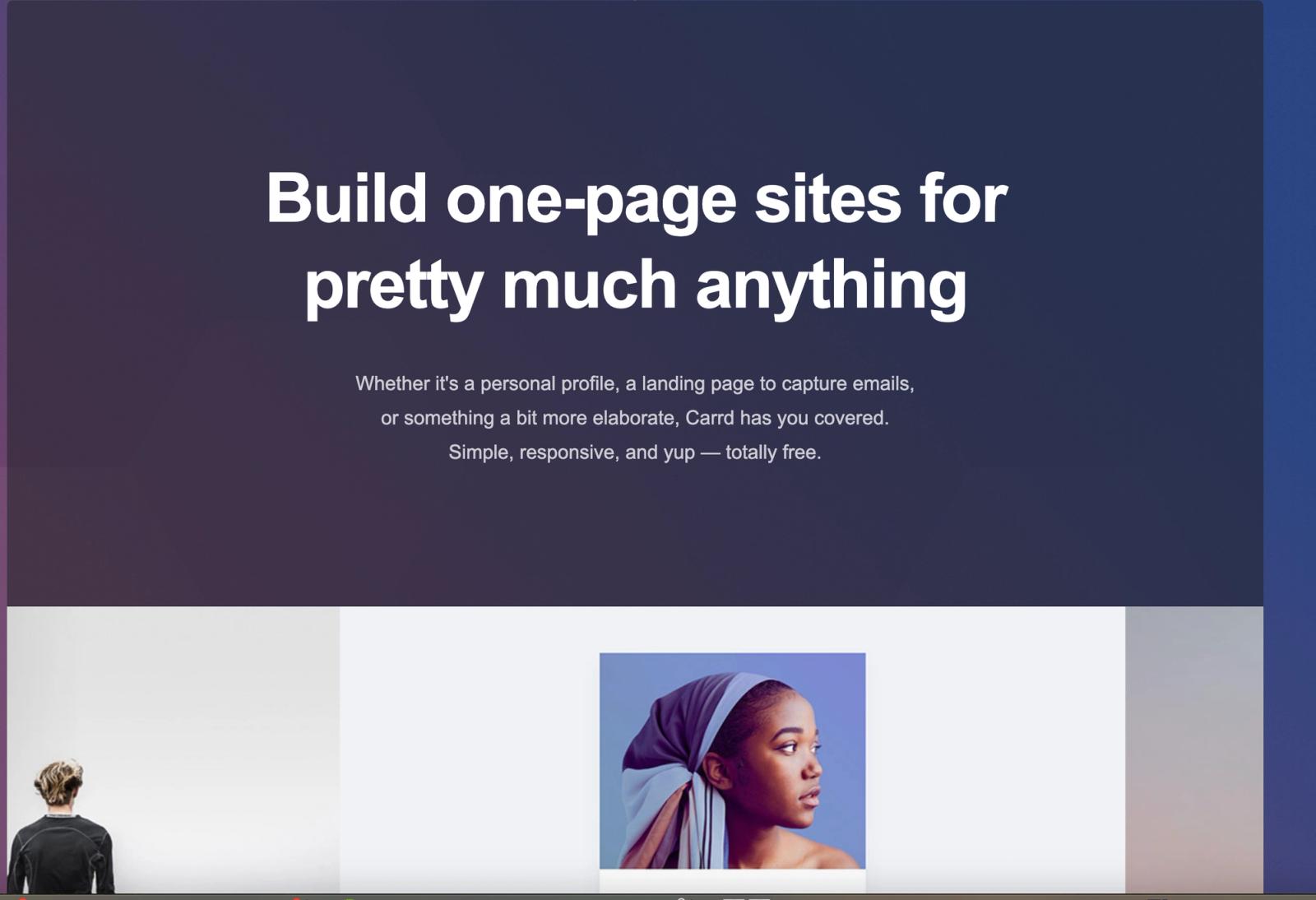
Carrd employs a different approach than WordPress and Kajabi. It is primarily designed for simple, responsive one-page websites.
For a freelancer who simply needs a landing page with a brief bio, an offer description, social media links, and a call to action, such simplicity may be helpful.
The obvious disadvantage is that if you need more sophisticated functionality, you will most likely need to integrate more tools.
Best for: New freelancers who need an inexpensive, straightforward landing page.
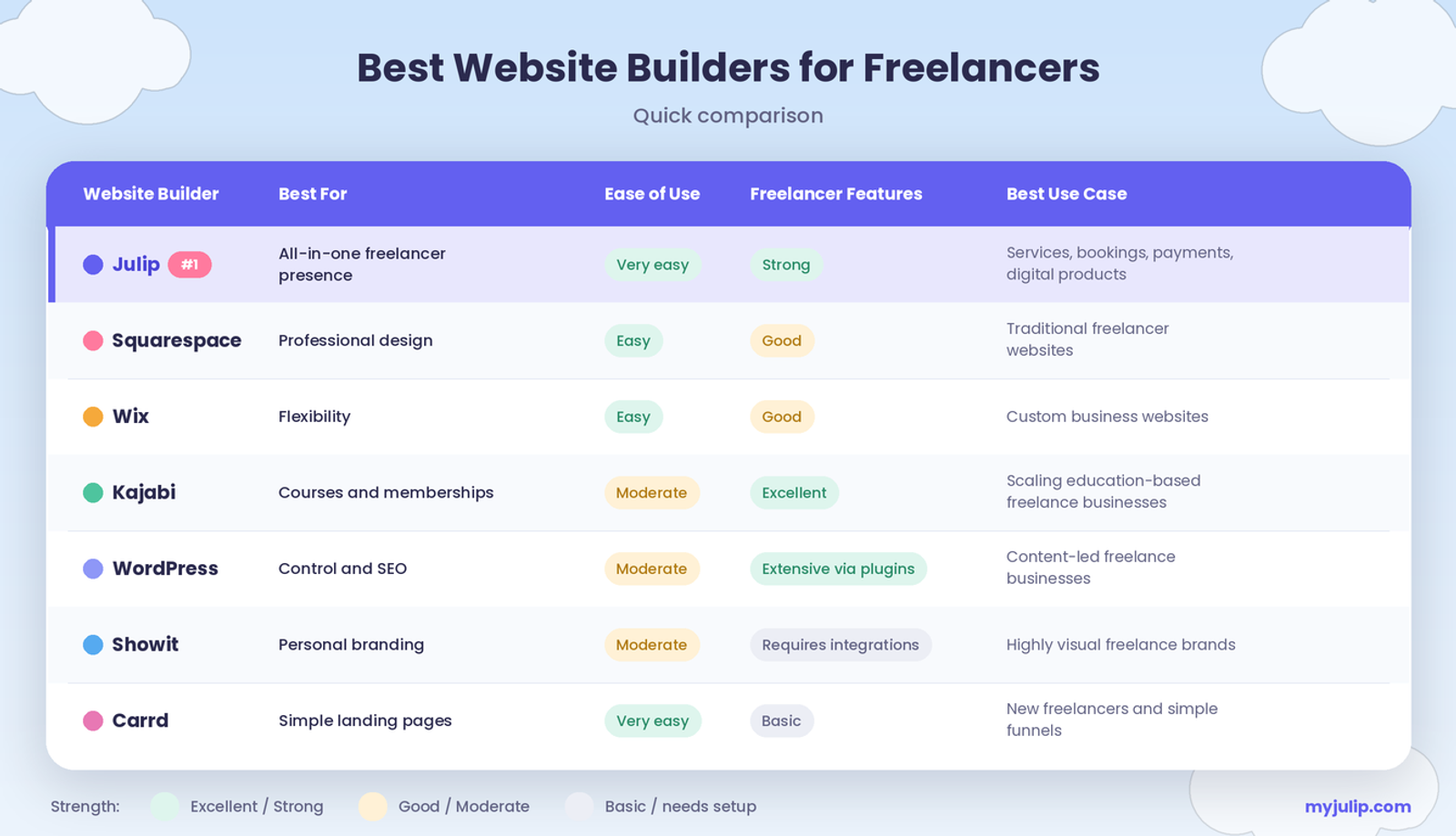
Best Website Builders for Freelancers: Quick Comparison
How to Choose the Best Website Builder for Your Freelance Business
The best website builder for coaching business depends on what you actually need your website to accomplish.
Choose Julip if you want simplicity
Julip is an appealing choice if your top goal is to launch your freelance business online without having to deal with hosting, complex website settings, or a variety of different tools.
One branded location can contain your services, social proof, booking links, payments, digital goods, and other crucial information.
Choose Squarespace if design is your priority
Squarespace makes sense when you want a traditional, polished website and don't mind managing a more conventional website platform.
Choose Wix if you want customization
If you want access to a wide variety of apps and features and want to have greater influence over the layout, Wix is a wonderful choice.
Choose Kajabi if you're building an education business
Kajabi's more extensive ecosystem can be worth the price if your long-term strategy calls for classes, subscriptions, communities, and automated marketing funnels.
Choose WordPress if SEO and scalability matter most
For independent contractors who are at ease with a more technical setup and desire complete control over their content, SEO, integrations, and website architecture, WordPress is the best option.
What Should a Freelancer Website Include?
Make sure the best website builder for coaching business addresses the queries a prospective customer has before making a reservation, regardless of the builder you select.
At the very least, think about adding:
- A clear headline explaining who you help and what result you provide.
- Your services with enough information for visitors to understand the offer.
- A compelling call to action, such as "Book a Discovery Call."
- Use your "About" section to build rapport and credibility.
- Testimonials or customer outcomes are examples of social proof.
- Pricing or package information, when appropriate.
- Frequently asked questions to overcome common objections.
- A simple booking process so interested prospects can take the next step.
- Payment options if clients can purchase directly online.
- Links to your social media accounts so people can learn more about your company.
Final Verdict: What Is the Best Website Builder for Freelancers?
There isn't one perfect platform for every freelancer. A freelancer building a large course and membership business has different needs from someone focused on one-on-one client work.
Still, Julip is our first choice if you want to have a polished online presence that is easy to manage and centered upon services, reservations, payments, digital goods, and personal branding.
Conventional platforms like WordPress, Squarespace, and Wix are still great options for independent contractors who require more customized or traditional websites. Kajabi is especially appealing to firms that focus on courses and memberships.
However, the most feature-rich website isn't always the greatest for freelancers. It's the one that makes it simple for a prospective customer to comprehend your offer, put their belief in you, and proceed.
And Julip is exceptional in this regard as the best website builder for coaching business.