The fastest way to add 'Build a Website in a Day' to your services

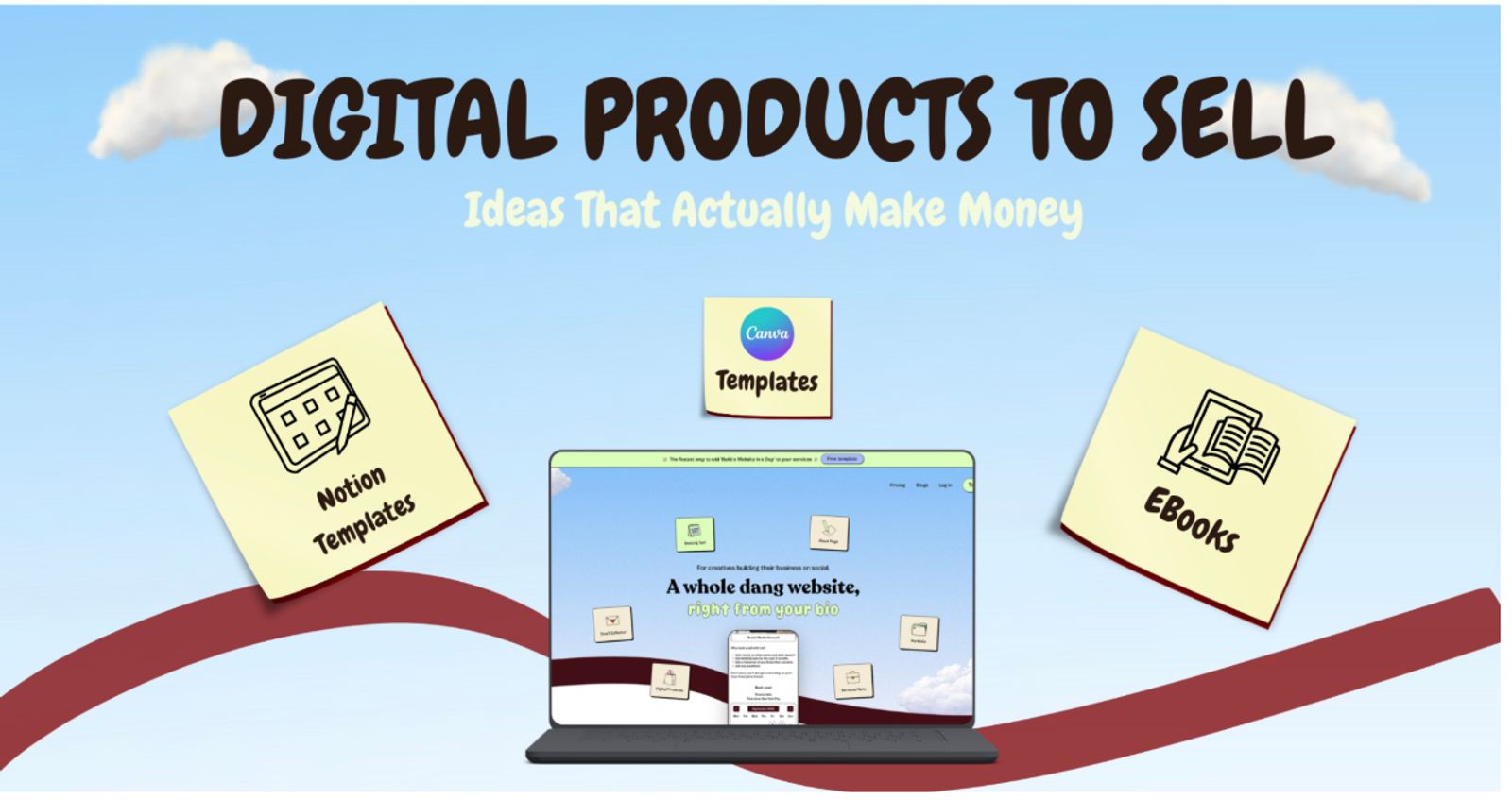
Key Takeaways:
- Digital products are highly profitable: Because there’s no inventory, shipping, or production cost, you keep nearly all of your profit on every sale
- Solve a specific problem: The most successful products don’t try to do everything; they fix one clear, narrow pain point for a specific audience
- Validate before you build: Avoid wasting time by confirming there’s actual demand for your product through polling or pre-selling before you fully create it
- Keep the buying process frictionless: Use a tool that allows your audience to find, purchase, and download your product in just a few taps
- Focus on where you are already reachable: You don't need a massive audience to start; you just need to connect with the people who already know you and trust your expertise
You’ve probably scrolled past those posts where creators talk about earning passive income from a simple template or a guide while they sleep. Sure, it sounds great, but a part of you stays skeptical, wondering if it’s actually real or if the internet is just completely saturated.
There’s also the fact that you don’t have a warehouse full of stock, a massive social media following, or a business idea you feel confident betting on. That middle ground between feeling like you should sell something and actually knowing what to build (and how to do it) is exactly where most people get stuck.
Well, this guide clears that hurdle by covering the best digital products to sell that actually gain traction. Here, you’ll learn who each product fits and get a clear, step-by-step path for how to make money selling digital products even if you are starting from scratch without a huge audience or any upfront budget.
Let’s begin!
Can You Actually Make Money Selling Digital Products?

Yes, you absolutely can.
The math behind this model is incredibly straightforward because you’re not dealing with the usual headaches of physical retail. Just think about it; you don't have to worry about manufacturing costs, keeping shelves stocked, or paying for shipping labels. You create a file once, and you can sell that exact same file a thousand times without adding a single minute of extra labor.
It’s one of the few ways to decouple your income from the time you spend working, which gives you profit margins that service-based work simply can't touch.
Of course, the answer to “can you make money selling digital products” relies on more than just having a file to upload. After all, success comes down to pinpointing a specific problem that a group of people actually wants to solve. Most people who struggle to get sales aren't failing because their product is bad; rather, they’re failing because they haven't figured out where their audience hangs out or how to position the product as a solution to that problem.
Get those two pieces right, and you're already ahead of the pack.
What Makes a Digital Product Worth Selling
Before you start building, use this quick checklist to see if your idea has actual legs in the market.
- Solve a specific headache. The best-selling items fix one clear, narrow pain for a very specific person. A Notion budget tracker for freelancers will always outsell a generic “productivity bundle”
- Focus on infinite scale. A true digital product doesn't need your time every time someone hits buy. If you have to do custom work for every single order, you’re selling a service, not a product
- Target a reachable audience. You need to know exactly who wants your work and where they hang out online. Can’t find them? Then your creation stays a hobby instead of a business
- Price based on the outcome. Your buyers pay for the time you help them save or the result they get, not for the hours you spent clicking away at your computer. So charge based on the value you deliver to their life or business
- Prioritize a frictionless experience. If it’s hard to buy, people will just leave. The road from seeing your product to having it downloaded on their device should only take a couple of taps
Keep these five points in mind, and you’ll naturally filter out the ideas that don’t stand a chance while landing on the ones that actually convert.
Best Digital Products to Sell (And Who Each One is For)
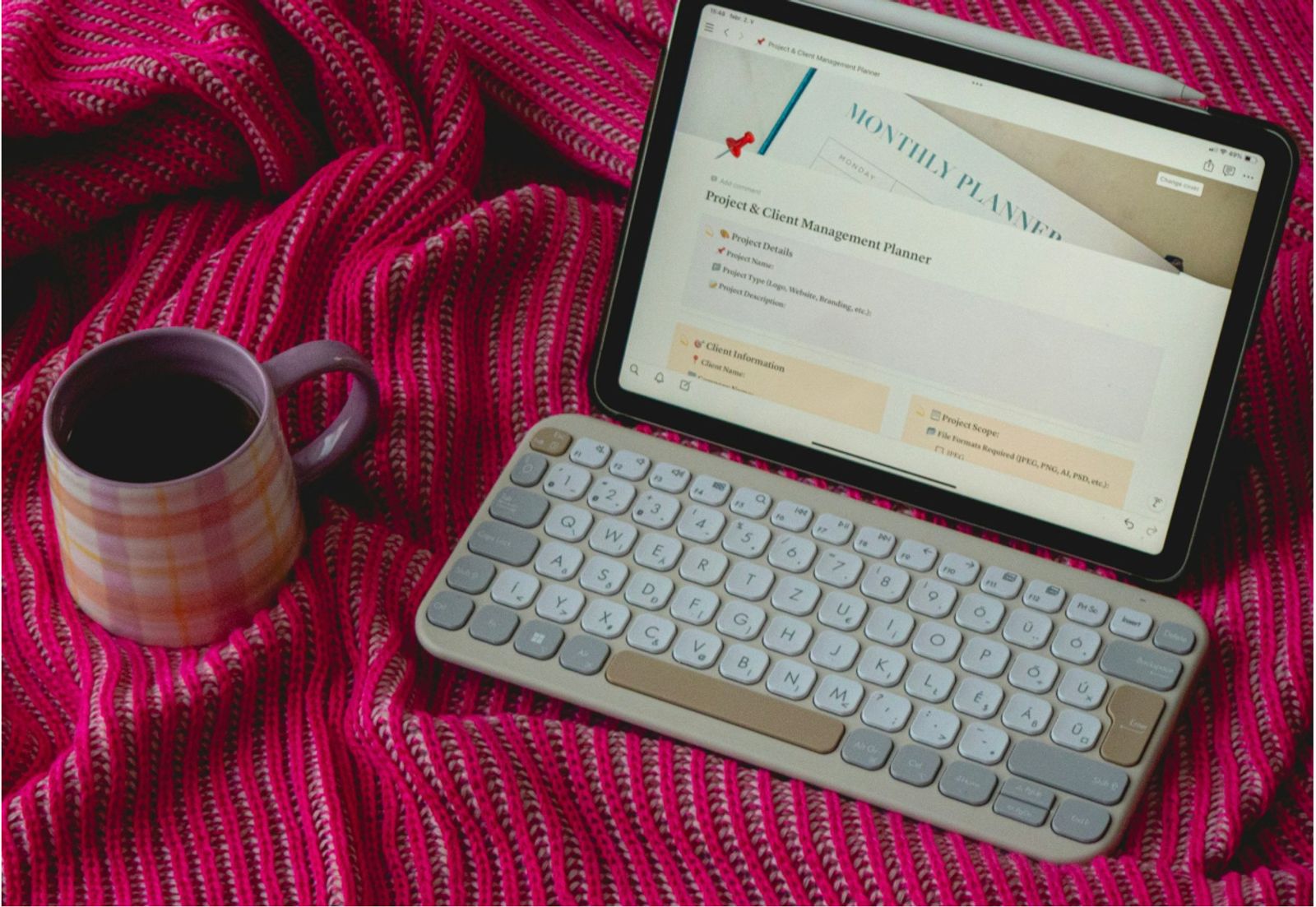
Now, here are the digital products to sell that consistently work, with notes on who each one suits and why it sells.
Note: The pricing ranges below are general benchmarks; please research your specific niche to verify current market rates, as these figures are not fixed.
1. Templates (Notion, Canva, spreadsheets, email/swipe files): These are reusable frameworks that buyers can plug into immediately to get organized.
- Best for: Creators, freelancers, and operators who use repeatable systems
- Why it sells: It offers instant time savings for the buyer
- Pricing guidance: $10–$50
2. Presets and filters (Lightroom, video LUTs): These tools provide a one-tap aesthetic for photos and videos.
- Best for: Photographers and content creators who want a signature look
- Why it sells: It simplifies professional-level editing for non-experts
- Pricing guidance: $5–$30
3. Ebooks and guides: This is your packaged expertise on a specific, narrow topic.
- Best for: Anyone with hard-won knowledge in a particular niche
- Why it sells: People pay for a direct, structured solution to a problem
- Pricing guidance: $10–$100

4. Online courses and workshops: These offer structured, outcome-driven learning experiences.
- Best for: Educators, coaches, and experienced practitioners
- Why it sells: It transforms a vague interest into a tangible skill
- Pricing guidance: $50–$500+
5. Digital planners and printables: These are dated or undated files like trackers and worksheets
- Best for: People in organization, wellness, parenting, or study niches
- Why it sells: It helps users manage their daily lives with better focus
- Pricing guidance: $5–$25
6. Stock content (photos, video b-roll, UGC clips, music): These are licensable raw assets ready for commercial use
- Best for: Photographers, videographers, and UGC creators
- Why it sells: Businesses and other creators need high-quality content quickly
- Pricing guidance: $5–$50 per asset
7. Design assets (fonts, icons, mockups, social templates): These serve as the building blocks for other creators to design their own brand projects.
- Best for: Designers and illustrators
- Why it sells: It cuts down the time spent starting from a blank screen
- Pricing guidance: $10–$60
8. Prompt packs and AI resources: These are curated, tested prompts and workflows designed for a specific use case
- Best for: Anyone who has built an efficient AI workflow worth packaging
- Why it sells: Users want to get better results from AI without the trial and error
- Pricing guidance: $10–$50

9. Memberships and paid communities/newsletters: This is recurring access to exclusive content or a private community.
- Best for: Creators who have an engaged following and ongoing value to deliver
- Why it sells: It creates a sense of belonging and consistent learning
- Pricing guidance: $5–$50 per month
10. Audio products (sample packs, meditations, podcasts-as-product): These are downloadable or gated audio files.
- Best for: Musicians, producers, and wellness creators
- Why it sells: It gives listeners tools for their own creative or mental health work
- Pricing guidance: $10–$100
The right pick for you is the one that matches your existing skill and an audience you can already reach. Once you have that match, it’s time to move from the drawing board to actually putting money in your pocket.
How to Make Money Selling Digital Products: Step by Step

Learning how to make money selling digital products is much easier when you follow a clear path rather than guessing your way through the process.
Below are the six practical steps to get you from an initial idea to your first sale:
1. Pick a product that fits your existing skills. Start by looking at tasks you already do well or questions your audience keeps asking you. If you already have a process that saves you time, there’s a high chance other people want to pay for that same shortcut
2. Validate your idea before you start building. Make sure people actually want what you’re planning by polling your followers, looking at top-sellers in your space, or even pre-selling the idea. You want to avoid the common mistake of spending weeks on a project only to find out there’s no demand
3. Build the minimum sellable version. Focus on creating a simple, genuinely useful first version that solves the core problem. You can always add more bells and whistles later once you start getting feedback from actual buyers
4. Price your work based on the outcome. Anchoring your price to the result or the amount of time saved is the smartest way to value your product. Skip the complicated tiers for now and offer one clear, confident price point
5. Set up a smooth, simple checkout. You need a reliable place to host your file, collect payments, and get the product to your customer instantly. This is where a tool like Julip comes in, as it handles the storefront and payment processing so you can focus on the product
6. Drive your traffic to one home base. Most sales happen because you consistently point your audience from social media, email, or search to your shop. Keep it simple by sending them to one clear, direct link instead of forcing them to click around your entire internet presence
How to Sell Your Digital Products with Julip
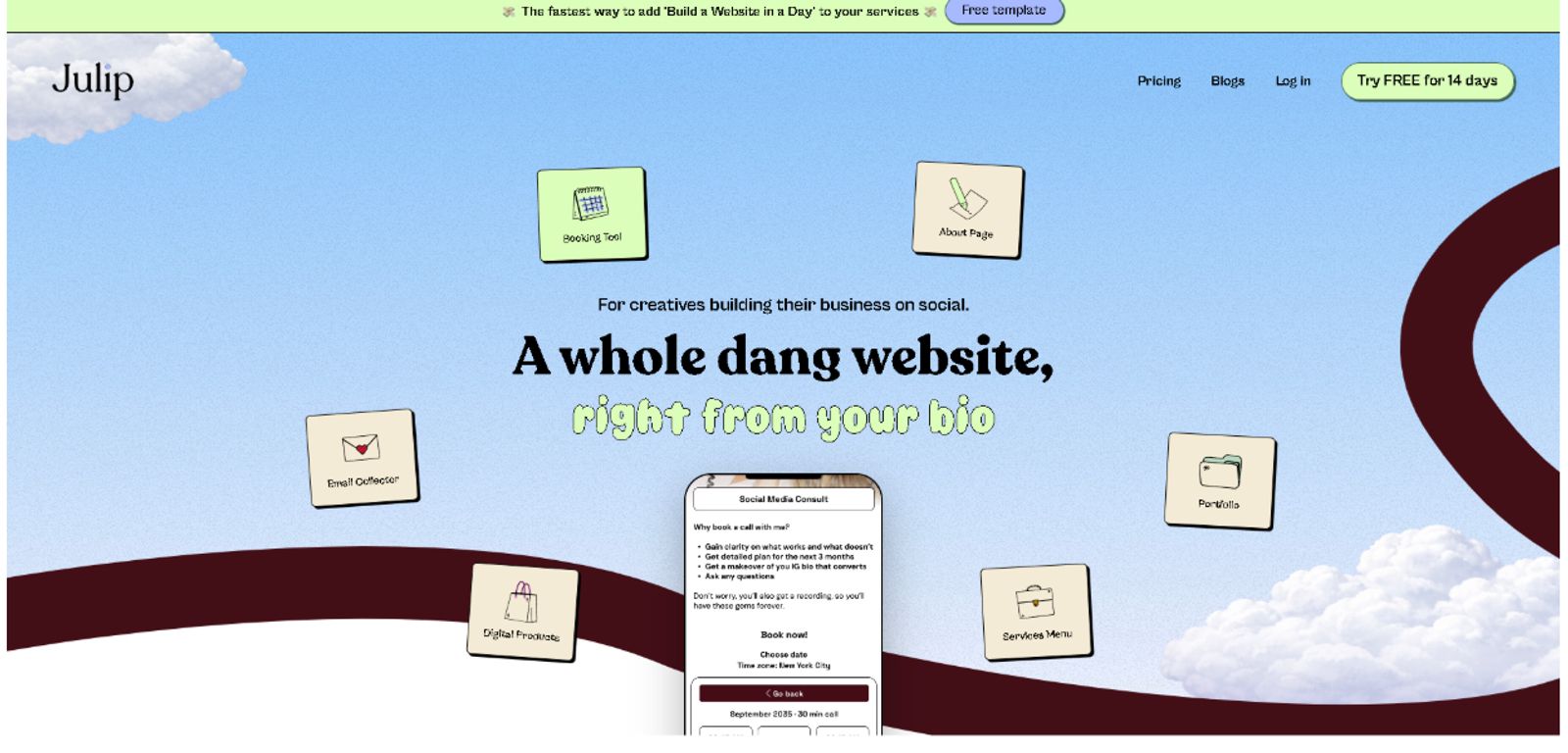
You have the product idea and a price tag. The only missing piece now is a place to actually process the sale. When choosing a platform, keep in mind that most creators don’t need a bloated, complex website but a clean page that takes payments and delivers files instantly from their bio link.
Julip is a visual website-in-bio built specifically for creators and freelancers who find their buyers on social platforms. You can sell digital products like guides, templates, presets, and courses directly from your page. And because you connect your own Stripe account, you keep 100% of your sales with no cuts taken by the platform.
Everything your audience needs lives right at the link in your bio.
- A visual storefront featuring your product with a clear image, a short description, and your price
- Your Stripe account connected so you can accept payments directly from customers
- A freebie section to collect email addresses and warm up potential buyers before they commit to a purchase
- A dedicated booking link if you want to offer calls or services alongside your downloadable products
- An about section and space for testimonials to build trust for first-time visitors who are checking out your work
You don't need to mess with coding, buy a custom domain, or worry about hosting fees. Most creators who use Julip have their shop listed and ready to take orders in well under an hour. Better yet, you can test it out with a 14-day free trial that doesn't even require a credit card to get started!
FAQ
Can you make money selling digital products?
Yes. Digital products carry almost no per-sale cost, no inventory, and no shipping, so margins are high and you can sell the same product repeatedly. The deciding factor is not the product itself but whether it solves a real problem for an audience you can actually reach.
What digital products are the most profitable to sell?
The most profitable products are the ones with high perceived value and low ongoing effort, such as templates, presets, courses, and memberships. Profitability comes from matching the product to a specific audience and a clear outcome, not from the format alone.
How do I start selling digital products with no audience or money?
Start with a product built from a skill you already have and validate it with a small group before building. You don’t need paid tools or a website to begin. A bio link tool like Julip lets you list a product, take Stripe payments, and keep all your sales from one page, so your only real cost is the time to create the product.
Where is the best place to sell digital products?
The best place depends on where your buyers find you. If they come from Instagram, TikTok, or other social platforms, a bio link tool like Julip is the most practical option because your product is one tap from your profile, payments run through Stripe, and Julip takes no cut. Standalone marketplaces and full website builders work too, but they add fees, friction, or maintenance.
Are digital products worth selling in a crowded market?
Yes, if you go narrow. A specific product for a specific audience outperforms a broad one, even in a busy category. “Crowded” usually means “proven demand,” and a sharply positioned product wins attention that generic ones lose.
Conclusion

The people who consistently make money from digital products aren't necessarily the ones with the largest followings; they’re the ones who pick a specific problem to solve and make it effortless for buyers to take action.
The path from your initial idea to your first sale is much shorter than it looks when you have a simple, reliable place to showcase your work.
Try Julip free for 14 days, no credit card required, and get your first digital product live and selling directly from your bio!