The fastest way to add 'Build a Website in a Day' to your services

If you sell from your link in bio, the choice usually comes down to Beacons or Stan Store. Beacons is free to start and built for service providers who monetize an audience through brand deals, tips, and digital products. Stan Store is built for people selling courses, coaching, or memberships and charges 0% on sales, starting at around $29 a month. Julip is a smaller, newer option built for freelancers and influencers who need a portfolio, booking, and payments in one place for $19 a month with no transaction fees.
None of the three is the "best" platform outright. Each one was built for a different kind of seller, and picking the wrong one means paying for features you'll never use.
Beacons vs Stan Store vs Julip: The Quick Verdict
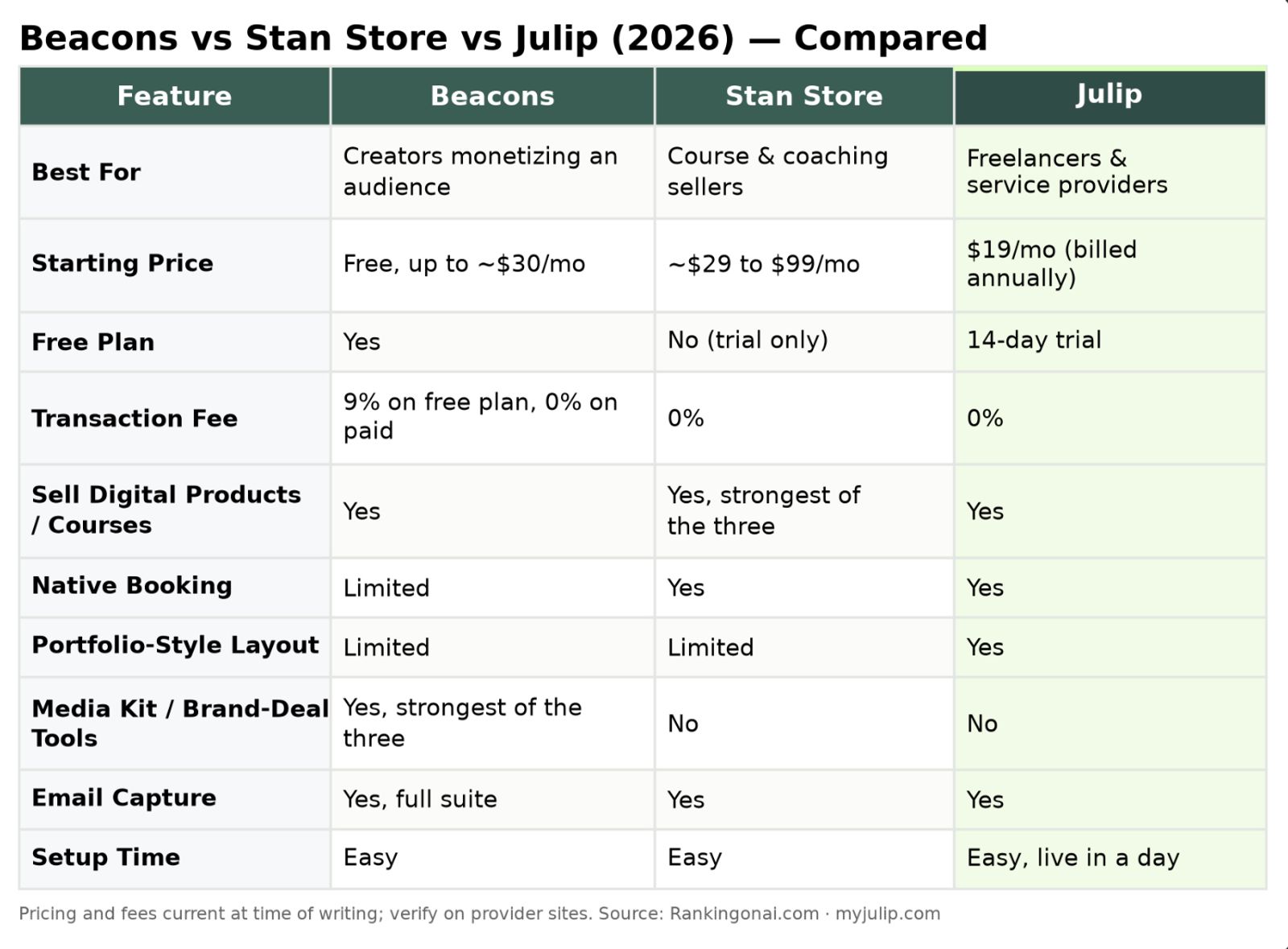
Pricing and fees change often, so check each provider's site before you commit.
If you're chasing brand deals and want to start for free, Beacons wins. If you're selling a $997 cohort course to a list of 10,000 people, Stan Store wins. If you're a designer, copywriter, or consultant who wants a page that looks like a real website and books clients directly, Julip wins.
What Is Each Tool?
Beacons
Beacons started as a link-in-bio tool and grew into a broader creator monetization platform. It now includes a store, tip jar, media kit builder, email marketing, and an AI assistant that helps draft brand pitches. It's aimed at influencers and service providers who already have an audience and want to turn that audience into income through several channels at once.
Stan Store
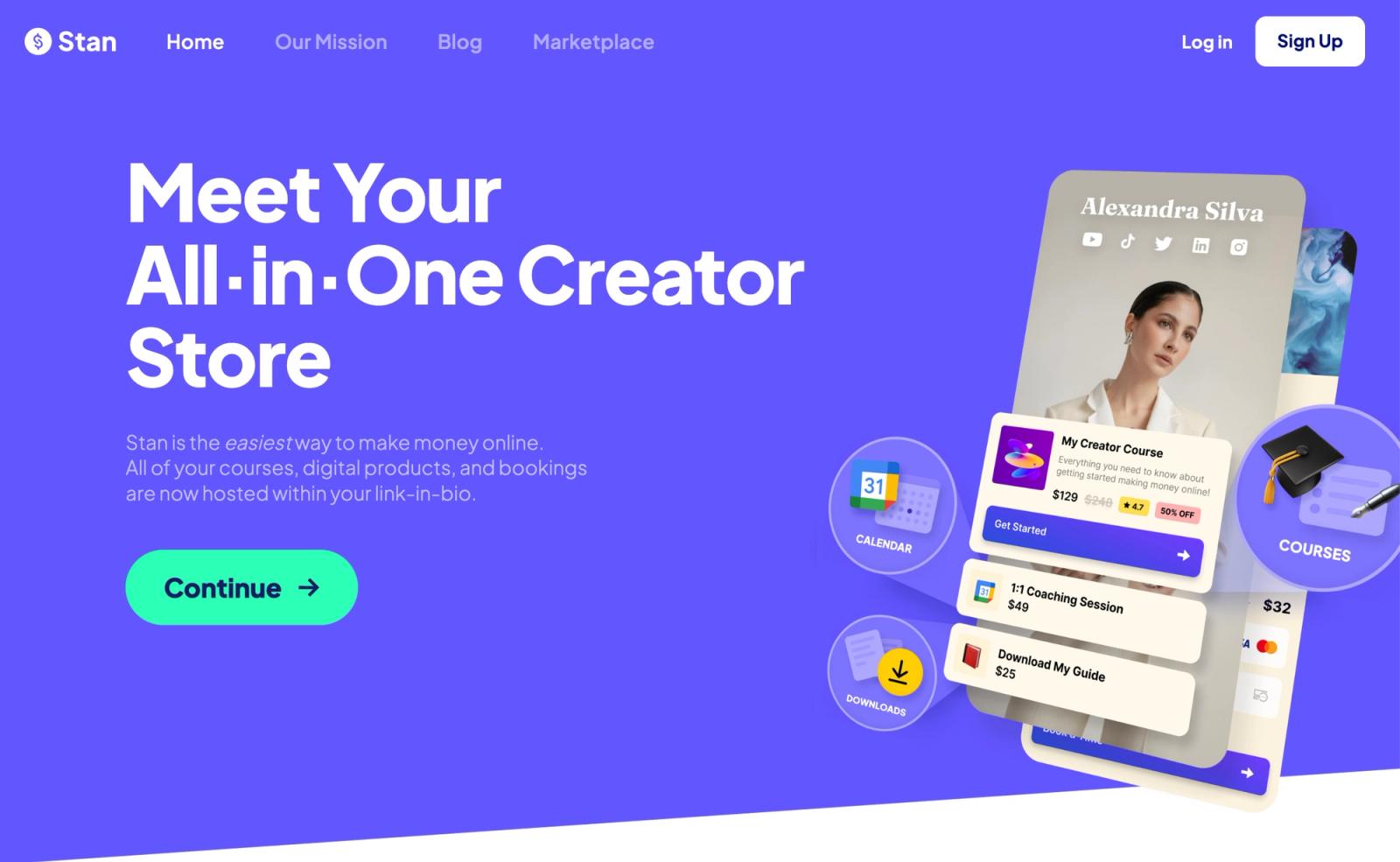
Stan Store is built almost entirely around one job: selling. Courses, coaching calls, digital downloads, and memberships go through a checkout page designed to convert. It skips most of the link-in-bio extras and focuses on getting a buyer from click to purchase in as few steps as possible. Creators with an established audience on Instagram, TikTok, or YouTube use it to turn followers into paying customers.
Julip
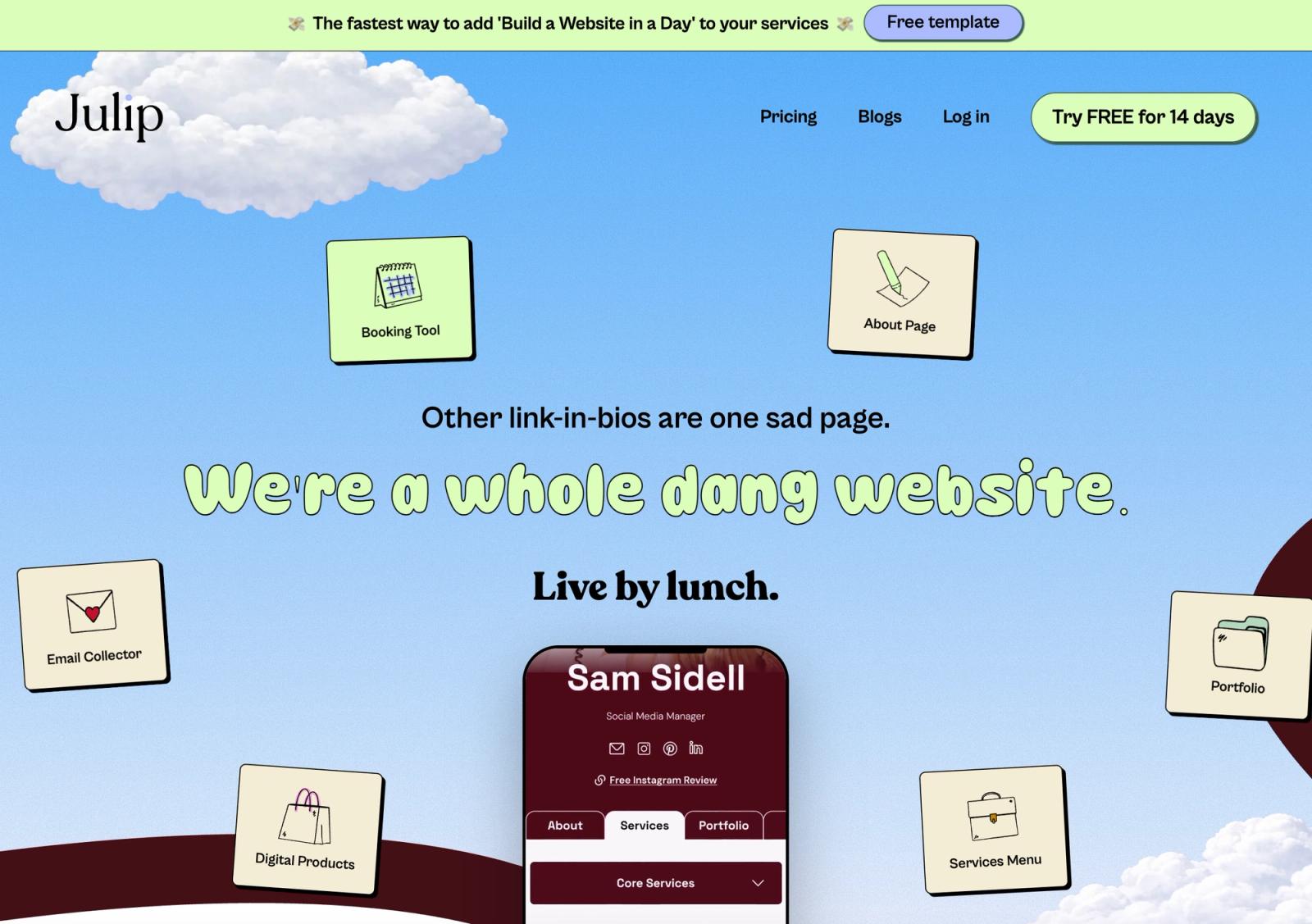
Julip is a portfolio-first platform for freelancers and service providers. Instead of a stack of links, a Julip page reads like a small website: work samples, service packages, a booking calendar, and a payment page. It's built for people who are selling their own time and skill rather than a course or a physical product, and who want their page to look like something a client would trust with a project.
Beacons Vs Stan Store: Which Is Better?
This is the comparison most people search for, and the honest answer depends on what you're selling.
Beacons is the better starting point if you have no budget yet. The free plan lets you build a page, add products, and collect tips before you've made a dollar. The tradeoff is a 9% fee on every sale until you upgrade to Creator Plus at roughly $30 a month, which drops the fee to 0%.
Stan Store charges 0% from day one, but there's no free tier, only a trial. Plans start around $29 a month and go up to $99 for higher-volume sellers who want more automation, like drip content or abandoned cart emails. For someone already earning $2,000 or more a month from courses or coaching, the flat monthly fee usually beats a percentage cut.
So: Beacons if you're starting from zero and want influencer tools alongside your store. Stan Store if selling courses or coaching is your main business and you want every sale to keep its full margin.
Pricing And Fees Compared
Beacons keeps a free plan with a 9% fee on transactions. Its paid tier, Creator Plus, runs about $30 a month and removes that fee entirely. There's no long-term contract requirement, and business owners can move between tiers as revenue changes.
Stan Store has no free plan. New users get a trial period, and paid plans run from about $29 a month for the standard tier up to $99 a month for the higher tier with more automation and multiple product types. Every paid tier is 0% on transaction fees.
Julip is $19 a month when billed annually, with a 14-day trial and 0% platform fees at every tier. There's no free-forever plan, but there's also no percentage cut waiting to eat into your first sales the way Beacons' free tier does.
If you're counting pennies before you've made a sale, Beacons' free plan costs nothing up front. If you want to avoid transaction fees without paying $29 to $99 a month, Julip is the cheaper 0%-fee option. It's worth saying plainly: 0% fees aren't unique to Julip. Stan Store also charges nothing per transaction. Julip's edge is price, not fee structure.
Run the math on a $50 product. On Beacons' free plan, a creator keeps $45.50 after the 9% cut. On Beacons Creator Plus, Stan Store, or Julip, that same sale keeps the full $50, minus whatever the monthly subscription costs that day. At low sales volume, Beacons' free plan can still come out ahead because there's no fixed cost. Once monthly sales pass roughly $300 to $400, the math flips, and a flat-fee plan starts saving money.
Selling: Digital Products, Courses, And Bookings
Stan Store is the strongest of the three for course sales. It was built for checkout, and features like order bumps, upsells, and payment plans are native to the platform. If your business is a single flagship course or a coaching program with tiered pricing, Stan Store's checkout flow is built for exactly that.
Beacons covers a wider spread: digital products, memberships, tip jars, and brand deal management all live under one roof. It's less specialized than Stan Store for course sales specifically, but it covers more of a creator's income streams in one place, which matters if your revenue comes from five different sources instead of one product.
Julip focuses on digital products alongside native booking for services. A photographer can sell a preset pack and book a shoot from the same page. A consultant can sell a template and schedule a discovery call without sending a client to a separate booking tool. That combination of product plus service, on one page, is where Julip is built to compete.
The practical difference shows up in how many tools a seller needs to stitch together. A Stan Store seller running a course usually still needs a separate calendar app for office hours. A Beacons user selling both a digital product and taking brand meetings often adds a scheduling link on top of the page. Julip tries to fold the booking step into the same flow as the sale, so a client can book a call, pay a deposit, and see past work without leaving the page.
Design, Portfolio, And How Professional It Looks

This is where the three platforms look most different from each other.
Julip is portfolio-first. Pages are built to show finished work, client logos, and case studies alongside services and pricing, closer to a small agency website than a link-in-bio page. For a freelancer pitching a $3,000 project, that matters. A client deciding between two designers is going to judge both by how their page looks before reading a single word of copy.
Stan Store is checkout-first. The design exists to move a visitor toward a buy button, not to showcase a body of work. That's the right priority for a course sale, but it's a limited layout if you need to show a portfolio.
Beacons sits closer to a customizable link page than a full website. You can rearrange blocks and add branding, but it still reads as a link-in-bio page rather than a standalone site, which fits its audience of creators posting content across multiple platforms.
Think about how each page would look pasted into an Instagram bio versus sent in a client proposal email. A Beacons or Stan Store link fits naturally in a bio and does its job when someone taps through from a post. A Julip page reads more like something you'd attach to a cold pitch or a proposal, because it's carrying more weight: proof of past work, pricing, and a way to book, all before a client has spoken to you directly.
Service Provider And Influencer Extras: Media Kits, Brand Deals, AI
Beacons has a real advantage here, and it's worth giving credit where it's due. The platform auto-generates a media kit from your existing social stats, which saves a service provider from building one from scratch in Canva every time a brand asks. It also includes tools for brand outreach and an AI assistant that can draft pitch emails and captions. Neither Stan Store nor Julip offers anything comparable, because neither platform is built around brand partnerships as a revenue stream.
Stan Store's roadmap leans toward selling, not brand deals, and doesn't include media kit tools.
Julip doesn't offer media kit or brand-deal tooling either. Its target user is a freelancer selling their own services directly to clients, not a creator pitching sponsors, so the gap makes sense given who each platform is built for.
If sponsorship income is a meaningful part of your business, Beacons is the only one of the three built to support it.
Audience Ownership: Email Capture And Analytics
All three platforms let you collect emails from visitors, which matters if you're building a list you can reach outside of social media algorithms.
Beacons has the fullest email suite of the three, including built-in email marketing and automation, so an influencers or a service provider can capture a lead and follow up without exporting a list to a third-party tool.
Stan Store and Julip both capture emails at checkout or booking, but neither has built out email marketing to the same depth as Beacons. Most Stan Store and Julip users export their list to a dedicated email platform like ConvertKit or Mailchimp for ongoing campaigns.
Beacons vs Julip: Which Should A Service Provider Choose?
Pick Beacons if you're building an audience-first business: content creation, brand partnerships, and a mix of products and tips. Its media kit tools and free starting tier fit that path well.
Pick Julip if you're a freelancer or service provider who needs to look credible to a client, not just an audience. A portfolio, booking calendar, and payment page in one spot solve a different problem than growing a following. Julip is also the cheaper of the two once you factor in Beacons' 9% fee on the free tier versus Julip's flat $19 a month with no cut taken.
The two rarely compete for the same buyer. A YouTuber selling merch and chasing sponsorships wants Beacons. A freelance web designer pitching retainer clients wants Julip.
Stan Store vs Julip: Which Should A Business Owner Choose?
Stan Store wins if your business is a course, coaching program, or membership sold to an existing audience of any real size. Its checkout tools, upsells, and payment plans are built specifically for that kind of sale, and nothing about Julip tries to compete on that ground.
Julip wins if you're selling your time and skill directly, project by project, and need clients to see proof of work before they book you. A copywriter, designer, or consultant with five or ten clients a month has different needs than someone selling a $497 course to a list of 5,000.
Price also separates them. Stan Store starts around $29 a month and climbs to $99. Julip is $19 a month annually. For a freelancer without a large audience yet, that gap matters.
Which One Should You Choose?
- Free start, brand deals, influencer tools: Beacons.
- Selling courses, coaching, or memberships to an audience: Stan Store.
- Freelancer or service provider who needs a portfolio, booking, and payments in one page: Julip.
If none of those describe you exactly, look at what you're actually selling first. A product sold once to many people points toward Stan Store. A skill sold repeatedly to individual clients points toward Julip. An audience you're monetizing through several small streams points toward Beacons.
It also helps to think about where your traffic actually comes from. A large Instagram or TikTok following that clicks through to buy a course fits Stan Store's checkout flow. A smaller list of warm referrals and past clients who need convincing before they book fits Julip's portfolio layout better than a straight checkout page. A mixed audience of followers, brands, and casual buyers fits Beacons, since it's built to handle all three without forcing you into one lane.
FAQs
Is Beacons better than Stan Store?
Neither is better across the board. Beacons is better for service providers who want a free starting point and brand-deal tools. Stan Store is better for anyone whose main income is course or coaching sales.
What is the difference between Beacons and Stan Store?
Beacons is a broader creator monetization platform covering products, tips, media kits, and brand outreach. Stan Store is a focused checkout tool built around selling courses, coaching, and memberships.
Does Beacons or Stan Store take a cut of your sales?
Beacons takes 9% on its free plan and 0% on its paid Creator Plus plan. Stan Store takes 0% on every paid plan, since there's no free tier.
Which is cheaper, Beacons or Stan Store?
Beacons is cheaper to start since it's free, though the 9% fee adds up once you're making regular sales. Stan Store costs more up front, from about $29 a month, but keeps 100% of every sale.
Is Julip better than Beacons or Stan Store?
Julip isn't built to replace either one. It's built for freelancers and service providers who need a portfolio and booking system, a use case neither Beacons nor Stan Store covers well.
Which is best for selling courses or coaching?
Stan Store. Its checkout, upsells, and payment plans are built specifically for that kind of sale.
Which is best for a freelancer or service business?
Julip, because of its portfolio layout, native booking, and 0% fees at $19 a month.
Which platform has a free plan?
Only Beacons. Stan Store and Julip both offer trials instead of a permanent free tier.
The Bottom Line
Beacons, Stan Store, and Julip solve three different problems. Beacons is the free, audience-first choice for service providers chasing brand deals and tips. Stan Store is the checkout-first choice for anyone selling courses or coaching at scale. Julip is the portfolio-first choice for freelancers who need to look credible to a client and book them directly from the same page.
If you're a freelancer or service provider weighing your options, Julip's 14-day trial is a low-risk way to see whether a portfolio-first setup converts better for your business than a link-in-bio page ever did.