The fastest way to add 'Build a Website in a Day' to your services

- Essential Creator Economy Tools: From your primary hub to email, content, and revenue, we break down seven essential tools for starting a creative business, such as Julip, Kit, and Canva.
- Beyond Social Media Profiles: Instagram and TikTok followers are not a business. In order for their audience to sign up for an email list, purchase goods, schedule calls, or view their work, creators must have their own website.
- A Simple System, Not a Tool Collection: A distinct niche, a single principal content channel, and a straightforward monetization stack—rather than subscribing to every creator tool on the market- are the keys to success.
Posting on social media and waiting for brands to contact you is no longer the only aspect of the creator economy. With digital goods, services, subscriptions, affiliate marketing, communities, newsletters, courses, and more, creators can now build companies around their audiences.
But the proper technical stack is needed to turn content into a long-term business.
Thousands of creator economy tools are now available, spanning everything from community development and monetization to audience expansion and content creation. One creator-economy directory alone presently contains more than 1,000 tools across 19 categories.
The challenge isn't finding tools. It's figuring out which ones you actually need.
If you're wondering how to become a creator economy entrepreneur and build a business around your content, this guide covers seven essential tools and platforms to consider, with Julip taking the #1 spot.
1. Julip: Best All-in-One Tool for Creator Businesses
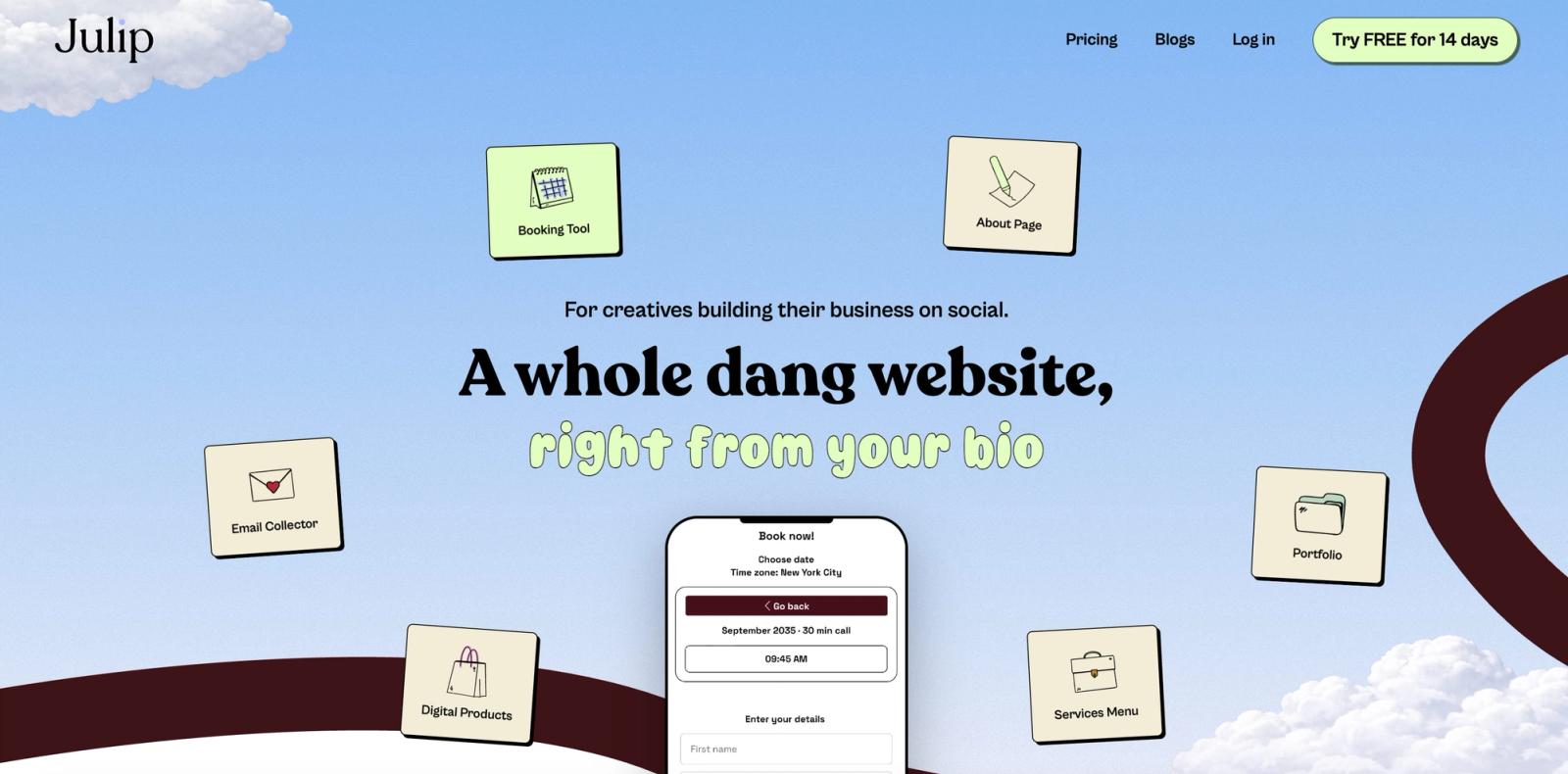
Julip is our top recommendation for creators who want to turn their online presence into a business without assembling a complicated collection of different platforms.
Julip is essentially a website-in-bio designed for creators, freelancers, and service providers. Instead of sending followers to a basic list of links, you can create a branded online hub that showcases who you are, what you create, what you sell, and how people can work with you.
That makes it particularly useful when you're moving from being "a creator" to building an actual creator business.
With Julip, you can:
- Showcase your portfolio and best content
- Create an About page
- List your services
- Sell digital products
- Offer paid or free calls
- Accept payments through Stripe
- Collect email subscribers through freebies
- Add testimonials and FAQs
- Create a visual storefront
- Share affiliate products
- Customize your branding
- Add unlimited external links
- Track analytics
The biggest advantage is consolidation. Instead of paying for and managing separate tools for your website, portfolio, booking system, storefront, and digital products, Julip brings many of those functions together.
Julip currently lists pricing at $19/month when billed annually or $25/month when billed monthly, with a 14-day free trial.
Why Julip is important for the creator economy
A creator business needs a destination, not just social media profiles.
Instagram, TikTok, YouTube, and other platforms are excellent for reaching people, but your audience ultimately needs somewhere to go next. A Julip page can act as that central hub, allowing followers to discover your offers, join your email list, purchase products, book calls, or explore your work.
Best for: Creators, influencers, UGC creators, podcasters, coaches, freelancers, photographers, social media managers, and other people building businesses around their personal brands.
2. Kit: Best for Building an Email Audience
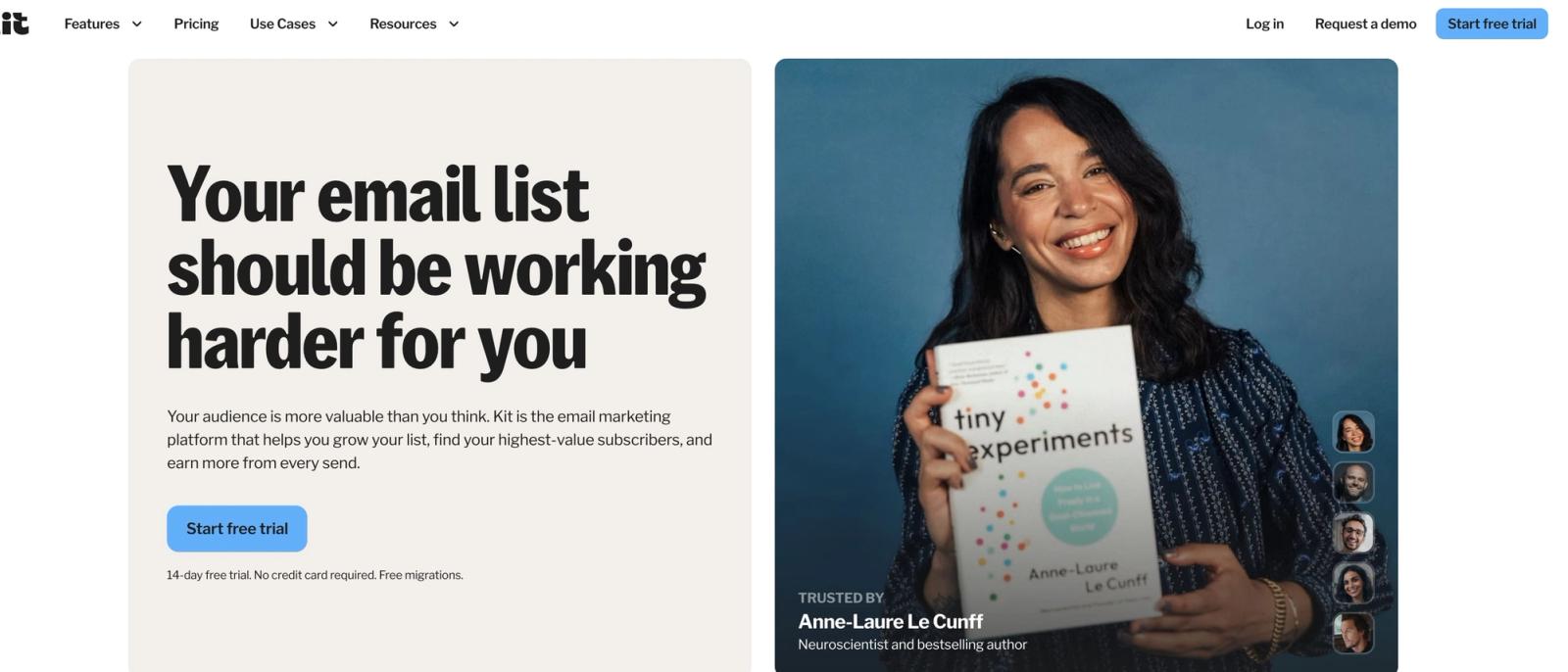
Social media can help you attract an audience, but an email list gives you a more direct relationship with that audience.
Kit is an email marketing platform designed specifically for creators. It can be used to collect subscribers, send newsletters, build automated sequences, and promote products and other offers.
Email is particularly important for creators because you aren't completely dependent on an algorithm deciding who sees your next post.
Why creators need email
Imagine you've spent years building an audience on one social platform and the algorithm changes. Your reach can suddenly decline.
An email list gives you another channel for communicating with your audience and promoting your business.
Best for: Creators who want to turn followers into an owned audience and build a long-term email marketing channel.
3. Canva: Best for Creating Visual Content
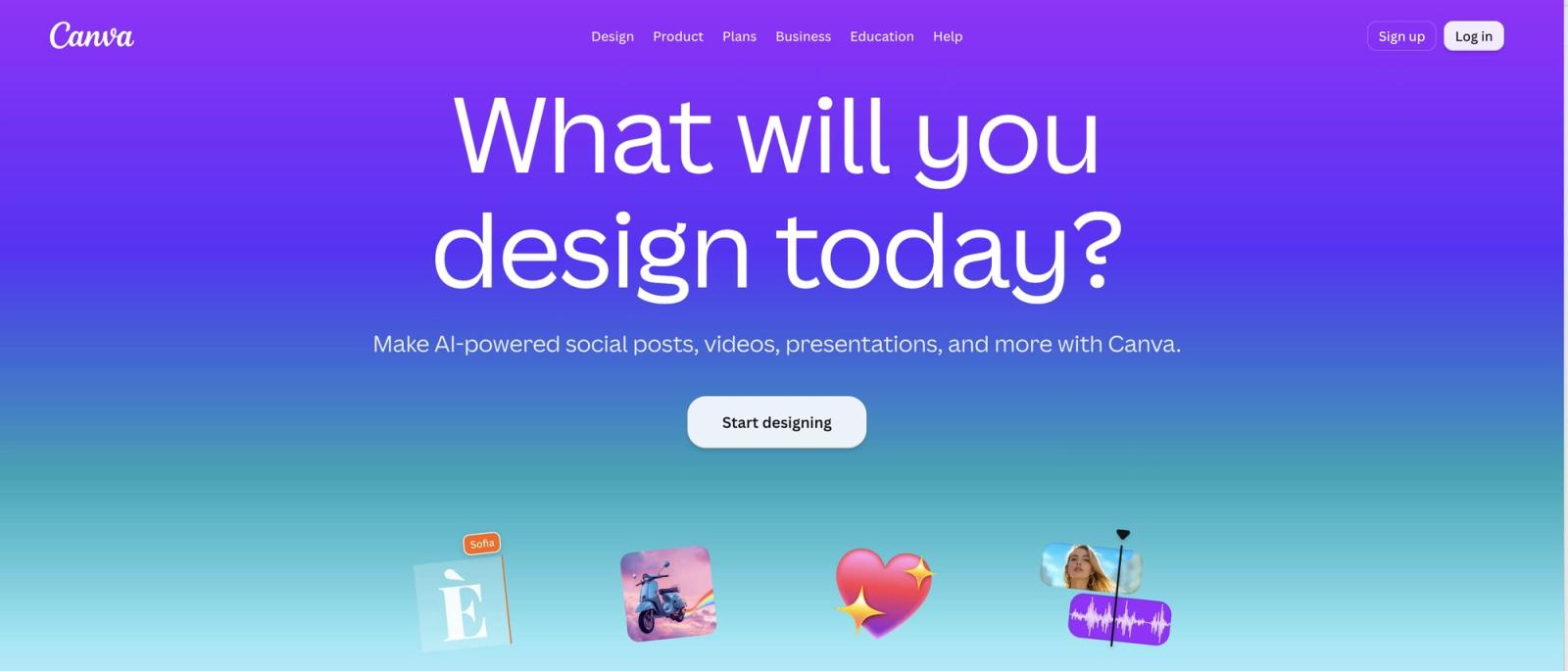
Content is the foundation of most creator businesses, and Canva makes it easier to produce professional-looking visual assets without needing advanced design skills.
Creators can use it for social posts, presentations, lead magnets, media kits, thumbnails, ebooks, templates, and other digital products.
This is especially useful when you're trying to build a recognizable visual brand across multiple platforms.
Best for: Creators who need to produce social media graphics, digital products, presentations, and branded assets quickly.
4. Patreon: Best for Membership-Based Monetization
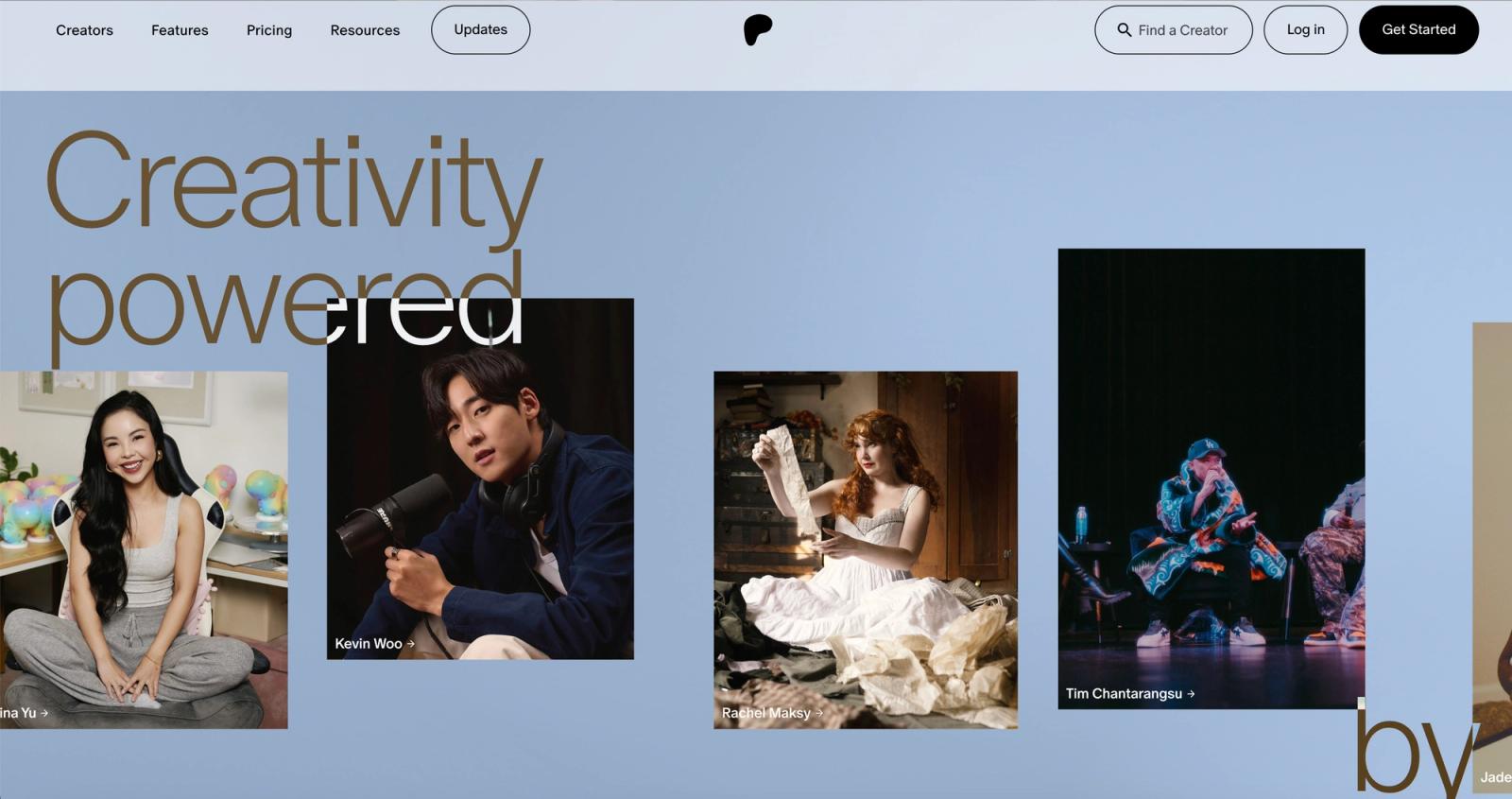
If your audience wants exclusive access to your content, Patreon can be an option for turning that interest into recurring revenue.
Creators can use membership platforms to provide paying supporters with exclusive content, community access, behind-the-scenes material, or other perks.
Subscription-based monetization is one of several established models in the creator economy, alongside digital products, newsletters, courses, and communities.
The key is to offer something valuable enough that people want to continue paying for it.
Best for: Creators with an engaged audience that wants exclusive or recurring content.
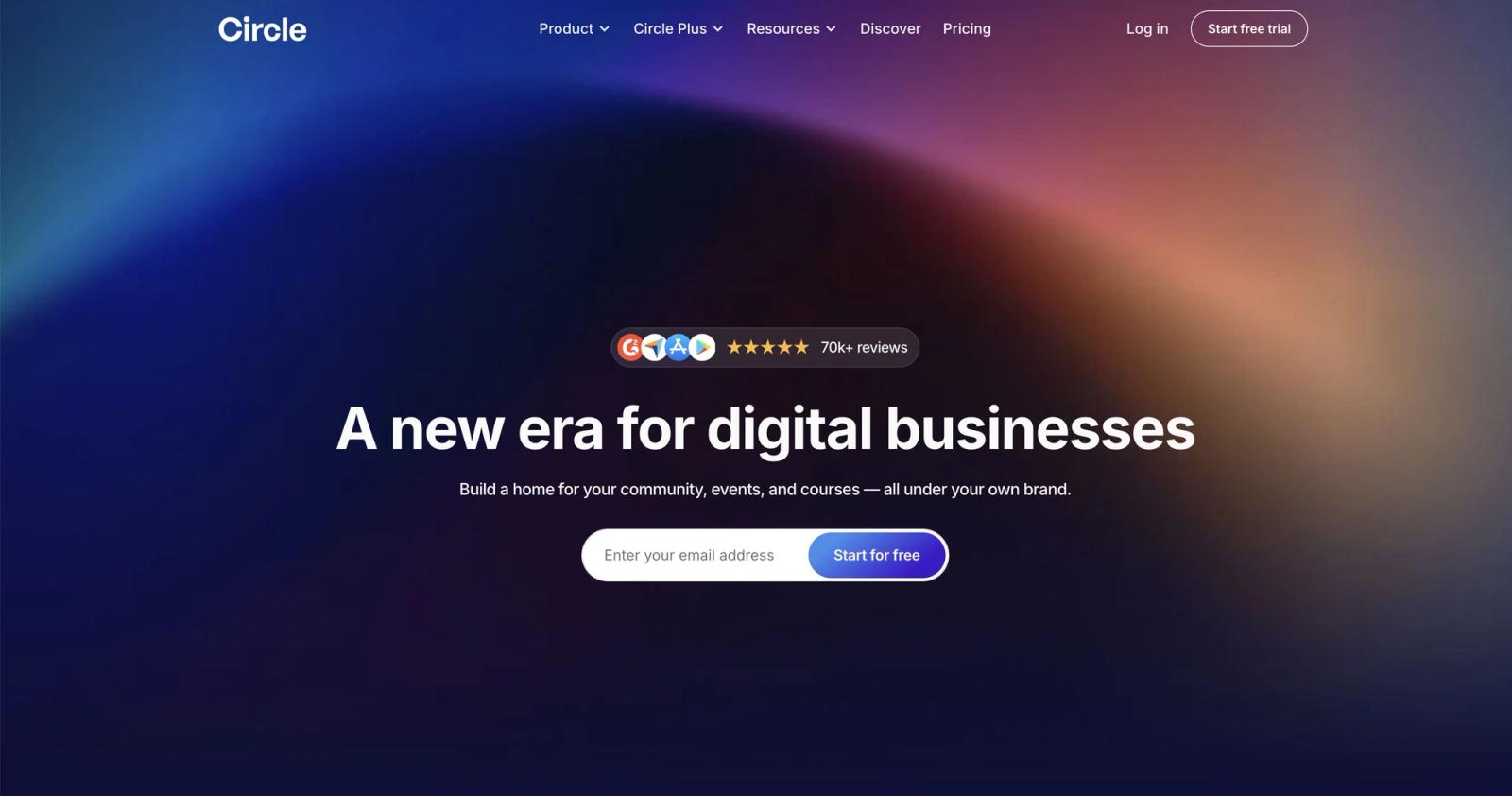
5. Circle: Best for Building a Creator Community
A large audience isn't necessarily the same thing as a strong community.
Platforms such as Circle are designed to help creators bring members together around discussions, courses, events, content, and memberships.
This can be particularly powerful for creators who want to move beyond one-way content and build an environment where their audience can interact with each other.
Best for: Creators building paid communities, memberships, courses, or audience-driven groups.
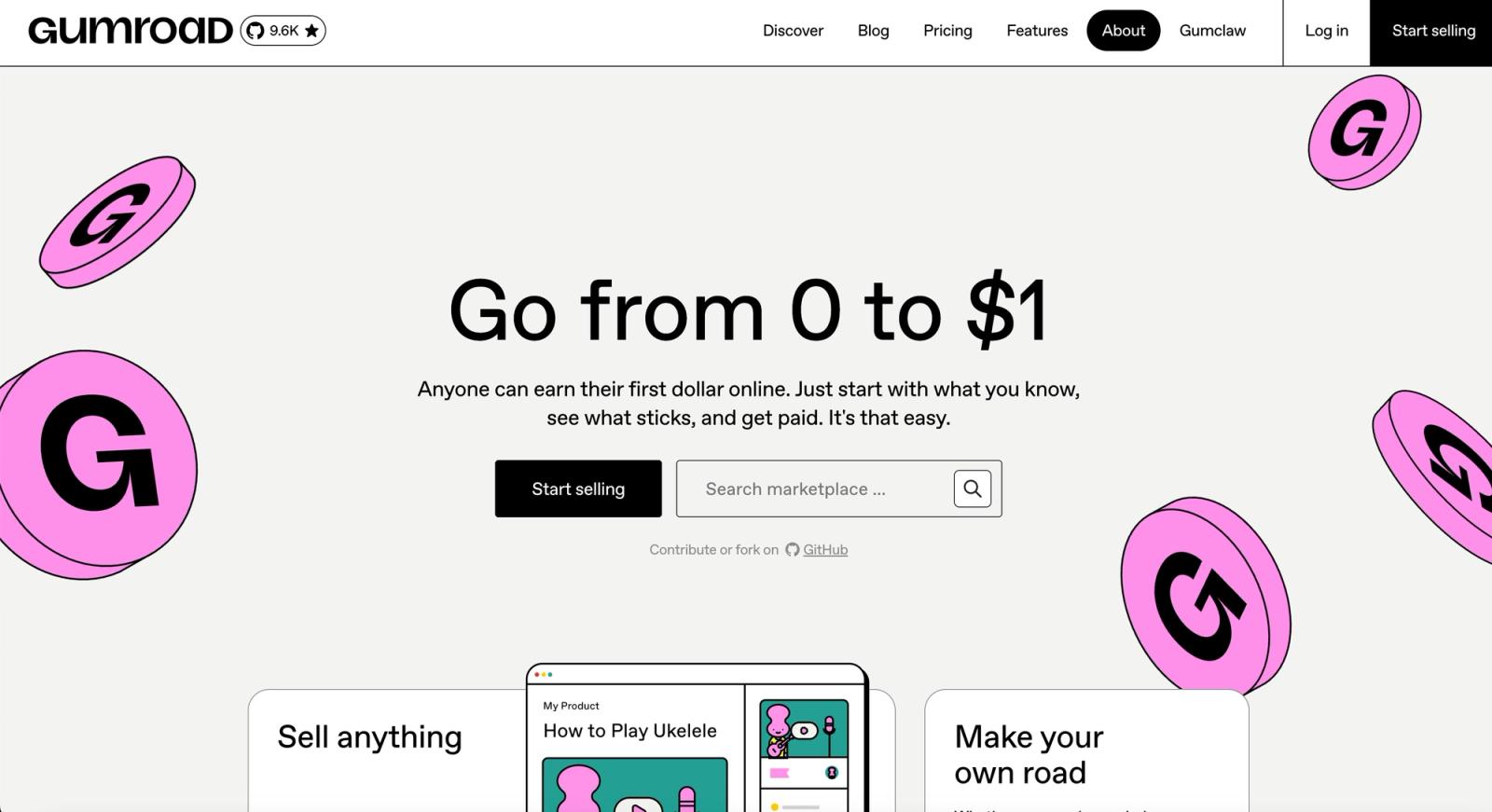
6. Gumroad: Best for Selling Digital Products
Digital products can be one of the most accessible ways for creators to monetize their knowledge.
Instead of selling only your time through brand deals or services, you can create something once and sell it repeatedly.
Examples include:
- Templates
- Guides
- Ebooks
- Presets
- Notion templates
- Educational resources
- Design assets
- Online courses
Gumroad is one of the established platforms in this category and is often used by creators looking for a relatively straightforward way to sell digital products.
Best for: Creators who want to test digital products without building a full ecommerce operation.
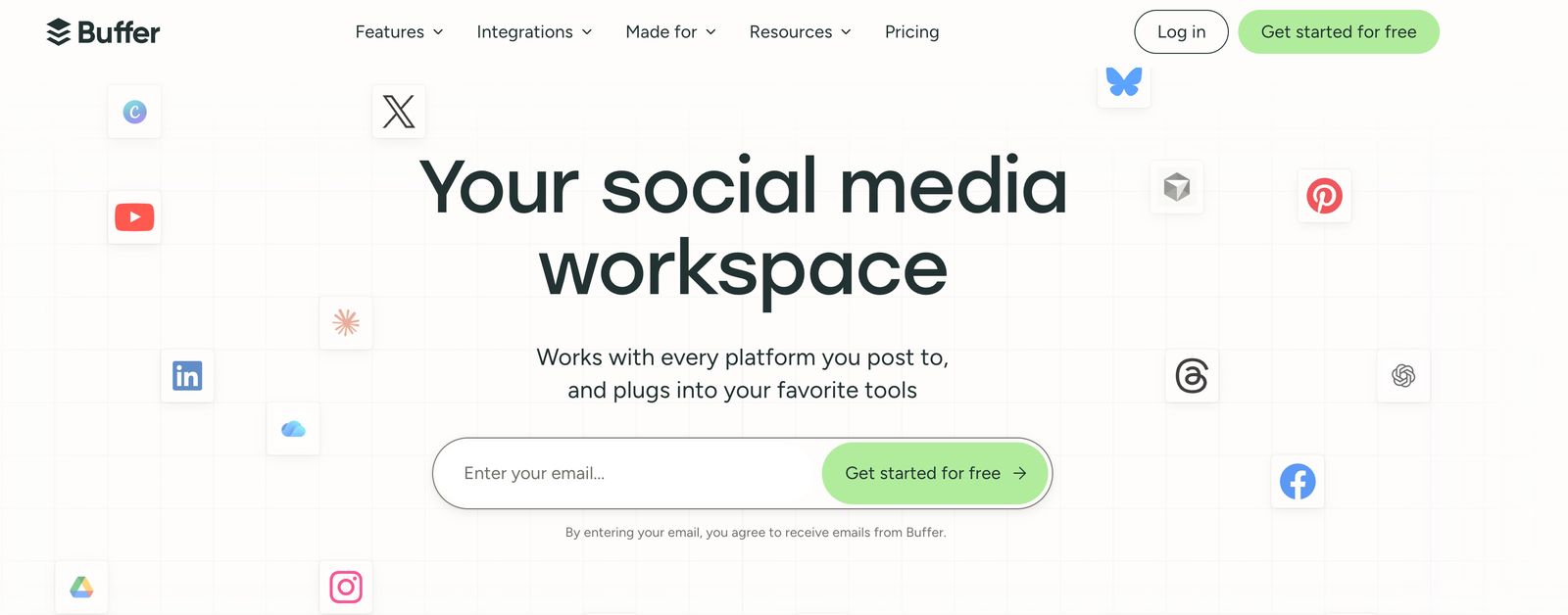
7. Buffer: Best for Managing Social Content
Creating great content is only part of the job. You also need to distribute it consistently.
Social media management platforms such as Buffer can help creators plan, schedule, and organize content across social platforms.
This becomes increasingly important as your business grows. If you're publishing across Instagram, LinkedIn, TikTok, YouTube, or other channels, manually managing every post can quickly become a significant time commitment.
Best for: Creators who publish consistently across multiple social platforms.
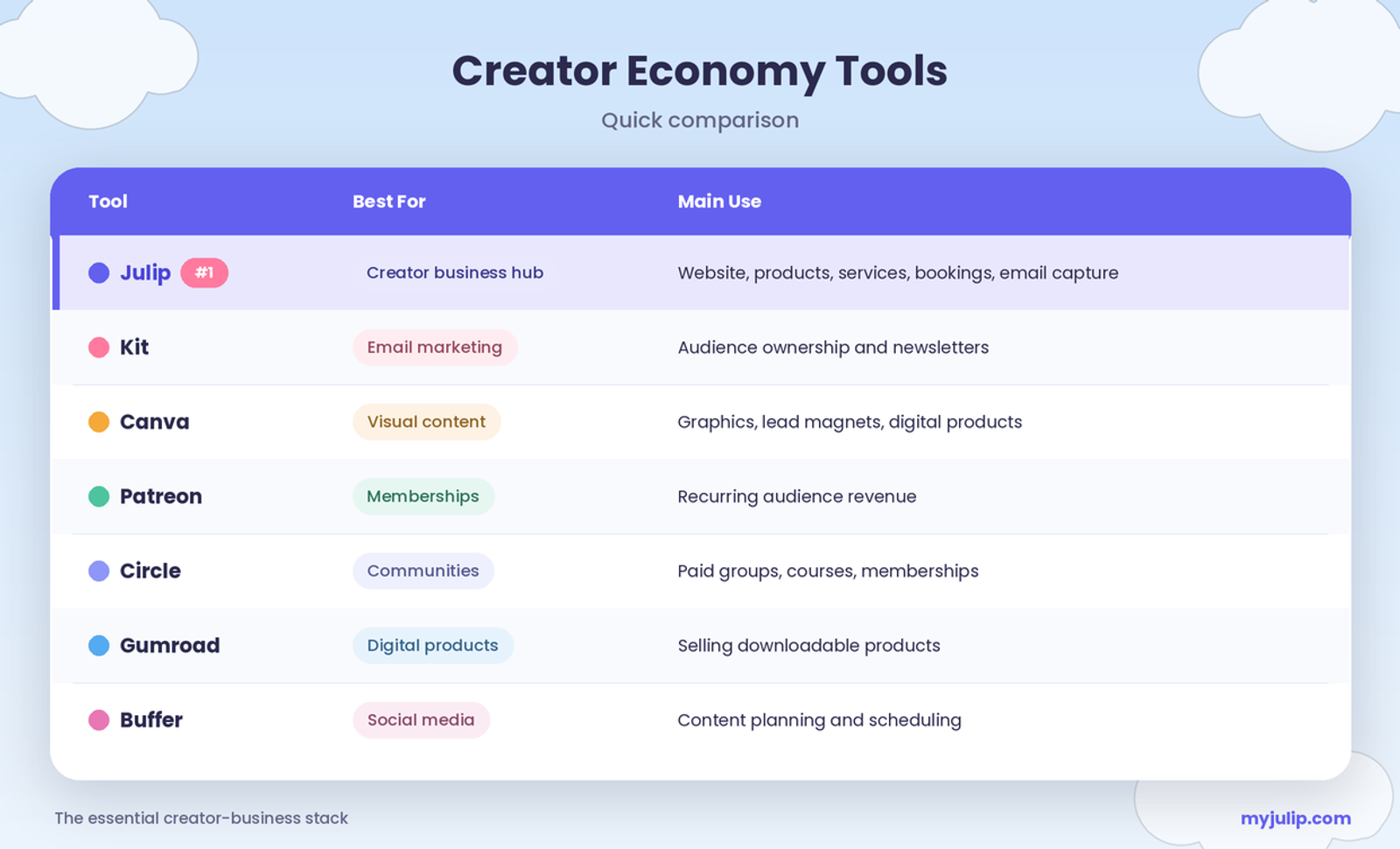
Creator Economy Tools: Quick Comparison
How to Become a Creator Economy Entrepreneur
Having the right creator economy tools is useful, but tools alone don't create a creator business.
You need a strategy for turning attention into something sustainable.
1. Choose a clear niche
You don't necessarily need to appeal to everyone.
Start by asking:
- What do I know a lot about?
- What do people ask me for help with?
- What type of content do I enjoy creating?
- Who do I want to reach?
- What problem can I help this audience solve?
The clearer your positioning, the easier it becomes to create content and develop offers.
2. Pick your primary content channel
You don't need to become an expert on every platform at once.
Choose one primary channel where your target audience already spends time.
For example:
- TikTok for short-form video
- Instagram for visual content and personal branding
- YouTube for long-form educational or entertainment content
- LinkedIn for professional audiences
- Podcasts for long-form conversations and storytelling
You can expand later.
3. Build an audience you can reach directly
Social media followers are valuable, but you should also work toward building an owned audience.
An email list is one of the simplest ways to do that.
Create a useful free resource, such as a checklist, guide, template, or mini-course, and use it to encourage people to subscribe.
4. Create a home for your business
This is where the best creator economy tools like Julip can become particularly valuable.
Instead of having one link to your Instagram, another link to your booking calendar, another to your digital products, and another to your portfolio, you can bring the important pieces together in one place.
Julip specifically positions itself as a full website-in-bio that can combine a portfolio, services, products, bookings, email collection, and other business functions.
Your goal is simple: when someone discovers your content, they should immediately know where to go next.
5. Start with one monetization method
You don't need five revenue streams on day one.
Pick one.
For example:
- Services: Sell your expertise through consulting, coaching, design, editing, or another service.
- Digital products: Create templates, guides, resources, or courses.
- Affiliate marketing: Recommend products you genuinely use and earn commissions from qualifying purchases.
- Memberships: Offer exclusive content or community access for recurring revenue.
- Brand partnerships: Work with companies that are relevant to your audience.
Once you understand what works, you can add another revenue stream.
6. Make your first offer simple
Your first product doesn't need to be a 100-module course.
- It could be a $19 template.
- It could be a $49 guide.
- It could be a $100 consultation.
- It could be a paid workshop.
The goal is to validate that your audience is willing to pay for something you provide.
7. Track what your audience responds to
Pay attention to more than follower counts.
Look at:
- Email signups
- Link clicks
- Product sales
- Bookings
- Engagement
- Conversion rates
- Repeat customers
- Revenue per audience member
A smaller audience that trusts you can be more valuable than a huge audience that rarely takes action.
What Is the Best Tool for Starting a Creator Business?
There aren’t just any creator economy tools that do everything perfectly. Your ideal creator stack depends on your content format, audience, and monetization strategy.
But you also don't need dozens of subscriptions.
For many creators, a simple stack can be enough:
Create content → Build an audience → Send people to Julip → Collect emails → Sell an offer → Grow from there.
Julip is particularly useful at the center of that system because it can function as the creator's online home while supporting portfolios, services, digital products, bookings, payments, email collection, and affiliate products.
Final Thoughts
The creator economy gives individuals more opportunities than ever to turn their skills, knowledge, creativity, and audience into businesses. But success doesn't come from collecting every creator tool available.
It comes from building a simple system that moves people from discovering your content, to trusting your brand, to joining your audience, to buying your offer.
That's why Julip is our #1 pick for creators building their business infrastructure. It combines the website and monetization pieces many creators need into one no-code platform, while allowing you to keep expanding your business as your audience grows.
Start with your niche, create valuable content, build an audience you can reach directly, and give that audience a clear place to go.
The tools should support your creator business, not become the business themselves.