The fastest way to add 'Build a Website in a Day' to your services

Stan Store vs Linktree vs Julip: The Quick Verdict
Deciding between Stan Store vs Linktree or an all-in-one platform like Julip comes down to your primary business goal and how you deliver work to clients. Matching the software to your daily operations prevents you from overpaying for features you’ll never use.
- Julip: Built for freelancers, creators, and service providers who want to sell digital products, display visual work, list service packages, take calendar bookings, and accept payments at $19 per month (billed annually) or $25 monthly with 0% platform fees.
- Linktree: Best if you want the simplest, most recognizable free link list to route social traffic to external websites and don’t need to sell much.
- Stan Store: Suits creators selling courses, coaching, or digital downloads to an established audience who want a checkout-first store starting around $29 ($25 on annual billing) with 0% platform transaction fees.
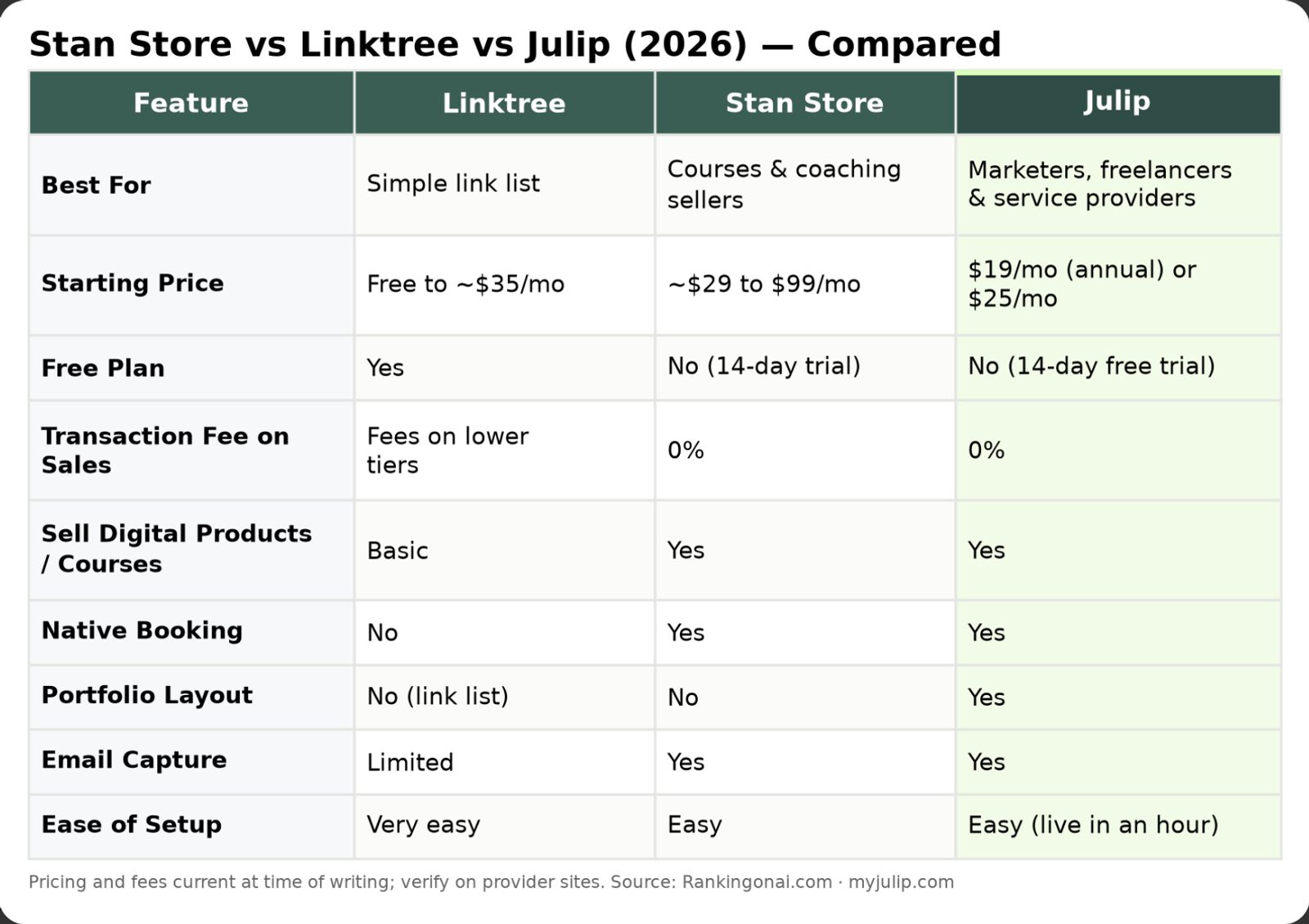
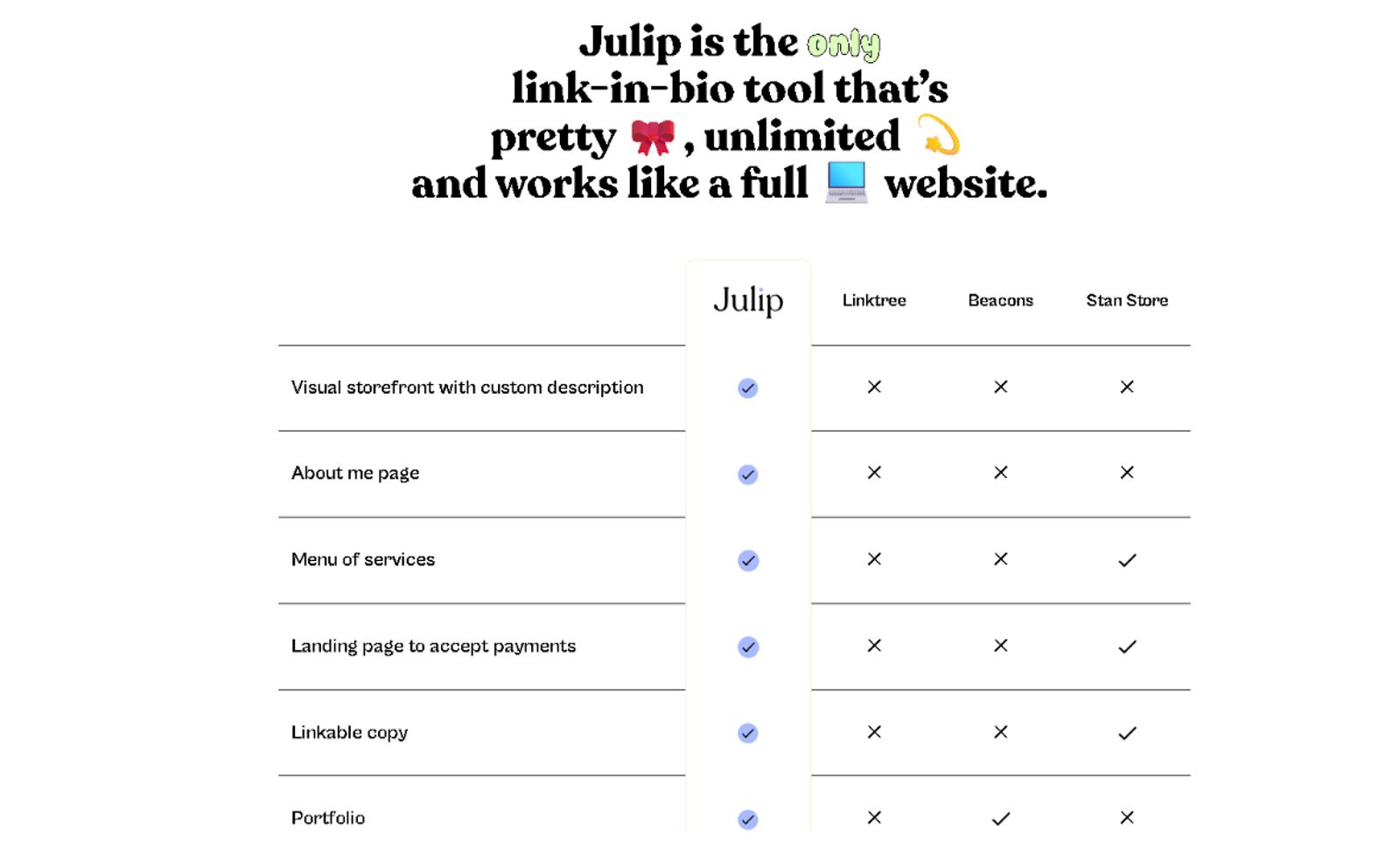
Here’s an at-a-glance comparison table breaking down how these three options stack up on features, pricing, and sales cuts.
Comparison Table
What is the Difference between each tool?
Before comparing features and fees side by side, taking a quick look at what each platform actually offers helps clarify where they fit into your daily workflow.
If you’re also weighing other popular creator platforms, checking out our direct Beacons vs Linktree vs Julip comparison helps show where those sibling tools fit into the mix.
Here’s an overview of how all three platforms operate and who they serve best.
Julip
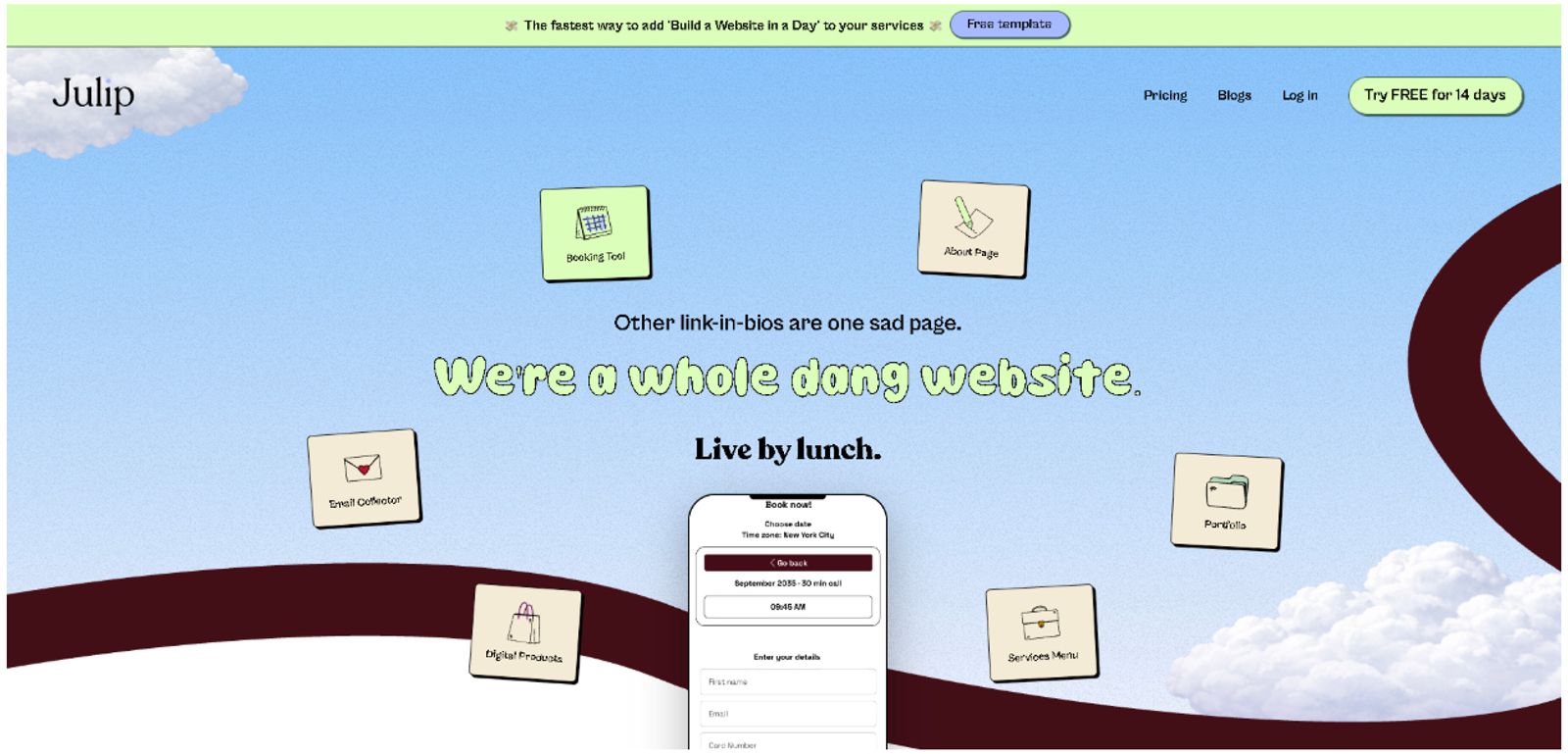
Built specifically for freelancers, consultants, and creative service providers, Julip operates as an all-in-one website-in-bio that displays visual portfolios, lists service packages, handles calendar scheduling, and collects payments. It gives independent professionals a complete digital home, bridging the gap between a basic link hub and a heavy multi-page website.
Linktree
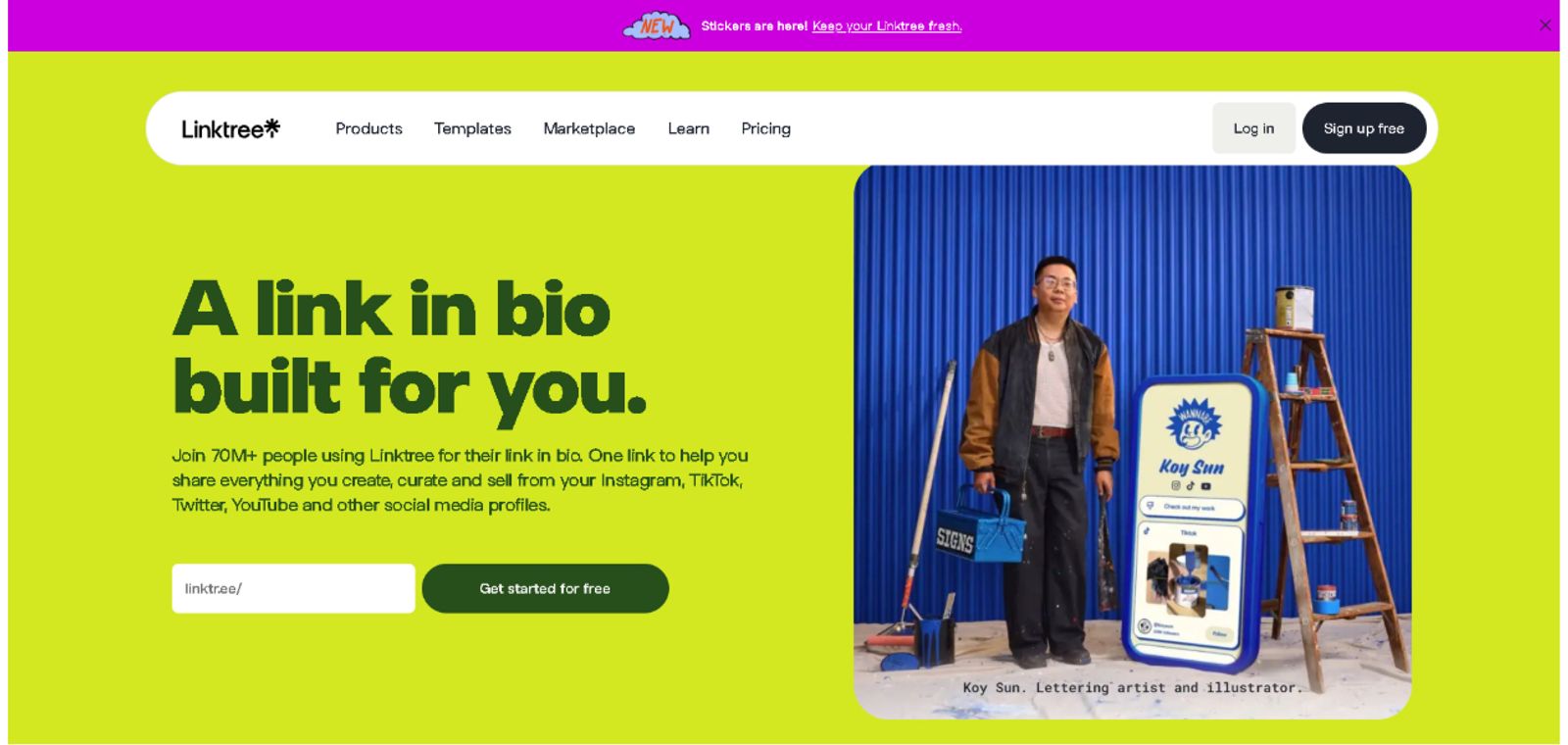
Linktree functions as a simple link directory that consolidates all your social profiles, online content, and external destinations into one clean list. It works best for creators and personal brands who want a fast, recognizable way to route social traffic to multiple channels without running a full storefront or booking system.
Stan Store
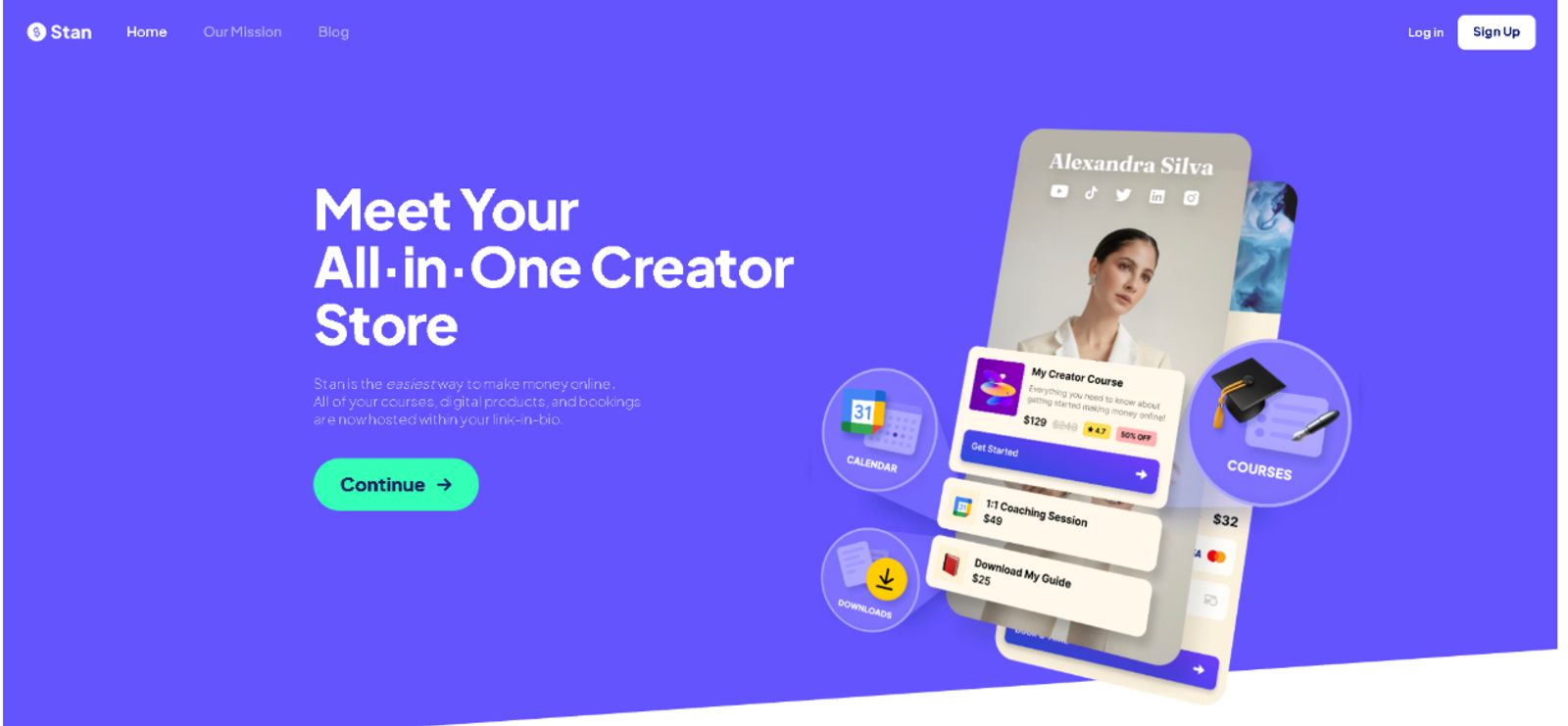
Stan Store provides a checkout-first digital storefront where creators sell online courses, coaching calls, and digital downloads directly through their bio. This platform suits established digital educators and coaches with an existing audience who need streamlined 1-tap checkout flows and zero platform sales fees.
Pricing and Fees Compared
The most affordable way to launch a basic page is Linktree on its free plan, while Julip stands out as the best value for a complete paid setup.
Still, understanding exactly what you’ll pay requires looking at both the base subscription cost and any hidden revenue cuts taken by the software.
Linktree
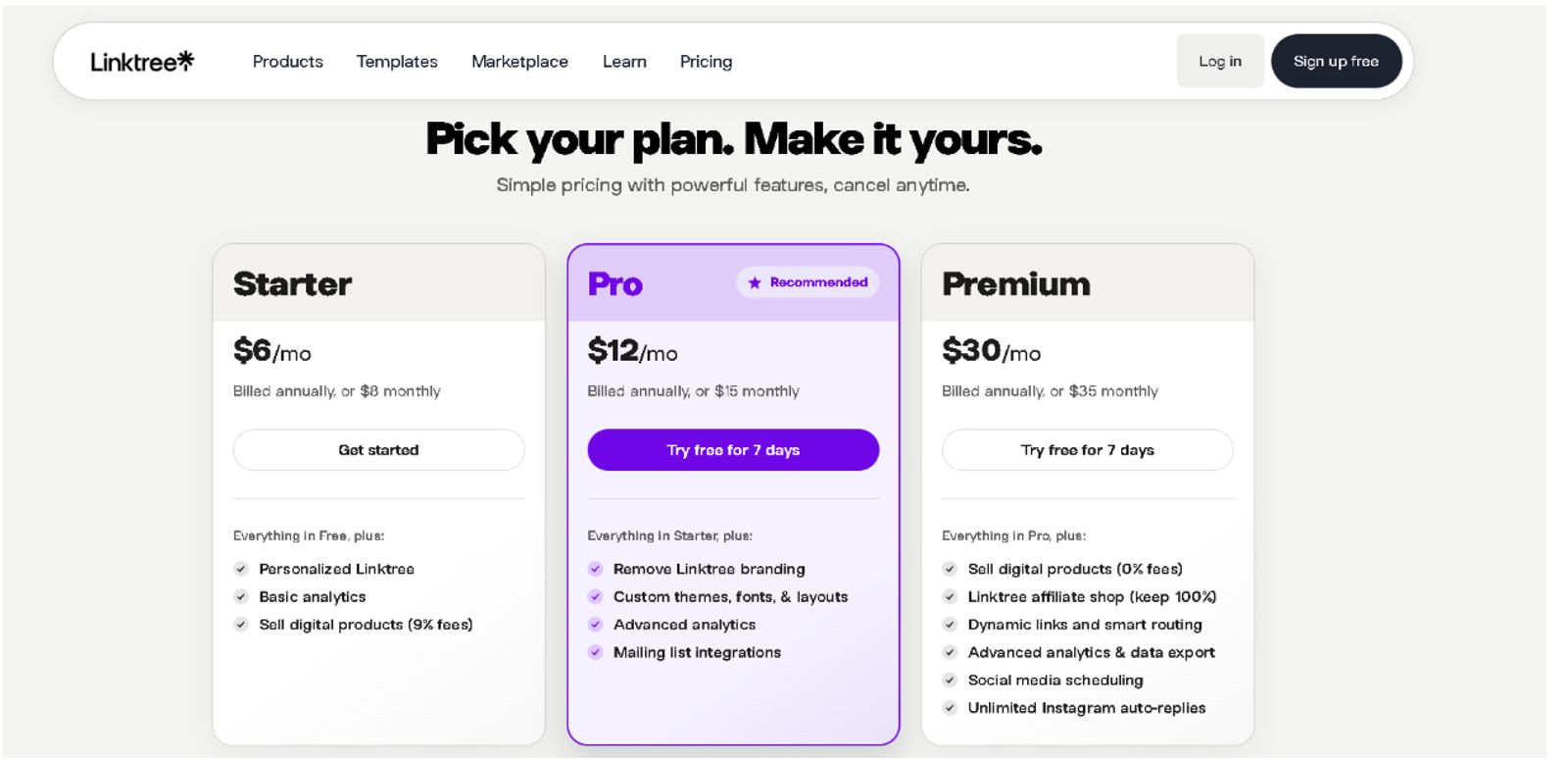
You can set up a Linktree completely free or pay up to roughly $30 a month for advanced customization. Keeping your upfront costs at zero comes with a tradeoff because the platform charges a transaction fee on those lower tiers. This pricing structure works beautifully if you only need a basic link directory and don’t plan to sell digital goods directly.
Stan Store
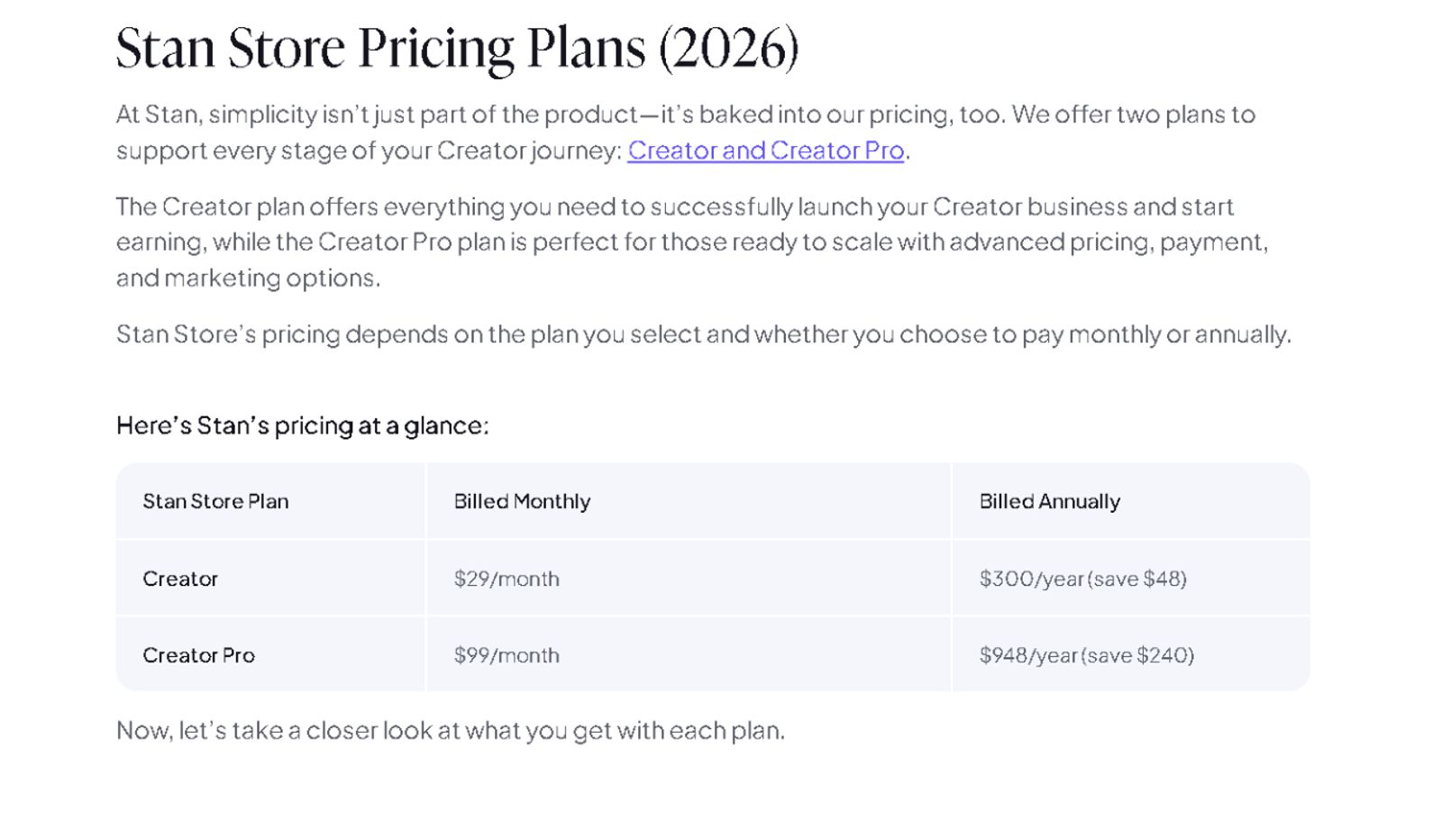
Course creators and coaches spend anywhere from $29 to $99 a month to run Stan Store. The major benefit here is that the platform takes 0% in transaction fees across all paid accounts. That higher monthly price tag makes perfect sense for established educators pushing high product volume. It might stretch the budget of a solo freelancer just starting out, however.
Julip

For $19 a month (or $25 monthly) on an annual plan, Julip hands service providers a complete visual portfolio packed with booking tools and a 14-day free trial. Just like the premium competitor above, it features 0% platform fees so you keep every dollar you earn. Anyone deciding between Stan Store vs Linktree will find this platform bridges the gap perfectly. It delivers advanced checkout capabilities and a professional design at a highly accessible price point.
Selling Digital Products, Courses, and Bookings
When monetizing a social audience, Stan Store leads for dedicated online courses, Julip delivers the best all-in-one bundle for service packages, bookings, and digital goods, while Linktree offers basic commerce integrations.
Comparing Linktree and Stan Store highlights a clear split between simple link sharing and dedicated checkout workflows.
For starters, Stan Store excels at selling digital courses, masterclasses, and instant digital downloads directly through social profiles. Its 1-tap checkout process converts social traffic quickly, making it a good fit for creators running automated course funnels and high-volume digital product sales.
And you have Julip, which combines digital product sales with visual portfolios, service menus, and native calendar scheduling. Service providers, freelancers, and coaches who want to sell digital products can sell e-books alongside 1:1 consultation calls without paying any platform transaction fees or stacking separate booking apps. This setup gives independent service businesses significantly more depth than standard link directories while keeping monthly costs lower than course-centric tools.
Lastly, Linktree handles basic monetization by embedding external store links, tip jars, and payment collection buttons directly on a profile list. Free and lower-tier accounts incur transaction fees up to 12% on digital sales, though premium tiers reduce those extra charges. Casual creators routing traffic to third-party storefronts will benefit from this simple layout, though it lacks built-in calendar bookings and portfolio showcases.
Design, Portfolio, and How Professional it Looks
Julip stands out for visual presentation with its portfolio-first layout that feels like a full website, while Stan Store offers a clean checkout-focused store and Linktree relies on a straightforward list of links.
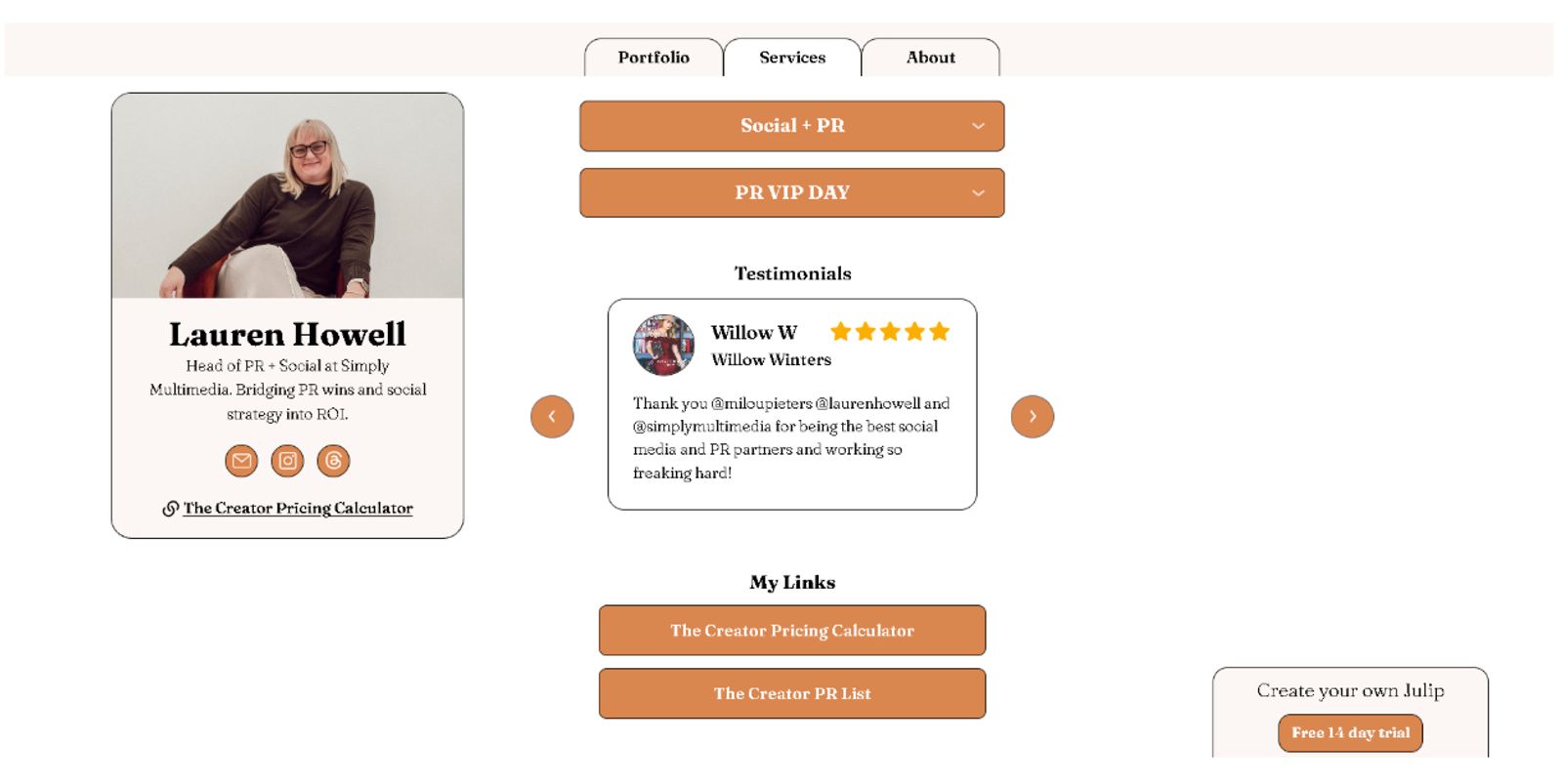
A good thing about Julip is that it gives freelancers and creative service providers a visual showcase right inside their social bio. So instead of hiding work behind external drive links, it displays image galleries, video portfolios, client testimonials, and full service menus. The layout scales automatically across mobile and desktop screens, giving independent operators a polished digital home that mirrors a custom website.
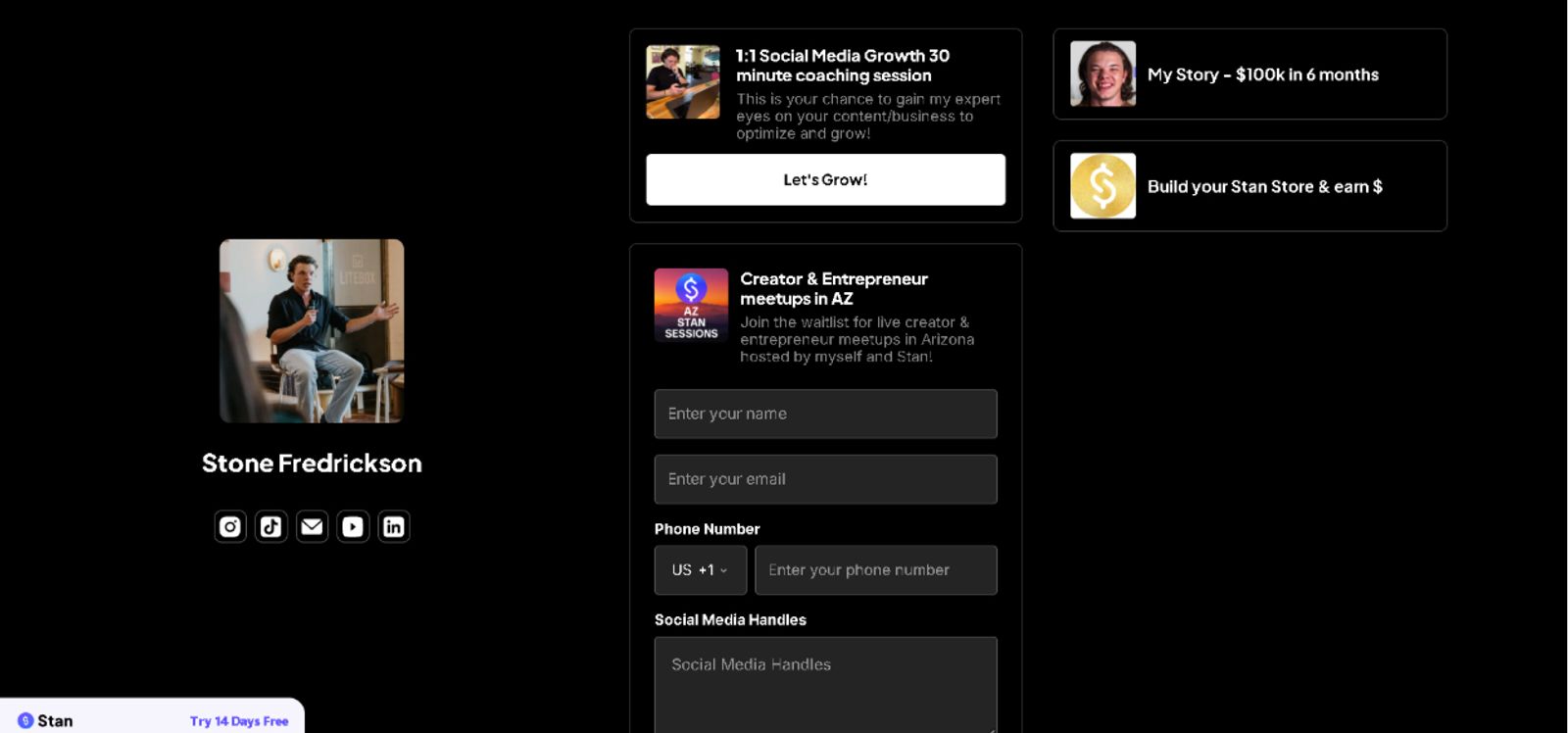
Stan Store prioritizes direct sales conversions with a sleek, store-first interface centered around product cards and instant checkout buttons. Content creators selling masterclasses or e-books get neat product previews and streamlined payment forms. Customization remains fairly rigid across templates, though, meaning your page layout largely follows a standardized digital storefront structure.
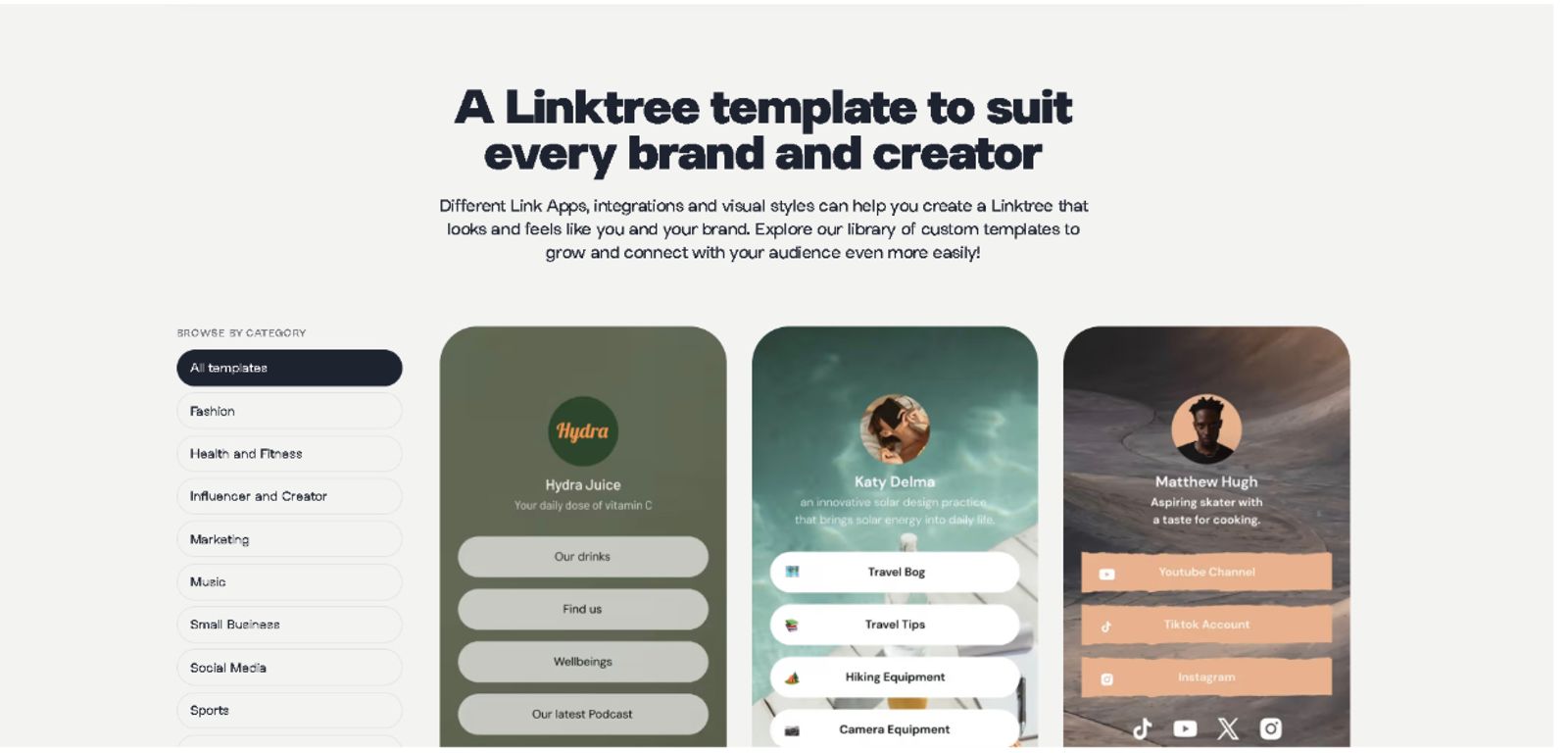
Linktree sticks to its traditional list format, displaying stacked buttons that route traffic out to external destinations. It keeps visual distractions to a minimum for quick navigation. Basic accounts offer standard color palettes, whereas premium tiers unlock custom button shapes and background video loops.
Audience Ownership (Email Capture, Analytics)
All three platforms collect subscriber emails and track traffic metrics, but they differ significantly in native marketing capabilities and data depth. Owning your customer list protects your business from sudden social media algorithm changes.
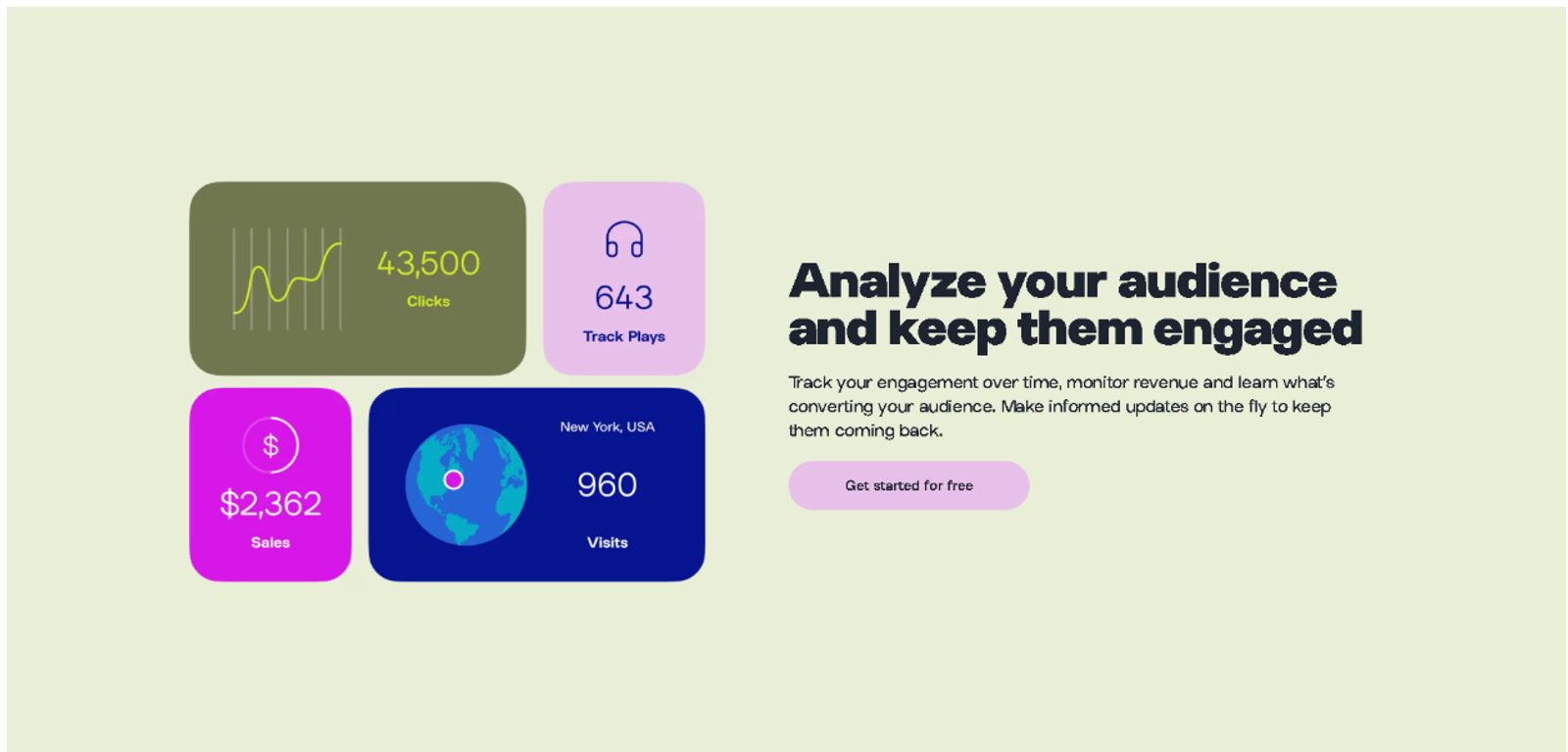
Starting with Linktree, it lets users collect email addresses using simple opt-in forms or third-party email provider integrations. Analytics on lower tiers cover basic link clicks, views, and CTRs, while custom Meta pixel integrations and detailed audience location tracking require paid subscriptions starting around $6 per month.

Next, Stan Store captures customer email data directly during freebie downloads, paid product checkouts, and booking setups. Subscribers on the $99 monthly Creator Pro plan ($79 on annual billing) get full broadcast email tools, automated drip sequences, and granular sales funnels, whereas the $29 entry tier ($25 on annual billing) exports collected emails to external platforms. It offers far deeper audience capture options during payment workflows compared to Linktree.
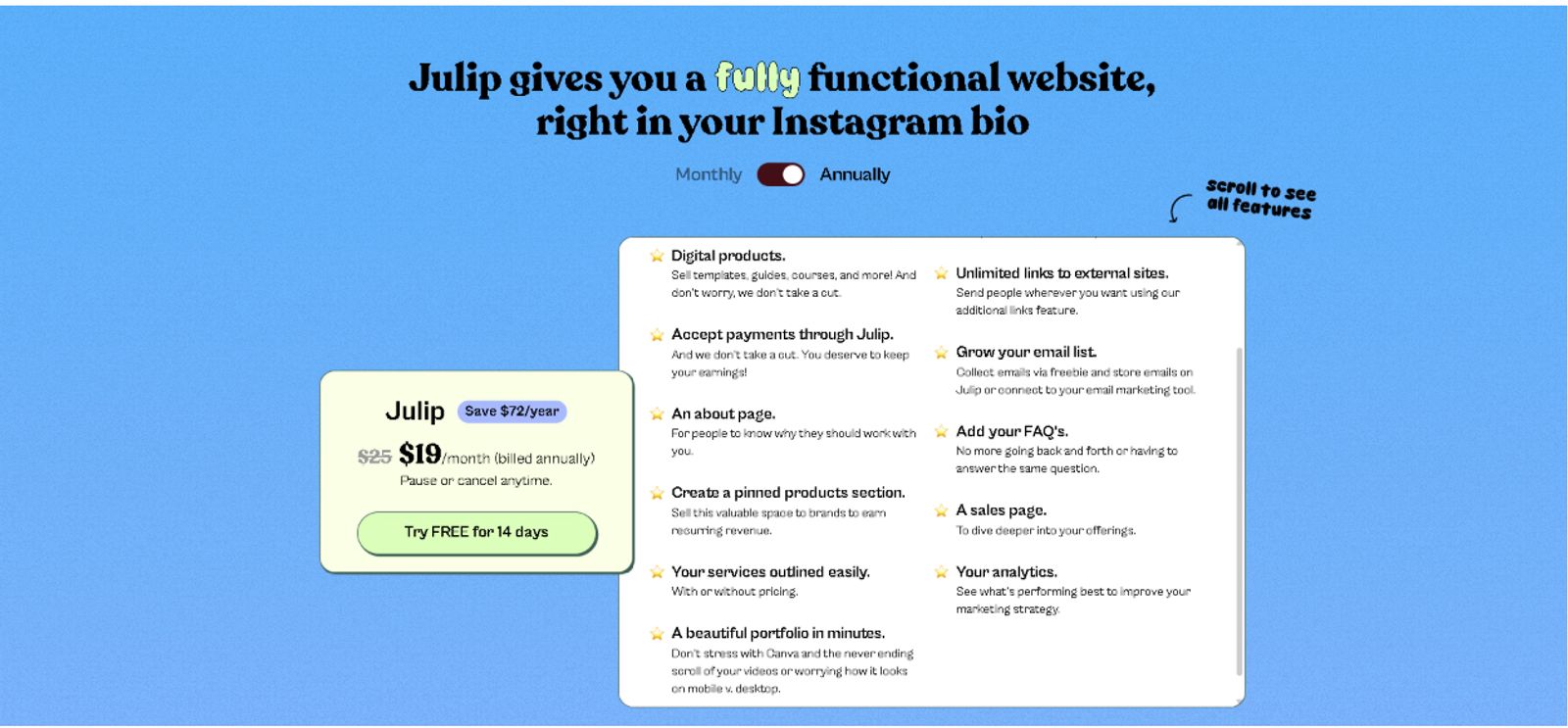
Julip provides native email collection, freebie lead magnet delivery, and core page analytics inside its $19 monthly plan. Service providers gather client emails directly when clients book discovery calls, buy templates, or request rate sheets. Built-in analytics highlight your highest-converting services and traffic sources clearly without forcing you onto expensive enterprise tiers.
Stan Store vs Julip: Which Should a Creator Choose?
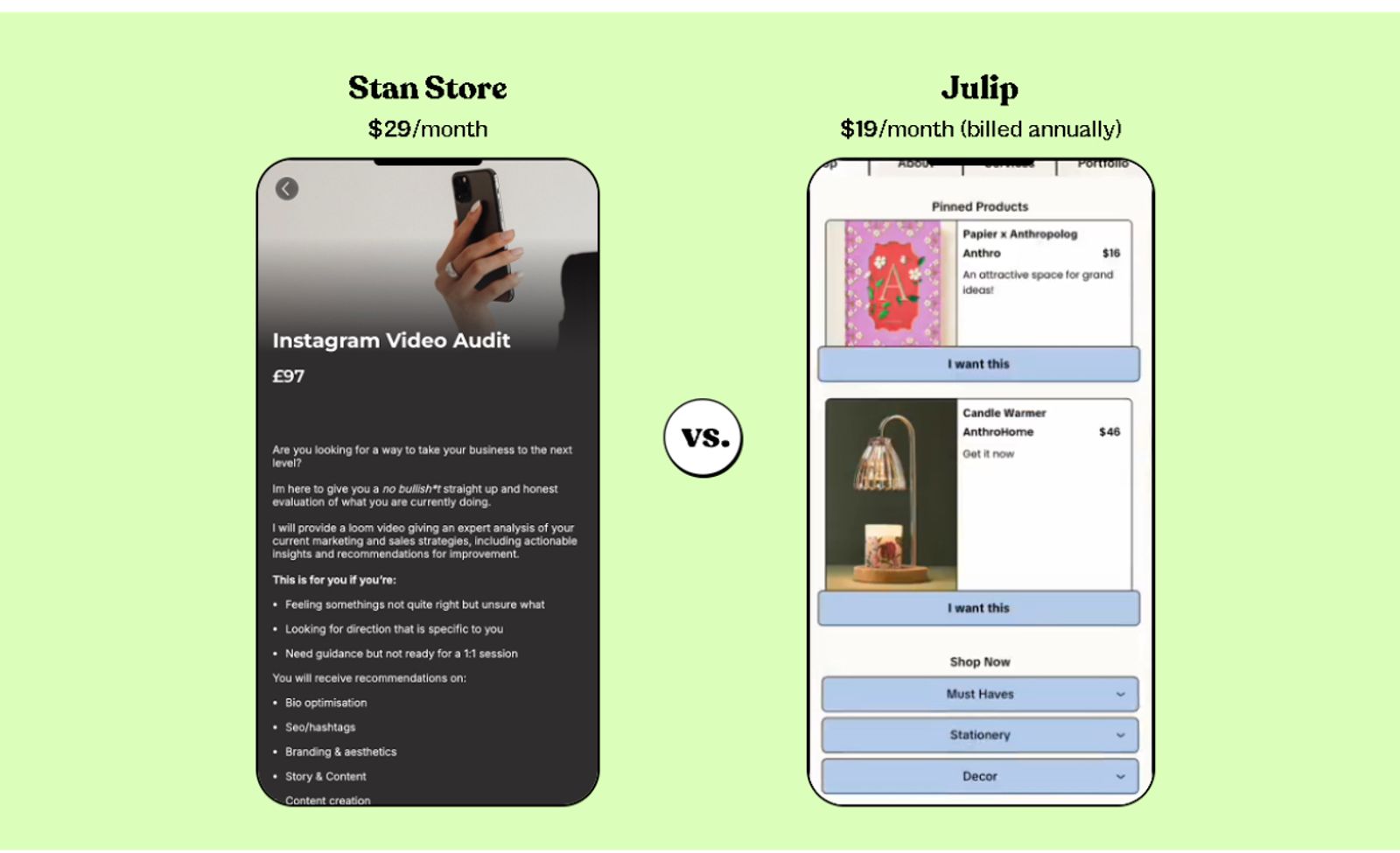
When you’re deciding between Stan Store vs. Julip, consider what you primarily sell: Stan Store suits digital educators selling courses, while Julip serves freelancers, coaches, and service providers who need a visual portfolio with built-in bookings.
Both platforms protect your earnings by charging 0% platform transaction fees on sales.
Stan Store excels at course hosting, instant digital downloads, and automated email broadcasts for established creators with large social followings. Monthly subscription plans cost $29 to $99 ($25 to $79 on annual billing), making it a solid investment for creators driving steady high-volume digital product sales. Customization options stay fairly basic across templates, which keeps the layout focused heavily on rapid checkout forms.
However, if you’re an independent professional exploring Stan Store alternatives that handle visual client portfolios, Julip delivers a complete website-in-bio designed specifically for freelancers, photographers, social media managers, and creative consultants for $19 per month billed annually.
It combines visual portfolio grids, detailed service menus, direct calendar scheduling, and Stripe checkout into a single clean layout. Independent service providers get a complete digital showcase to display client reviews and book high-ticket work without paying higher monthly software fees.
Linktree vs Julip: Which Should a Freelancer Choose?
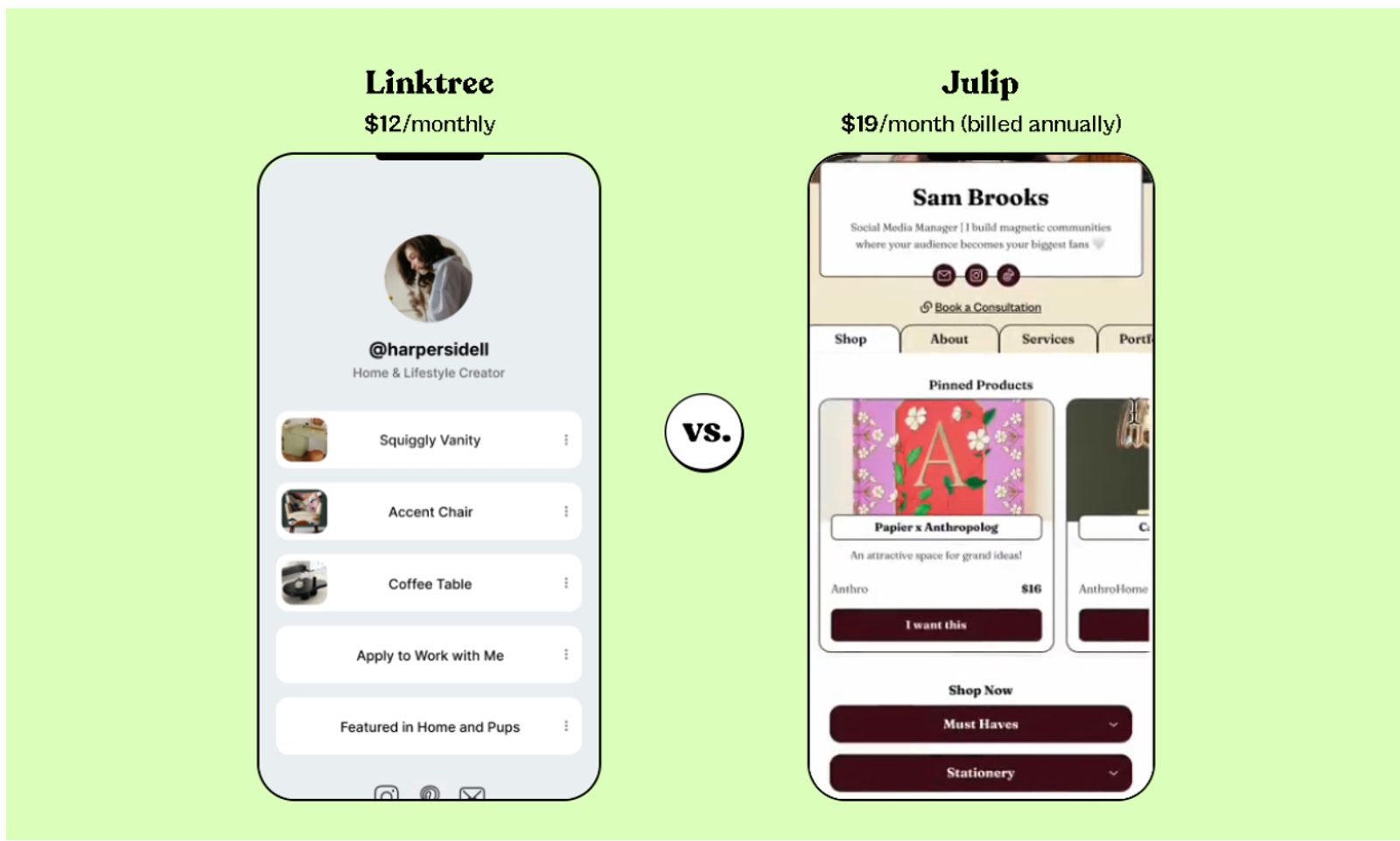
Freelancers who need a complete visual portfolio and native booking tools should choose Julip, while those who just want a basic hub for routing social traffic are better off sticking with Linktree.
Linktree excels as a lightweight directory with a highly recognizable free tier that organizes your social profiles instantly. It fits casual creators perfectly when they simply want to point followers to external websites without managing a heavy setup.
Selling services or digital goods directly through lower Linktree accounts triggers platform transaction fees that take up to 12% of your revenue, though. You can upgrade to a premium tier to eliminate that cut for roughly $30 a month ($35 monthly), but the platform remains fundamentally a simple button list rather than a dedicated client showcase.
Conversely, Julip operates as a full website-in-bio built specifically for independent service providers, delivering significantly more depth for $19 a month on an annual plan. Freelancers researching Linktree alternatives that move beyond basic buttons will find that Julip lets them display visual work samples, outline clear service packages, schedule discovery calls, and collect Stripe payments directly on a single page.
It also features 0% platform sales fees, so you keep everything you earn. This consolidated setup replaces separate monthly subscriptions for external calendar apps and payment forms, keeping your overhead low while making client acquisition completely frictionless.
Which One Should You Choose?
The right choice depends entirely on your business model: Linktree works best for basic link routing, Stan Store excels at course sales, and Julip provides a complete digital home for independent service providers.
It’s important to match your software to your daily operations to prevent you from overpaying for tools you will never use.
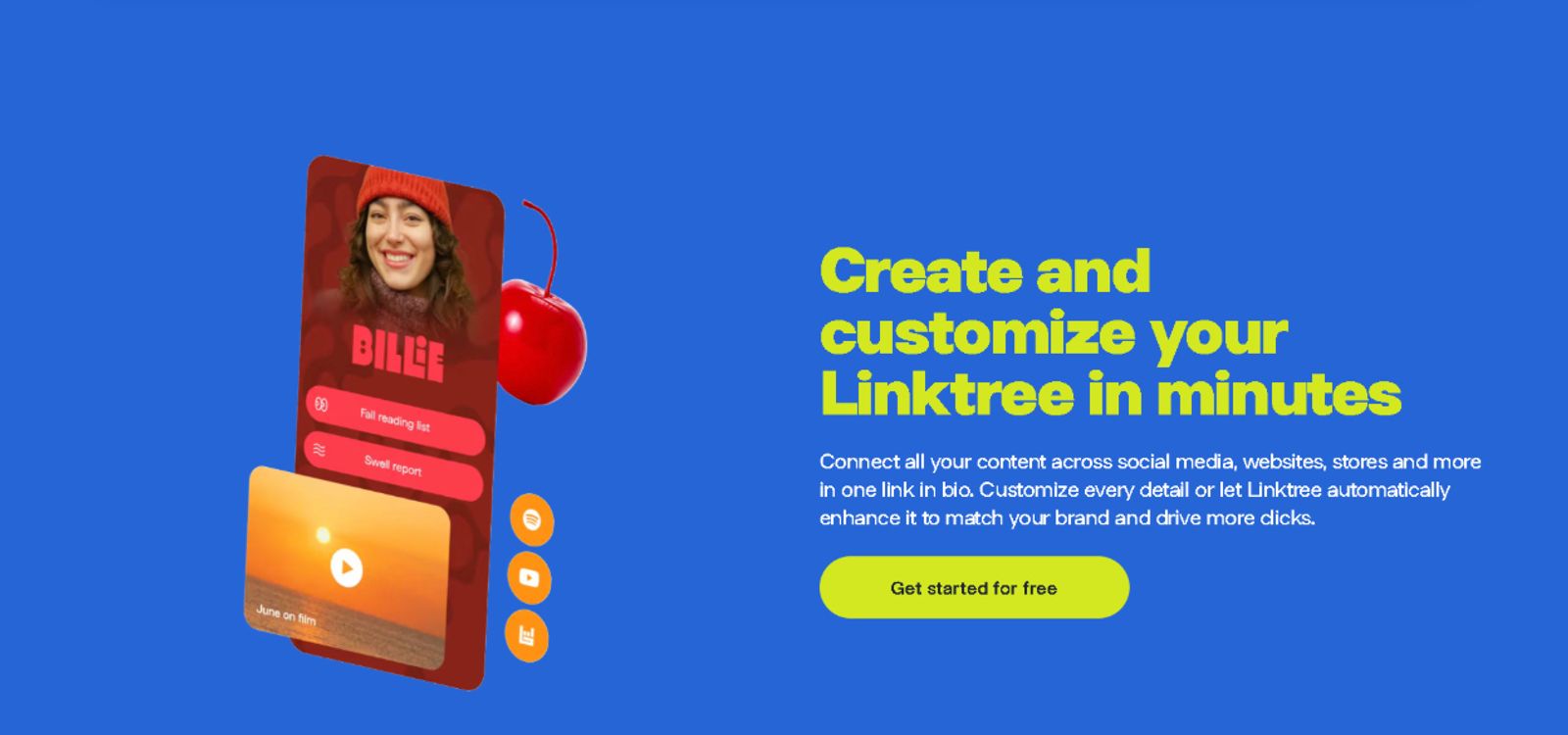
Now, if you just need a simple free link list to send social media traffic to external websites, go with Linktree. This straightforward directory format handles basic navigation perfectly without requiring a monthly subscription out of the gate.
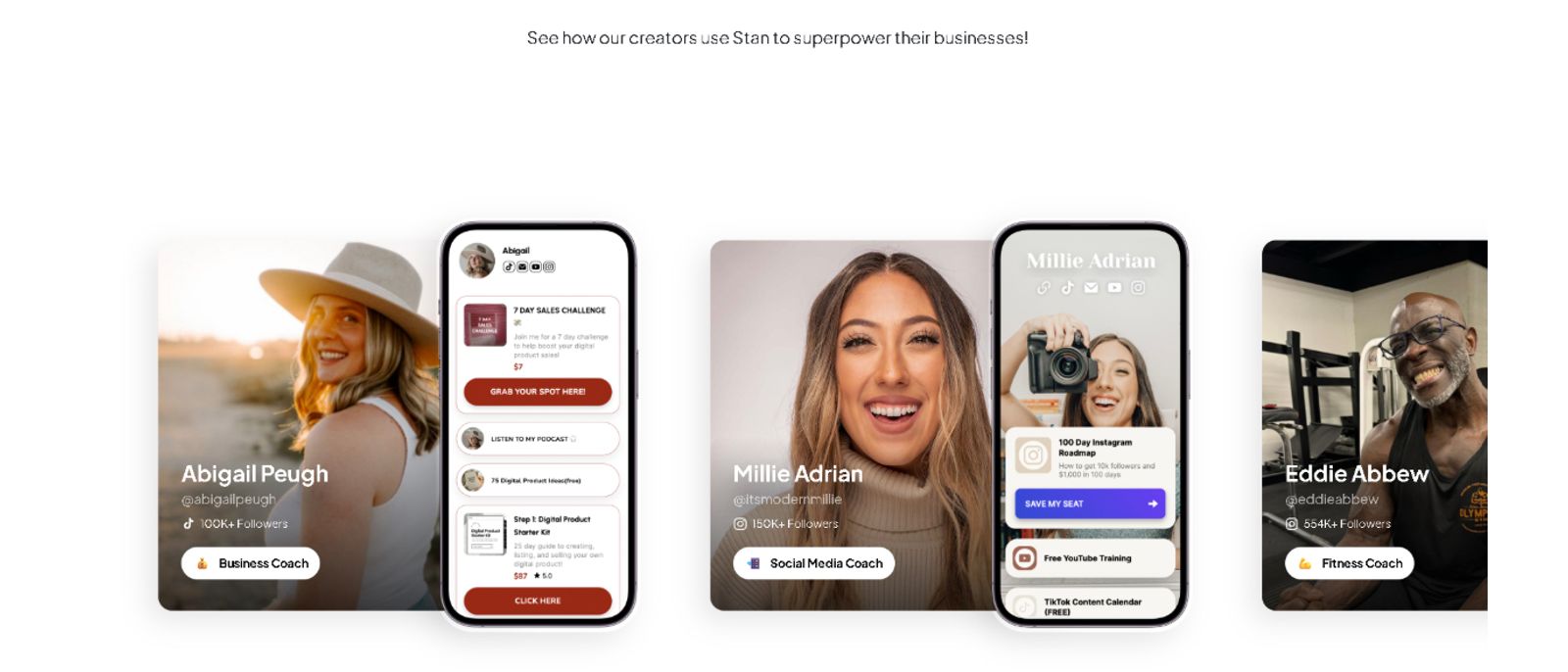
Creators actively selling online courses or coaching programs to a large audience should pick Stan Store. The streamlined checkout layout and zero platform transaction fees make the premium monthly cost worthwhile for established digital educators moving steady product volume.
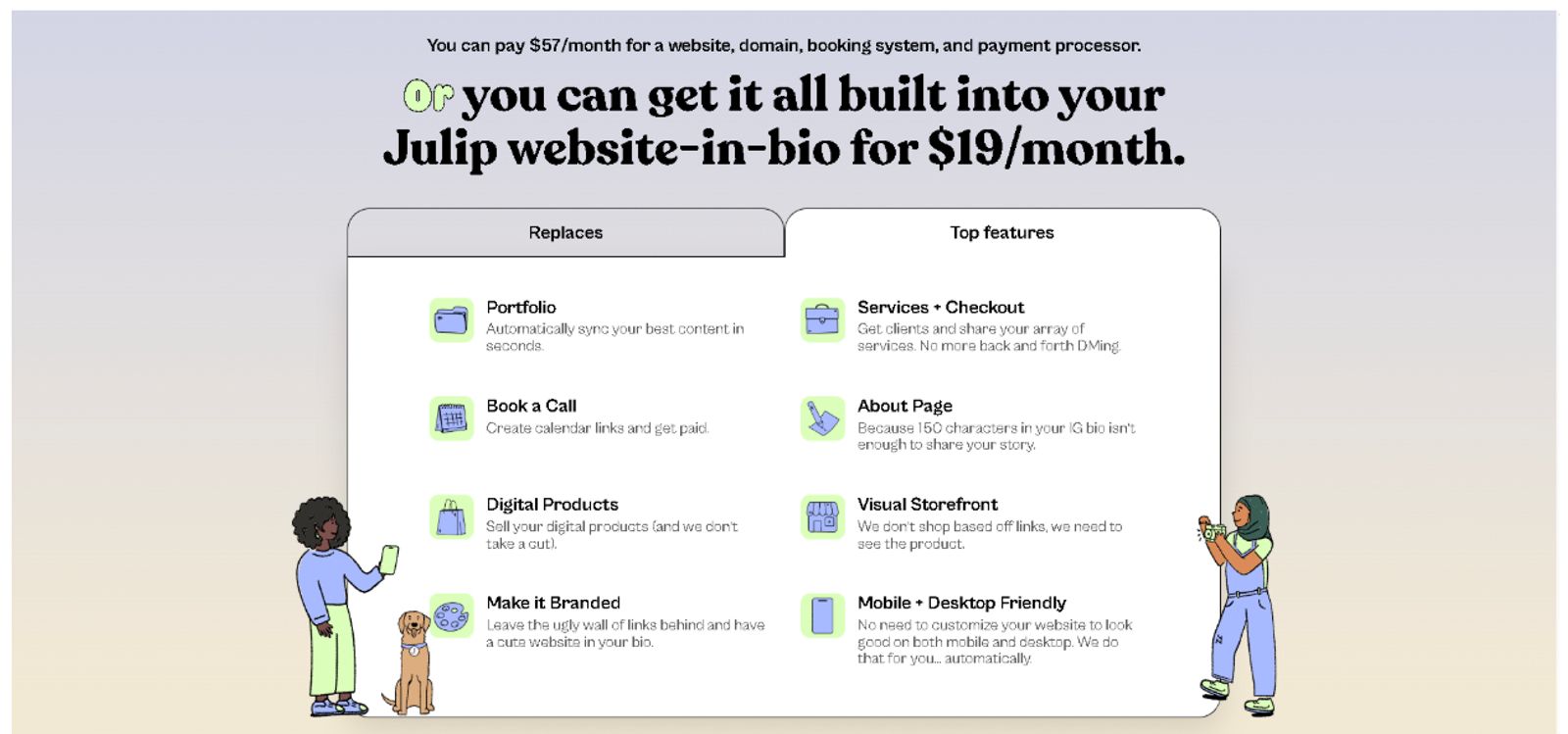
Finally, freelancers and service providers who need a visual portfolio, native calendar booking, and direct payment collection in one spot will find their ideal match with Julip. It operates as a comprehensive website-in-bio tailored specifically for independent professionals, keeping your tech stack lean while protecting your profit margins with 0% platform sales fees.
Stan Store vs Linktree vs Julip - FAQ
Is Stan Store better than Linktree?
Stan Store is better than Linktree for digital creators and coaches whose main goal is selling courses, masterclasses, and digital downloads directly through social media. Linktree works better if you only need a quick, affordable way to organize social profiles and route followers to external web links.
What is the difference between Stan Store and Linktree?
Stan Store operates as a checkout-first digital store built for course creators, while Linktree functions primarily as a link directory for sharing multiple web destinations. Stan Store plans range from $29 to $99 per month with 0% platform sales fees, whereas Linktree offers a free tier alongside paid plans that charge transaction fees on lower tiers.
Does Stan Store or Linktree take a cut of your sales?
Stan Store charges 0% platform transaction fees across all subscription plans, which means you keep 100% of your earnings. Linktree takes a platform cut of up to 9 to 12% on digital product sales on its free and lower-tier accounts unless you upgrade to a higher plan.
Which is cheaper, Stan Store or Linktree?
Linktree is cheaper for beginners because it provides a free tier and low-cost paid plans starting around $6 a month. Stan Store requires a higher monthly commitment between $29 and $99 per month, though its zero-fee structure makes it cost-effective for creators selling high-volume digital products.
Is Julip better than Linktree / Stan Store?
Julip is better than Linktree and Stan Store for freelancers, creative consultants, and service providers who need a visual portfolio, client booking calendar, and direct payment processing in one place. Billed at $19 per month annually with 0% platform fees, Julip provides significantly more functional depth than Linktree at a much lower monthly price than Stan Store.
Which is best for selling digital products/courses?
Stan Store is best for creators who specialize in online video courses, masterclasses, and automated email funnels. Julip is best if you want to sell digital downloads, e-books, and templates alongside live service packages and visual work portfolios with zero platform transaction fees.
Which is best for a freelancer or service business?
Julip is the top pick for freelancers and service businesses because it integrates visual portfolio grids, service menus, calendar scheduling, and Stripe payments on a single page. Linktree lacks native portfolio displays, while Stan Store focuses almost entirely on digital course creation rather than client service work.
Can I take bookings on Linktree / Stan Store / Julip?
Julip and Stan Store both feature native calendar booking and payment collection built directly into your profile page. Linktree doesn’t offer native scheduling tools, so taking client bookings on Linktree requires embedding third-party apps like Calendly or linking out to external scheduling software.
Conclusion
The best setup for you comes down to what your daily workflow actually looks like.
Linktree handles simple link directories, Stan Store excels at course sales, and Julip offers the complete portfolio and booking hub for freelancers.
Keeping your setup simple with Linktree makes sense if you only need to route social traffic to external sites. Established digital educators pushing masterclasses will find Stan Store worth the higher monthly subscription since it charges 0% platform transaction fees.
And for independent freelancers, coaches, and creative service providers, Julip replaces separate calendar, portfolio, and checkout tools for $19 a month on annual billing. Also, combining your service packages, visual work samples, and direct Stripe payments on a single page keeps your overhead low while turning profile visitors into paying clients.
Upgrade your bio link and test out all the features risk-free by starting a 14-day free trial with Julip today.